
Infusing AI into curricula to shape workplace-ready graduates
Universities can leverage industry collaboration to strengthen graduate skills and employability
Sponsored by Modern College of Business and Science

Sponsored by

Sponsored by
Business is changing fast – geopolitical shifts, digital transformation and the emergence of AI are reshaping how organisations operate and compete. In response, business education must go beyond theory to help students practise decision-making and problem-solving in real-world contexts. Embedding AI and industry engagement into teaching and learning can help close skills gaps.
Business school graduates increasingly need industry-ready skills, practical experience and confidence in using digital tools, says Fadi Abdelfattah, associate professor of business administration and head of the Department of Business and Economics at Modern College of Business and Science (MCBS) in Oman.
“An industry-engaged, AI-integrated approach to education closes the relevance gap between classroom learning and the workplace,” Abdelfattah says. At MCBS, institutional goals and strategies are aligned with Oman Vision 2040, a national development plan aimed at diversifying the country’s economy. Vision 2040 places strong emphasis on human capital development, entrepreneurship and employability. This alignment reinforces the university’s focus on supporting students as they transition from the classroom to the workplace.
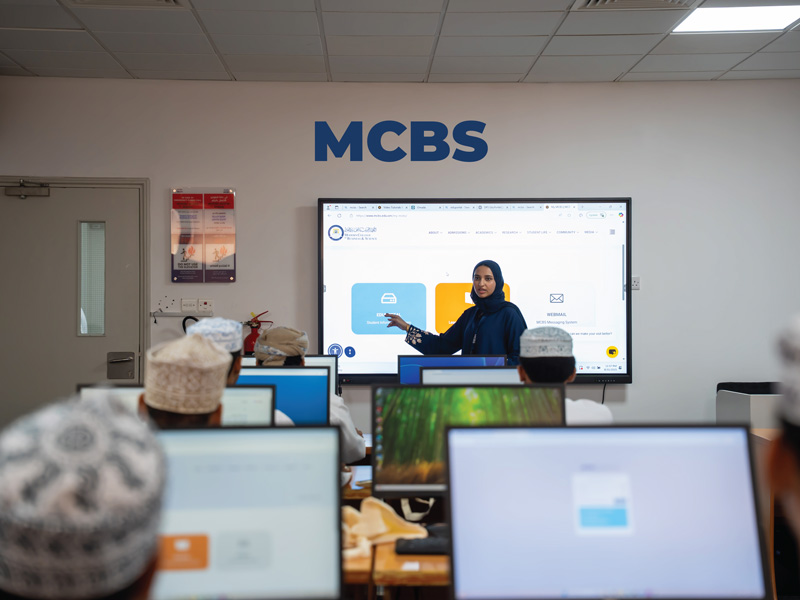
Digital literacy is a priority for the university in preparing graduates for professional success. Employment opportunities are higher for people with applied capabilities such as AI fluency and data skills, Abdelfattah notes. An important aspect of technological literacy is understanding when it is appropriate to use modern tools. Recognising this, the university is also teaching students about responsible and ethical AI use. “We are now focusing on work-integrated learning and have included responsible AI use in the curriculum,” he adds.
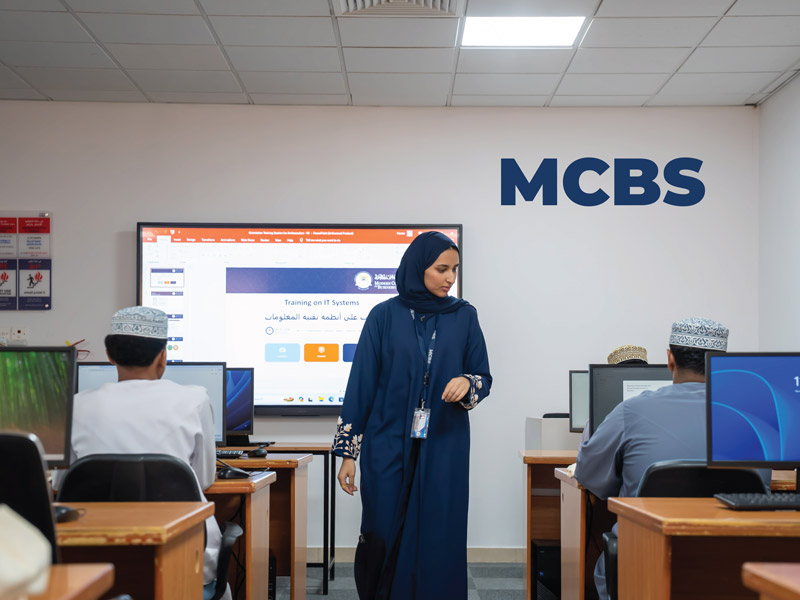
Educators’ skills and expertise are crucial to delivering this effectively. Faculty members need to understand emerging technologies and how to use them appropriately in their disciplines. MCBS has introduced workshops and professional development courses to help educators keep up with digital tools. “It allows educators to integrate AI skills without compromising disciplinary depth,” Abdelfattah says. “The goal is not only to teach the tools but also the thinking around how to use them transparently and ethically.”
Collaborating with employers is another strategy MCBS uses to boost graduate employability. The university designs its curricula in response to evolving industry needs, working with businesses – from small and medium enterprises to large organisations – to develop real-world tasks for students. These projects include market analyses, AI-enabled problem-solving and feasibility reports for real organisations.
The emphasis is on transferable skills. Students can include outputs from these projects in their portfolios and highlight them as evidence of practical experience during job interviews.
MCBS collaborates with local and international organisations to continuously improve its programmes. Co-created learning includes internships, guest lectures and industry-based research projects. In some cases, the university also offers modules taught in partnership with other universities, broadening students’ exposure to global learning while remaining grounded in the regional context.
The university takes a two-fold approach to maintaining academic standards. It is accredited through the national quality frameworks in Oman. MCBS also benchmarks its courses and research against higher education institutions internationally to offer a world-class business education.
Find out more about Modern College of Business and Science.