
Merging science and sustainability to elevate wine tourism
Institut Lyfe’s new postgraduate degree combines expertise in wine tourism, hotel management, sommellerie and digital innovation to prepare students for a successful international career
Sponsored by Institut Lyfe

Sponsored by
Sponsored by
Located near Lyon, the beating heart of French gastronomy, Institut Lyfe is an elite hospitality, food service and culinary arts school. It seeks to radically reimagine wine and hospitality education with its full-time postgraduate degree in sustainable international wine tourism. The programme brings together concepts from science, sustainable management and digital innovation to train students to create unforgettable hospitality experiences.
Taught in English, the new MSc in Sustainable International Wine Tourism is designed to prepare students for a career in wine tourism anywhere in the world. Frédéric Beaumont-Debresie, academic dean at Institut Lyfe, believes the education students receive at the institute is unparalleled.
“If we look at other master’s degrees in wine offered in France, they are very focused on how to sell wine. It is a much more commercial approach,” says Beaumont-Debresie. “At Institut Lyfe, we are focused on hospitality and how to tell the story behind the wine.”
As with many 21st-century degrees, the programme tackles a practical challenge in the industry: the global decline in wine consumption. The popularity of natural wine has been largely limited to urban centres and has not yet spread to the general market. Beaumont-Debresie hopes that Institut Lyfe’s graduates can reverse this trend by demystifying the jargon around wine culture, making wine more accessible and broadening its appeal.
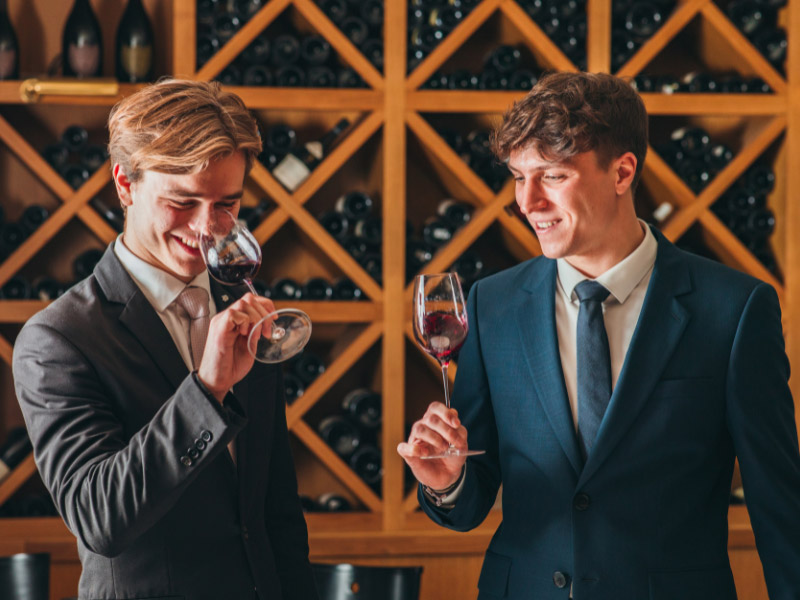
“It’s important to explain to customers that, when we are speaking about wine, we are speaking about something special and easy to understand,” says Beaumont-Debresie. “That is why we are focused on wine tasting through a multisensory approach.”
During the programme, students will learn how to turn wine estates into tourist destinations and tell the story of the terroir and the region’s history. Sustainability is a unique component of the course, which integrates sustainable practices into the curriculum and prepares students to design wine tourism experiences that respect the environment and local communities. They will gain skills in showcasing winemakers and their vinification techniques and welcome tourists on-site while minimising environmental impact.
Institut Lyfe’s ties with industry enhance its courses and the student experience. “It is easy to attract professionals into the programmes because we are close to them,” says Beaumont-Debresie. “When it is time to bring students into vineyards, wineries or restaurants, it is also easy.”
Students undertake six-month internships as part of the course. French students undertake their work placements abroad and international students complete theirs in France. All will have Institut Lyfe’s state-of-the-art infrastructure to lean on, with its research centre underpinning the scientific aspects of the course. “Our students will learn how chemistry affects wine and how multisensory aspects such as sunlight affect the way wine tastes,” says Beaumont-Debresie.
The programme helps graduates to be adaptable and well-equipped for a range of careers. After graduation, students can choose careers such as wine tourism, brand management and consultancy within the hospitality sector. The skills they develop could be readily applied to managing a whisky, sake or any beverage brand. However, with France welcoming millions of tourists every year, Beaumont-Debresie hopes that the Institut Lyfe’s graduates can convert some of them into oenophiles.
Find out more about the MSc in Sustainable International Wine Tourism at Institut Lyfe.