
Huazhong University of Science and Technology explores new frontiers of brain surgery
A multidisciplinary team has developed a cutting-edge robot that can enhance patients’ survival chances after a cerebral haemorrhage
Sponsored by Huazhong University of Science and Technology

Sponsored by

Sponsored by
Founded in 1907, Tongji Medical College at Huazhong University of Science and Technology (HUST) is one of the pioneering institutions advancing modern medical education in China. It aims to promote cutting-edge scientific research to meet China’s health needs.
In recent years, the college has adopted collaboration between medical and engineering disciplines as a strategic direction. A prime example of this approach is the world’s first surgical robot that can respond to cerebral haemorrhage. The mortality rate among patients with cerebral haemorrhage is as high as 52 per cent. Only 20 per cent of patients regain functional independence within six months of receiving clinical treatment.
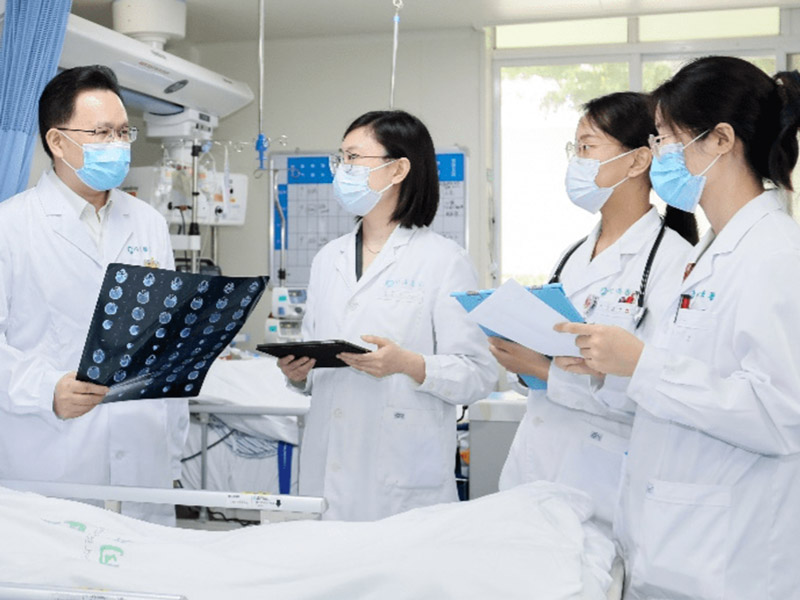
The college’s intelligent, minimally invasive surgical robot for cerebral haemorrhage was developed by a team led by Zhouping Tang, chair of the Tongji Medical College committee, and Han Ding, professor at HUST’s School of Mechanical Science and Engineering. The team worked in collaboration with Beijing WanTeFu Medical Apparatus Co. It is the world’s first minimally invasive surgical robot that can intervene in the process of hematoma puncture and suction flow, allowing it to carry out the procedure with precision and intelligence.
The robot follows a 3D human brain map, which combines CT scans and MRI data. It uses a micro endoscope built into the puncture needle alongside intracranial sensors that check key metrics such as pressure, temperature and pH levels. This means the robot can sense the complex intracranial environment in real time, working out the optimal plan by millimetre. The needle itself is designed to perform a three-stage puncture, which significantly reduces damage to brain tissue. During the procedure, the robot captures clear brain images for analysis and makes surgical recommendations as it moves.
The research team behind the development of the robot include experts from the fields of medicine, mechanical engineering, material science and AI. For example, Tang has been engaged in the treatment of cerebral haemorrhage for 20 years, leveraging Ding’s expertise in robotic motion control and sensory fusion technology. Beijing WanTeFu Medical Apparatus accelerated the project from the laboratory to the operating room using its experience in the industrialisation of medical devices.
Looking ahead, the team will continue their research on how new technologies, such as regenerative medicine and brain-computer interfaces, can further improve treatment and enhance patients’ quality of life. Together, researchers at HUST are writing a new chapter of healthy China, thanks to the multidisciplinary advantages of the university.
Find out more about the Huazhong University of Science and Technology.