
Training the next generation of health professionals
Medical education should embrace innovative, technology-integrated pedagogy to meet the healthcare needs of tomorrow
Sponsored by the Hong Kong University of Science and Technology

Sponsored by
Sponsored by
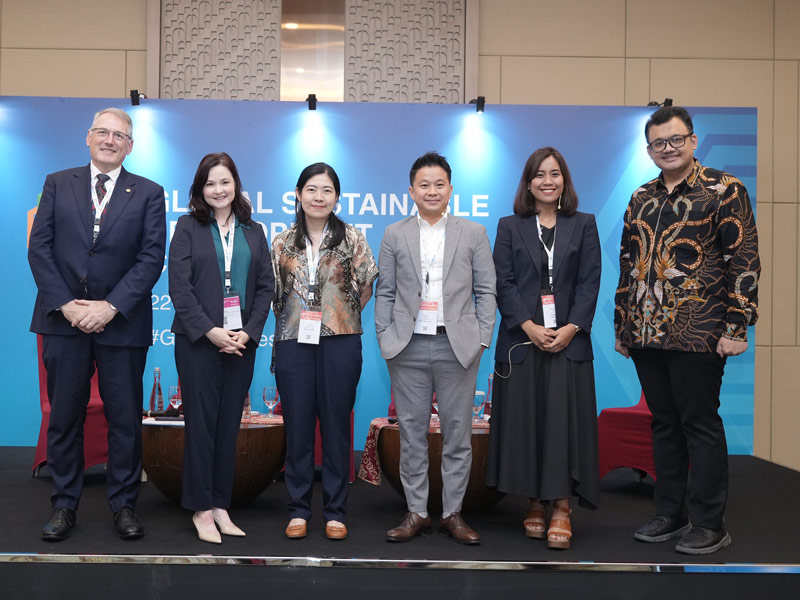
Technology has long been integral to clinical practice and training. But with the increasing use of AI tools in the sector, medical education needs to adapt its approach to teaching and learning. During a session – held in partnership with the Hong Kong University of Science and Technology (HKUST) – at the 2026 THE Global Sustainable Development Congress, panellists explored HKUST’s approach to cultivating digitally skilled healthcare professionals through technology-driven education.
“At its core, medical education is an apprenticeship, where we learn from our seniors,” said Russell Lindsay Gruen, associate provost of health and medical sciences at HKUST. “We don’t change practice without good evidence.” Although this profession tends to change slowly, with the growing popularity of AI, it has to keep pace with industry innovators while also maintaining safety.
To navigate this, industry partners and medical professionals need to develop mutual understanding through immersive partnerships. “We see that in great health technology and innovation centres around the world, where you have engineers embedded in clinical environments. It takes a thoughtful, dedicated, context-specific approach,” Gruen said.
The panel agreed that an important focus for these collaborations should be improving equity and reducing disparities in healthcare, paying particular attention to regional contexts. Adithia Kwee, CEO of Kaiser Cancer Center in Indonesia, said that prioritising technological solutions is not always the best approach, as this may vary depending on the specific needs and challenges of different areas. “Focusing on the problem and the context is really important to solve the core issues,” said Kwee.
Rina Rudyanto, data science director at Siloam Hospitals in Indonesia, echoed this, saying that a common trend is for industry to present technical know-how but without a deep understanding of the problems to be solved. “This is as much a cultural battle as it is a technological one,” she said.
At the same time, modern medical technology offers healthcare professionals the ability to automate administrative tasks and spend more time focusing on patients. Febie Yuriza Poetri, vice-chairwoman of the Indonesian Medical Equipment Manufacturers Association, added that technology integration must be seamless to be effective.
With the rapid development of technology, training programmes for new learners need to be practical and adaptive. With information readily available online, it is now important to train students on what to do with their technical knowledge. They must learn how to use AI responsibly while retaining good judgement and empathy, said Pukovisa Prawiroharjo, associate dean of planning, budget, law, collaboration and ventures at the University of Indonesia.
HKUST’s School of Medicine was created to address the region’s shortage of medical professionals. It is designed to maintain clinical excellence with the help of technology, said Gruen. With a goal to shape the future of medicine, the school seeks to be at the centre of a new health ecosystem that combines education, research and service. Its long-term plans include delivering care and research in Hong Kong and the Greater Bay Area.
The panel:
- Russell Lindsay Gruen, associate provost of health and medical sciences, Hong Kong University of Science and Technology
- Adithia Kwee, CEO, Kaiser Cancer Center
- Febie Yuriza Poetri, vice-chairwoman, Indonesian Medical Equipment Manufacturers Association
- Pukovisa Prawiroharjo, associate dean of planning, budget, law, collaboration and ventures, University of Indonesia
- Rina Rudyanto, data science director, Siloam Hospitals
Find out more about Hong Kong University of Science and Technology.