
Regional partnerships for sustainable transformation in cities
Universities can maximise their regional impact through city-level engagements with local government, community and industry

Sponsored by

Sponsored by
Universities play an important role in the global sustainability efforts. As regional and international hubs of knowledge, they can actively engage in partnerships with local governments, communities and industries to develop innovative urban solutions focusing on sustainability, inclusivity and resilience.
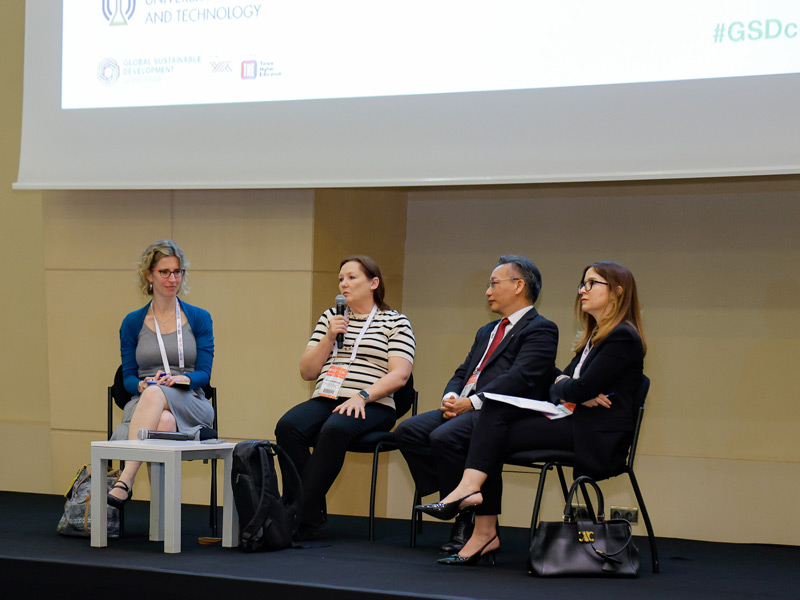
At a panel discussion held during the 2025 THE Global Sustainable Development Congress, panellists from across the world shared their insights on creating successful local collaborations.
“Every city has its own character and challenges, and this reflects the relationships the universities have with them,” said Kate Miller, deputy director of civic engagement at the University of Bristol in the UK.
Bristol was the first UK city to be a European Green Capital in 2015, but it also has educational inequalities to be addressed, Miller said. The University of Bristol’s civic strategy determines how it works with the city to progress together towards the United Nations’ Sustainable Development Goals.
Johannesburg faces major challenges that the university sees as opportunities, said Denyse Webbstock, senior director of institutional planning, monitoring and evaluation at the University of Johannesburg in South Africa. The university has become an independent power producer to combat blackouts in the city, and it works with Johannesburg Roads Agency to keep the areas around the university safe. “Our mission is to make a positive impact on society,” Webbstock said.
Partnership and interdisciplinary working are areas where universities can be effective, said Senem Aydın-Düzgit, professor of international relations at Sabancı University in Türkiye and director of the Istanbul Policy Centre. Local, international and transnational collaboration is important. “Where universities can bring added value is the fact that much of this collaboration has to be interdisciplinary in nature. We’ve had multiple projects where we had the involvement of not just political scientists and city planners, but also architects, archaeologists and environmental scientists,” she added.
An understanding of multiple stakeholder points of view is also important, said Kenneth Leung, director of the Sustainability and Net Zero Office at The Hong Kong University of Science and Technology. Trust is important for facilitating good engagement between universities and governments. “This kind of trust takes time,” he said.
By working together, universities can raise the bar on expectations and outcomes from sustainability solutions, Leung said. In Hong Kong, eight universities have formed a sustainability consortium that meets regularly and shares best practice. It has received funding as a unit to promote responsible consumption across all campuses.
Such partnerships help streamline the point of contact within higher education, Leung said. “It’s easier for the government to approach a platform of collaboration rather than individual universities.”
The panel:
- Senem Aydın-Düzgit, professor of international relations, Sabancı University and director, Istanbul Policy Centre
- Kenneth Leung, director of Sustainability and Net Zero Office, The Hong Kong University of Science and Technology
- Kate Miller, deputy director of civic engagement, University of Bristol (chair)
- Denyse Webbstock, senior director of institutional planning, monitoring and evaluation, University of Johannesburg
Find out more about The Hong Kong University of Science and Technology.