
A human-centric approach to urban design
Urban planning decisions should prioritise people’s needs and well-being to ensure spaces are accessible and sustainable

Sponsored by the German University of Technology in Oman

Sponsored by

Sponsored by
Sustainable urban development is a growing challenge for societies. There is a growing demand for professionals who can create innovative spaces based on countries’ evolving needs. The Department of Urban Planning and Architectural Design at the German University of Technology in Oman (GUtech) focuses on the dynamic nature of urban environments to ensure they are built to fit how people use them.
“There’s a risk that designers start to think about a space based on their own perspective or examples they’ve already seen, rather than recognising that every city has a different background,” says Iman Al Ofi, instructor at GUtech. “We have to understand how people use a space. Our role as designers is to react to what is happening, not just to make something beautiful.”
The programmes at GUtech’s Department of Urban Planning and Architectural Design prioritise developing future designers who take a more facilitative rather than prescriptive approach to urban planning. This offers people more flexibility to use spaces according to their needs and routines. “We advise students to observe, to be in contact with people in the area and to understand who they are,” says Al Ofi. “We identify what the opportunities are before we identify the problems. The first stage is always the location.”
Local knowledge and impact are important considerations for urban designers and planners, argues Al Ofi. Designers need to explore how people interact with a space and the factors that influence their behaviours. In Oman, for example, they need to consider seasonal variations in temperatures and differences in daily routines between coastal and inland residents.
By talking to people and understanding their needs, designers can improve community involving in a project throughout its development instead of presenting it as a finished product. “It’s important to teach students to find ways in which their designs should have direct benefits for local people,” Al Ofi notes. “A project should contribute on a broad scale to a country, but the priority should be the people living there and how they will benefit.”
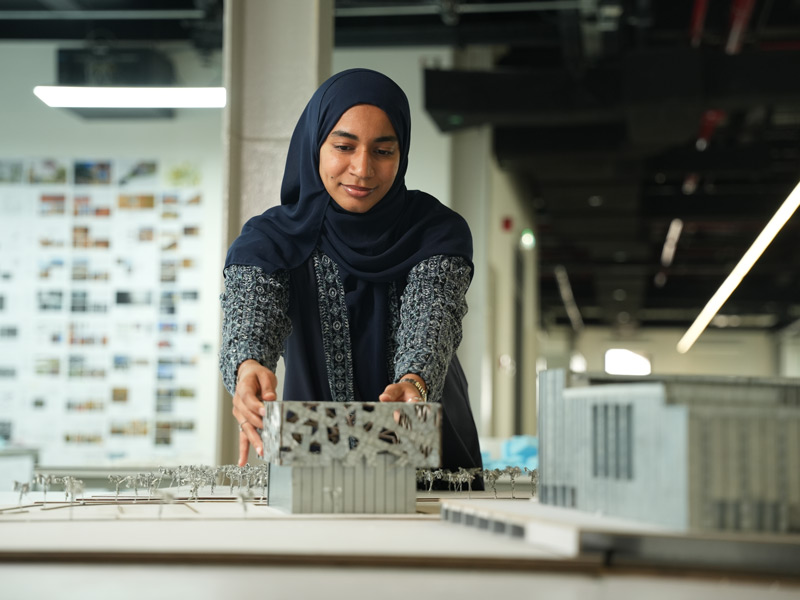
Some courses offered by the department include a year-long practical project. During the first semester, students collect data, perform analysis, engage with communities and gather information. They also conduct interviews with policymakers to get a complete picture of the drivers behind urban development. In the second semester, students begin to build proposals based on this data. They organise community workshops to display physical models of potential designs so people can interact with them and offer feedback.
Urban planners and designers can identify the differences between the intention behind a design and how people actually use spaces in practice by understanding everyday social behaviours, says Al Ofi. By placing this principle at the core of its programmes, the department produces design graduates who take a people-centric approach to shaping a more sustainable and resilient future for all.
Find out more about the German University of Technology in Oman.