
Promoting gender equality through education
To ensure a sustainable future for all, institutions must address gender disparities in digital skills and access

Sponsored by The Education University of Hong Kong

Sponsored by

Sponsored by
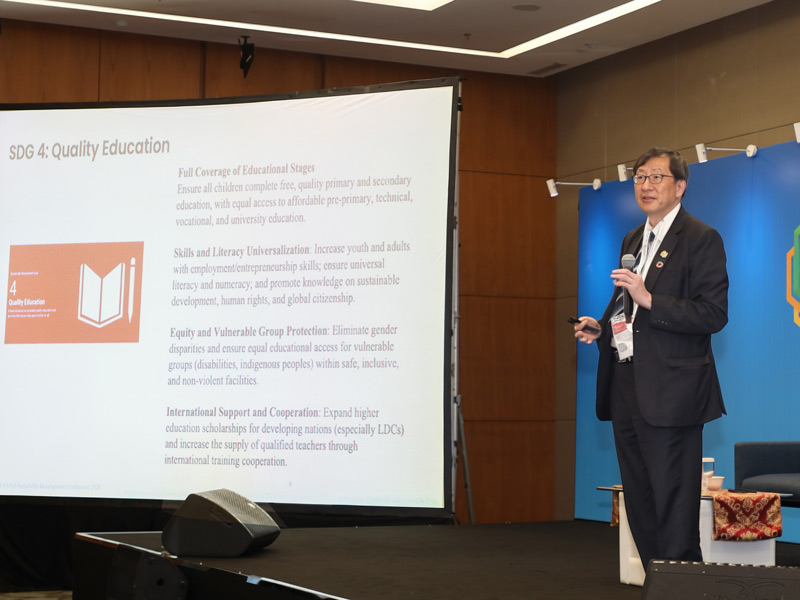
Tackling global socioeconomic challenges demands sustainability-focused leadership. A session – held in partnership with The Education University of Hong Kong (EdUHK) – at the 2026 THE Global Sustainable Development Congress explored ways to reimagine education for a sustainable future.
The future of education is not only about enrolment – it is also about making sure everyone has access to digital tools and sustainable knowledge through meaningful engagement with communities, said John Chi-Kin Lee, EdUHK’s president and Unesco chair in regional education development and lifelong learning. “Education is the foundation that equips individuals with fundamental productivity and essential life skills,” he said. “But life skills are changing rapidly.”
This means being adaptive is increasingly important for graduates. Lifelong learning extends “beyond schooling, university and vocational education”, said Lee. There is a growing focus on creativity, critical thinking, interpersonal skills, cross-cultural understanding and digital, AI and entrepreneurial literacies.
“One key definition of literacy is that it is a repertoire of skills, knowledge and values,” Lee noted. “Values need to be deeply embedded in our behaviour. We cannot separate knowledge from action. We are talking about having a broader alignment between individuals and society.”
Achieving this alignment demands local, national and global collaboration. Issues such as gender inequality remain an impediment to this goal. Society must ensure flexible pathways are available to women to increase opportunities for participating in education and the economy, Lee said.
Lee remarked that gender inequality is also being exacerbated by unequal availability of digital resources. “The digital divide refers to inequality in access, usage and outcomes,” he explained. “Statistics from the United Nations show that the gender gap in internet access remains uneven across the world, and the widest gap is in poor and less connected regions.”
The secondary factors contributing to the divide are the lack of digital skills. In the post-pandemic learning environment, the key barrier has shifted from basic access to parental digital literacy, said Lee. It is important to address whether parents and educators are prepared to educate children on digital literacy.
“We look for projects, actions and curriculum that drive social and gender equity,” Lee said. Education should promote sustainability, strengthen digital and life skills development to close gaps and ensure equal access for different groups. This can pave the way for inclusive and equitable digital and green transitions.