
When AI Meets the City
Designing the cities of tomorrow through AI-powered digital twins for sustainability and resilience

Sponsored by

Sponsored by
Cities across Europe are racing toward net zero. Also, they collect more data than ever before, but struggle to turn it into decisions people trust. That is where EXPEDITE, a Horizon Europe project, makes a difference. By creating a city-scale digital twin, the project allows planners to simulate scenarios, test solutions, and manage energy flows before they are built, bridging the gap between research and real-world transformation.
At Católica Lisbon School of Business & Economics, researchers from the Digital+Sustainable Innovation Lab are helping make this vision work in practice. Their role: designing the business models that make Positive Energy Districts, neighbourhoods that generate more energy than they consume, financially viable and socially scalable.
“Technology alone doesn’t make cities sustainable,” says René Bohnsack, Full Professor of Strategy and Innovation at Católica Lisbon. “We need new business models that align economic incentives with environmental goals, and that’s exactly where our lab contributes to EXPEDITE.”
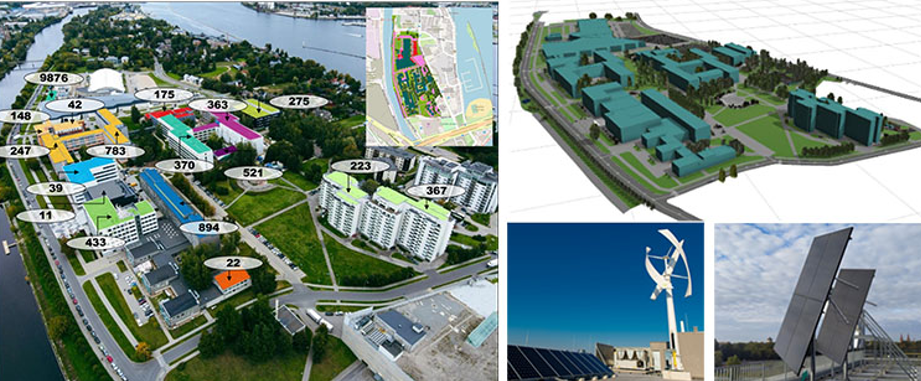
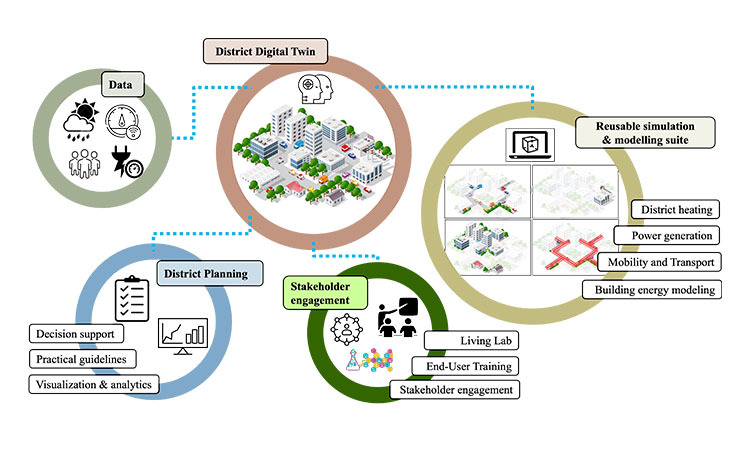
The digital twin integrates models from buildings, renewables, transport, and heating systems into a single interactive platform. It enables city leaders to compare pathways, understand trade-offs, and plan investments with confidence. Once implemented, it helps optimize daily operations, reducing costs, peaks, and emissions.
“What makes EXPEDITE special is its Living Lab approach,” explains Cláudia Antunes Marante, Lecturer and Researcher at Católica Lisbon. “We bring city officials, companies, and residents together to co-create. When people see the impact of their choices through simple, transparent visualizations, they become active participants in the energy transition.”
The project gathers 15 partners from eight European countries - universities, technology firms, and municipalities - united by the ambition to turn research into scalable practice.
“The challenge is not just technical, it is systemic,” adds Arash Rezazadeh, Postdoctoral Researcher at the Digital+Sustainable Innovation Lab. “We are building frameworks that let digital innovation scale responsibly, balancing performance, inclusion, and long-term sustainability.”
This work connects directly to the team’s forthcoming article in the California Management Review, “Digital Twins for Circular Cities,” which explores how AI-driven urban systems can evolve into circular business models that continuously learn and optimize for sustainability.
Together, the team at Católica Lisbon shows how research can leap from the lab into the city, turning abstract data into concrete progress toward a cleaner, smarter, and more resilient urban future.
More information:
https://expedite-project.eu/
www.dsi-lab.org
www.renebohnsack.com
By René Bohnsack, Cláudia Antunes Marante and Arash Rezazadeh, researchers at CUBE and Digital+Sustainable Innovation Lab of Universidade Católica Portuguesa.
Image 1: Digital twin visualization of a positive energy district showing building-level energy data and planning scenarios
Image 2: EXPEDITE’s integrated approach: from data collection to district planning and stakeholder engagement