Integrating Green Education in Universities: Youth-Led Sustainability at Baku State University
As global efforts to advance the Sustainable Development Goals intensify, universities are increasingly expected to serve not only as centers of knowledge but as active laboratories of sustainable transformation. Baku State University demonstrates how green education can be integrated into higher education through youth engagement, institutional policy, and campus-based innovation.

Sponsored by

Sponsored by
At BSU, sustainability is embedded across academic programs, governance structures, and student life. Faculties such as Ecology and Soil Sciences, Geography, International Relations and Economics, and Biology incorporate climate adaptation, water management, sustainable development policy, and green transformation into their curricula. These programs emphasize applied learning, linking theory with practice through laboratory work, regional field studies, and interdisciplinary research. By aligning academic content with real environmental challenges, the University fosters sustainability literacy that extends beyond the classroom.
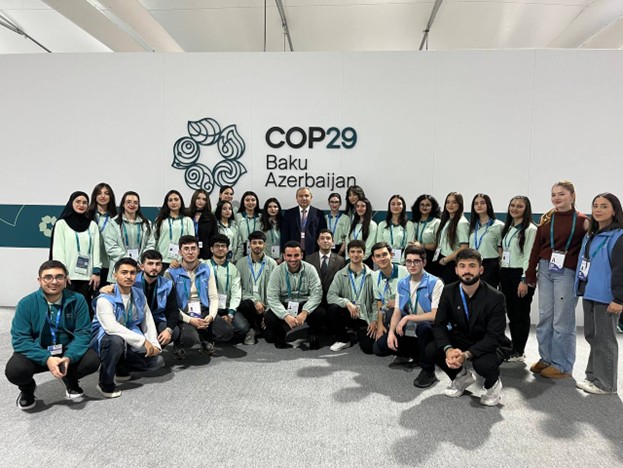
Youth participation is central to this transformation. With more than 22,000 undergraduate students, young people form the core of the University’s sustainability culture. Student-led platforms including the BSU Volunteers, Student Trade Union, Student Youth Organization, Student Scientific Society, various student clubs mobilize thousands of students in environmental campaigns, recycling initiatives, awareness programs, and community outreach. These initiatives cultivate leadership, responsibility, and experiential learning, translating sustainability principles into everyday practice.
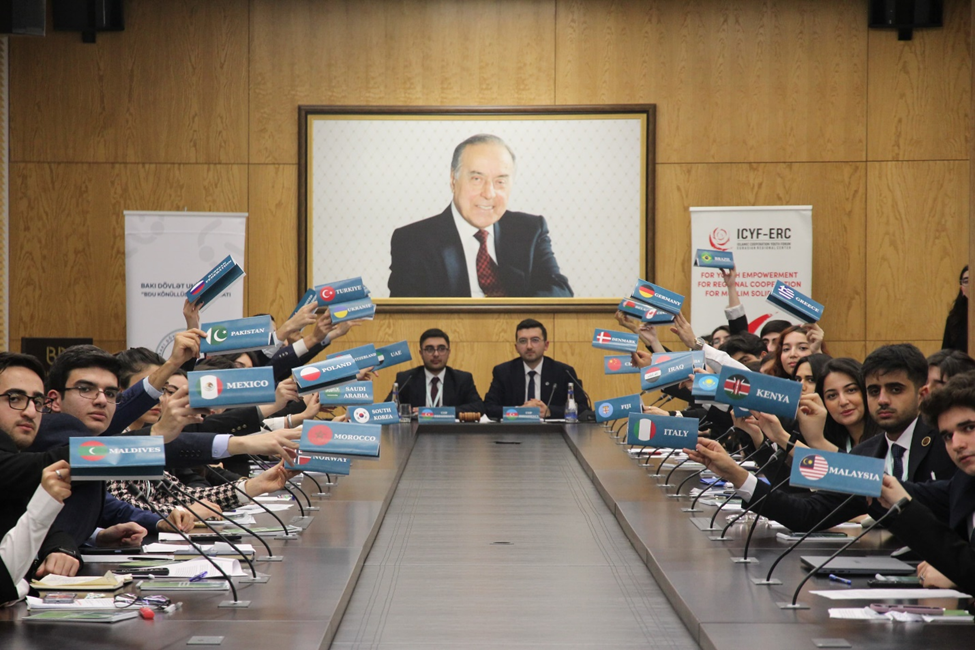
Experiential education further strengthens this approach. BSU regularly organizes model simulation conferences dedicated to global governance and sustainable development processes, including COP, UN, OIC, and urban development platforms. Through these formats, students engage directly with climate diplomacy, urban resilience, and policy negotiation scenarios. International academic conferences and thematic lecture series such as Urban Talks expand interdisciplinary dialogue and connect students with national and global sustainability agendas.
Operational sustainability is equally integrated into campus management. Water consumption is systematically monitored, and efficiency measures have resulted in measurable reductions in usage since 2022. Renewable energy solutions, including solar panels and energy-efficient lighting systems, have been introduced alongside cleaner heating technologies and sustainable procurement practices. Waste sorting systems and student-led recycling campaigns reinforce responsible resource management, ensuring that infrastructure reform is complemented by behavioral awareness.
A significant milestone in BSU’s sustainability journey is the establishment of the Eco Space initiative, a campus-based environmental hub that functions as a living laboratory. The facility integrates aquaponics systems, microalgae bioreactors, renewable energy technologies, and digital environmental monitoring tools. By providing hands-on experience in circular agriculture, carbon reduction processes, and real-time ecological observation, Eco Space transforms sustainability from abstract concept into practical learning environment.
The University’s commitment to sustainable development also encompasses social inclusion and well-being. Health services, psychological support, legal aid through the BSU Law Clinic, and anti-discrimination policies reflect a holistic understanding of sustainability that integrates environmental, social, and institutional dimensions.
The experience of Baku State University illustrates that effective green education requires coordinated action across curriculum design, youth leadership, infrastructure management, and community engagement. By embedding sustainability within both governance structures and student initiatives, the University has developed a comprehensive and adaptable model of green higher education that may serve as a reference point for similar institutional contexts.