
Baku State University demonstrates how universities can deliver truly zero-carbon EV infrastructure
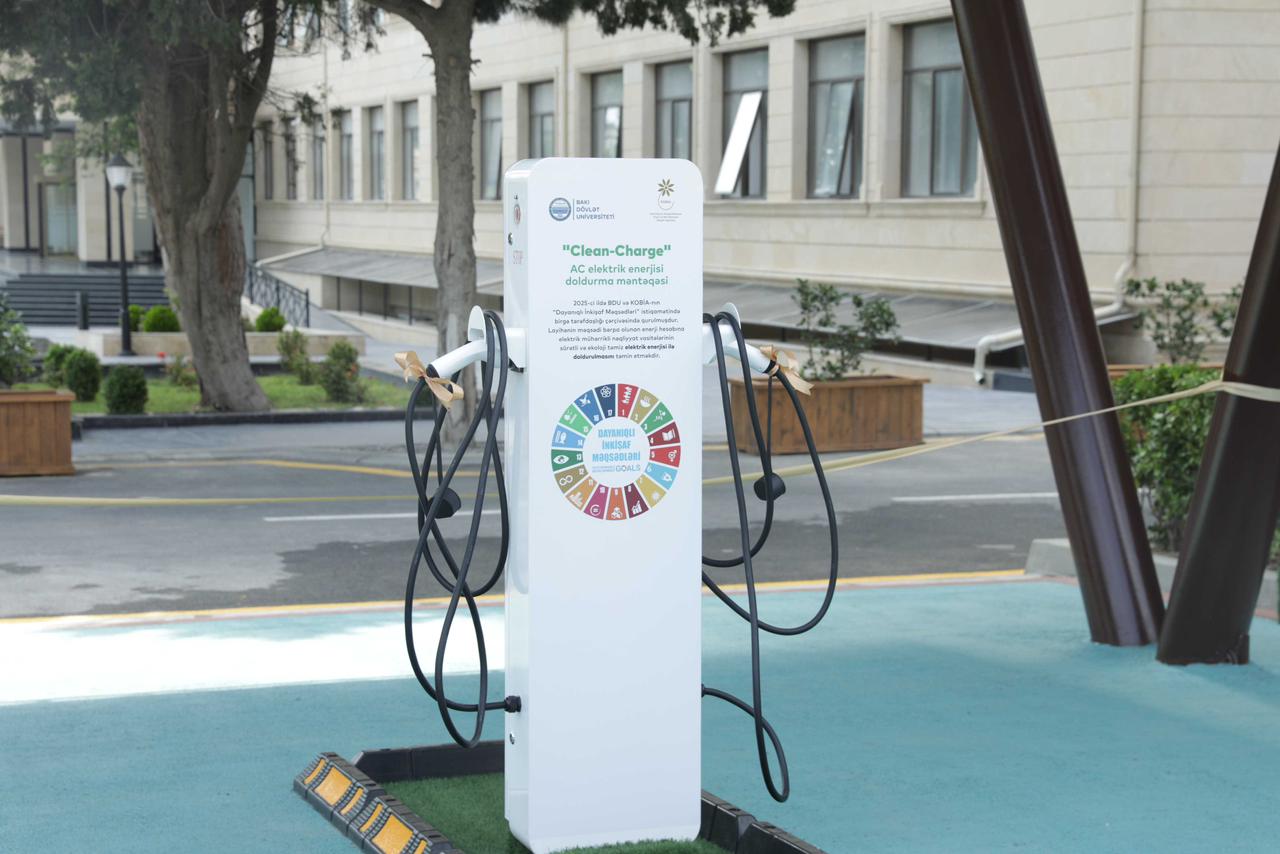
As electric mobility accelerates worldwide, the environmental burden of the electricity behind the charge remains a critical – and often overlooked – challenge. Researchers at Baku State University (BSU) have developed a solution that directly targets this problem: “Clean-Charge”, a 22 kWh AC charging station powered entirely by on-site solar and wind energy, eliminating indirect carbon emissions from electric vehicle (EV) use on campus.

Sponsored by

Sponsored by
Global EV adoption has surged, rising from 26 million vehicles in 2022 to more than 55.8 million by mid-2024. Azerbaijan mirrors this trend: according to national customs statistics, imports of EVs and plug-in hybrids have grown 30-fold in the last four years.
However, in most countries—including Azerbaijan—EVs rely on electricity produced primarily from coal and natural gas. This leads to substantial “indirect carbon emissions”: CO₂ released at power plants to generate the electricity consumed by EVs.
A coal-powered EV can generate up to 140g of indirect CO₂ per kilometre—a figure comparable to emissions from a modern petrol car such as the 2023 Toyota Corolla (162g/km). As EV numbers climb, so too will these indirect emissions unless energy sources change.
The Clean-Charge station was developed at BSU precisely to address this issue. Its goal: produce all charging electricity exclusively from renewable sources, ensuring each kilometre driven from a campus charge produces zero carbon emissions.
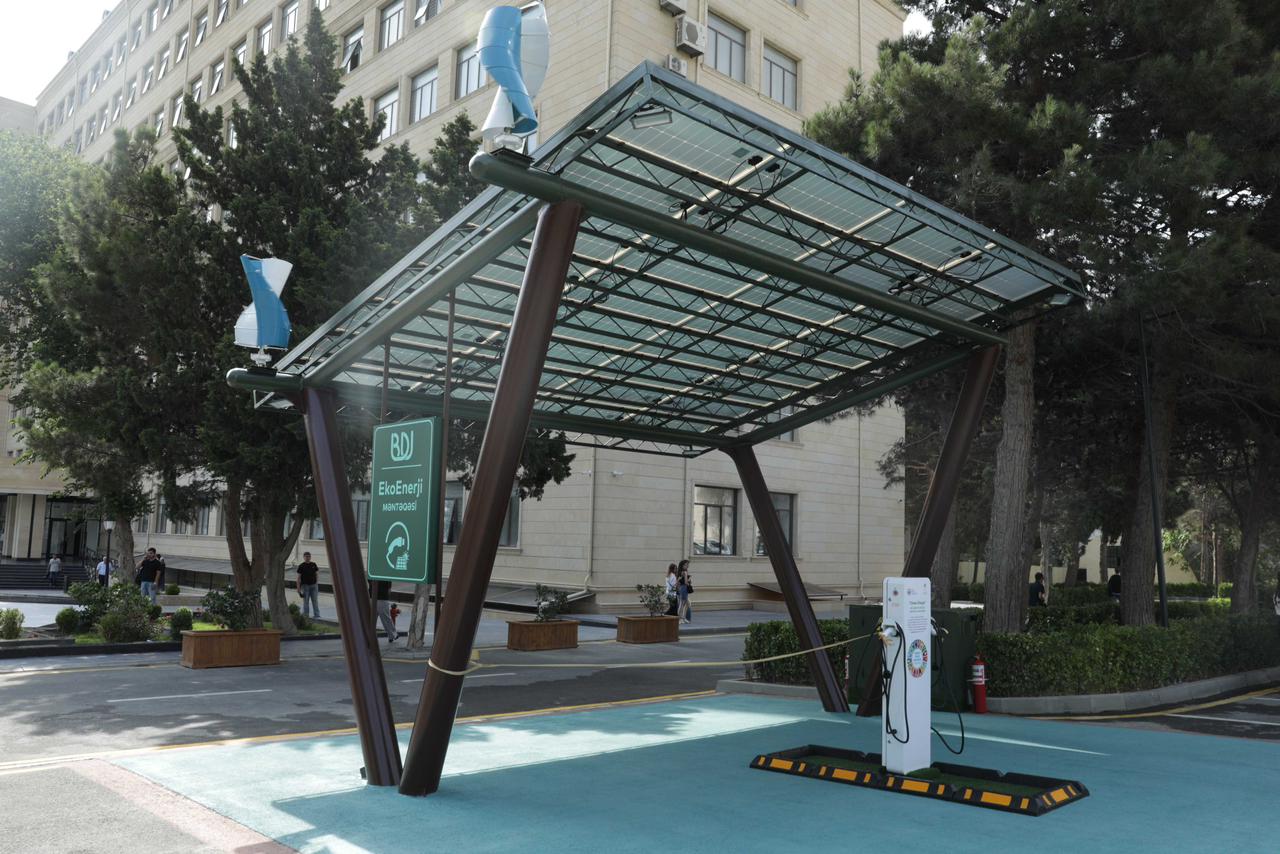
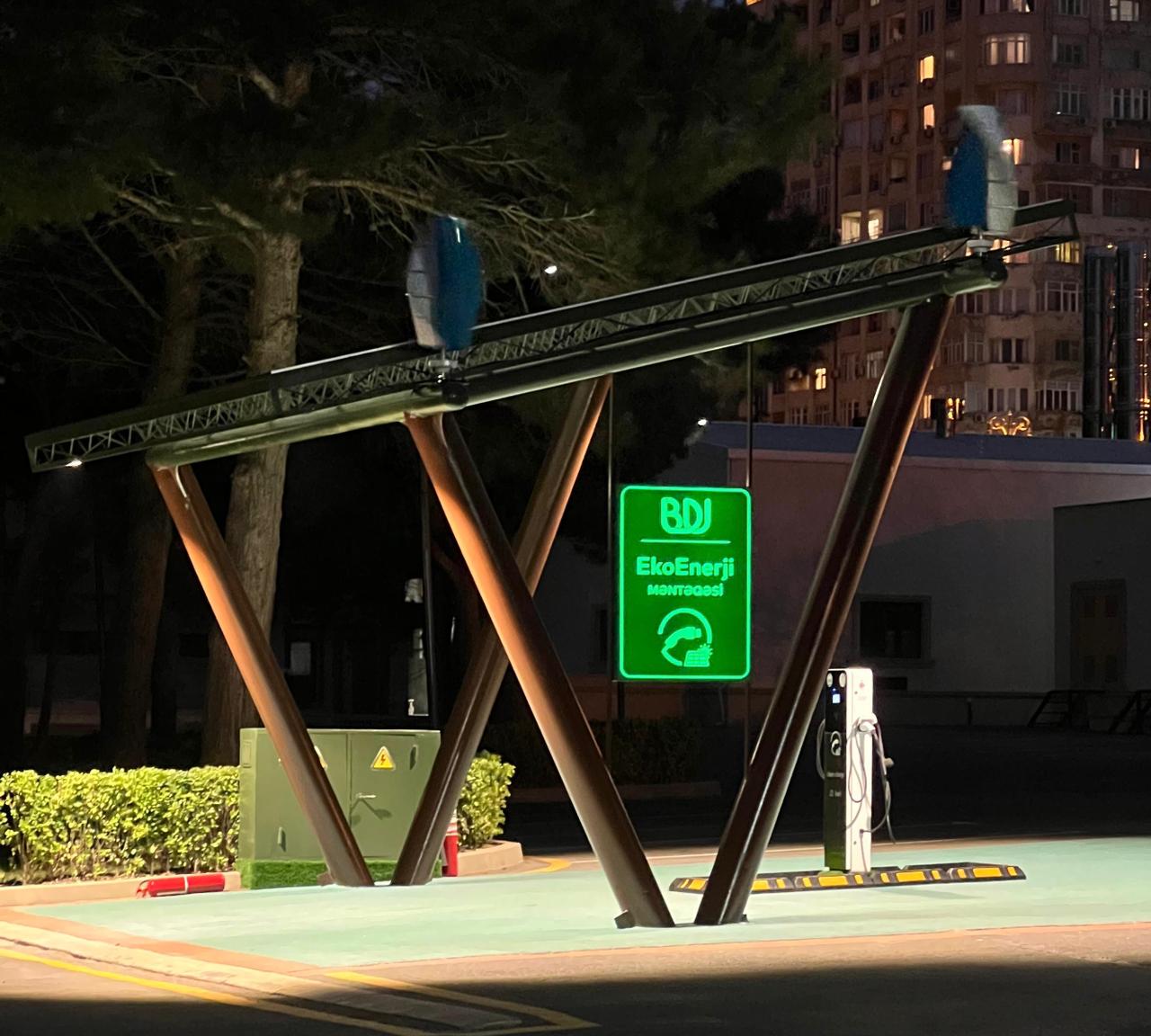
Wind turbines play a critical role in Baku’s evening and night-time conditions: strong nighttime winds prevent batteries from discharging to zero, stabilizing 24/7 renewable supply even when solar production drops.
Installed on BSU’s main campus, the Clean-Charge station currently provides free, zero-emission charging for faculty and students. The system supports a broad range of electric mobility options—including EVs, e-bikes and e-scooters—encouraging low-carbon transport choices across the university community.
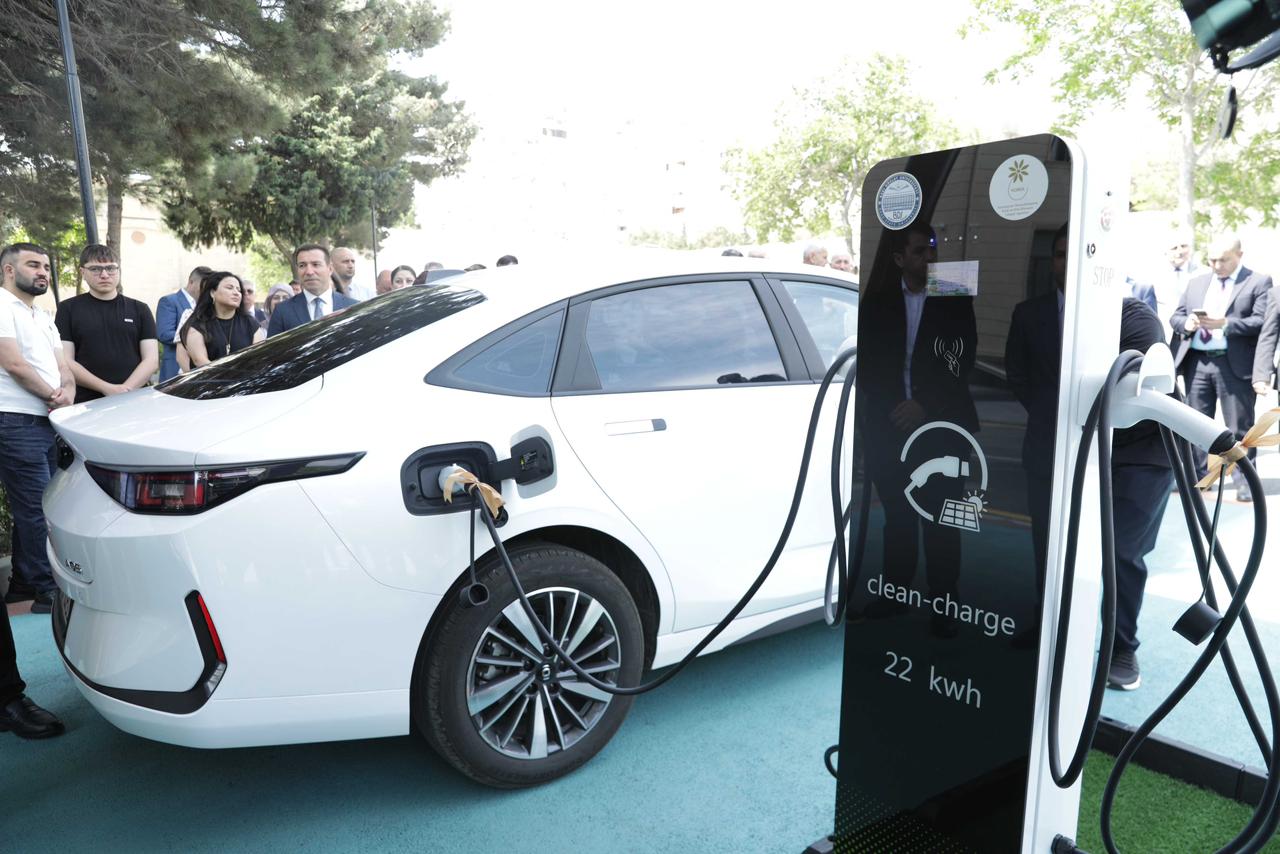
A dedicated mobile application allows users to remotely monitor charging status, track duration, and manage their vehicles’ connection in real time, improving efficiency and user experience.
Clean-Charge demonstrates how universities can pioneer practical climate solutions while supporting emerging mobility ecosystems. By proving that a fully renewable EV charging station can function reliably within an urban environment, BSU has produced a replicable blueprint for campuses, municipalities and private operators across the region.
As EV adoption grows and indirect emissions rise, BSU’s Clean-Charge system offers a tangible pathway toward truly zero-carbon transportation—redefining what sustainable electric mobility can look like in practice.