
Driving innovation in mood disorder research
Molecular research holds promise for developing targeted therapies to tackle the global rise in mental health challenges
Sponsored by Ajman University

Sponsored by

Sponsored by
Mental health conditions are a serious global health issue, and their prevalence has been steadily increasing since the Covid-19 pandemic. In 2025, the World Health Organization estimated that more than a billion people globally were living with mental health conditions.
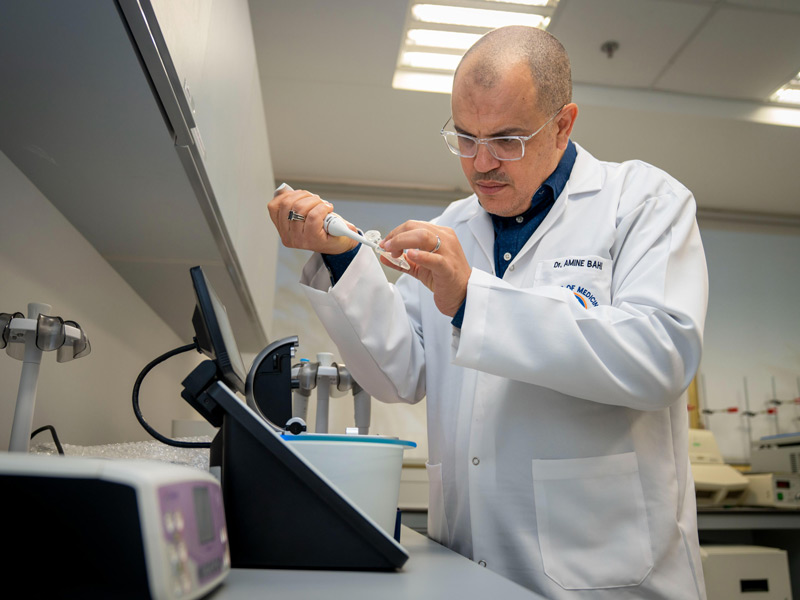
Researchers at Ajman University in the United Arab Emirates (UAE) are examining the molecular drivers of stress, addiction and mood disorders. “Innovative molecular neuroscience allows us to move beyond symptom-based treatment and towards mechanism-based interventions,” says Amine Bahi, associate professor in the Basic Medical Sciences Department at Ajman University’s College of Medicine.
“Despite major advances, mood disorders remain difficult to treat because their mechanisms are complex and multifactorial,” says Bahi. “We still lack a full understanding of how genetic vulnerability, environmental stress, epigenetic changes and neurocircuit dysfunction interact over time.”
For example, research hasn’t uncovered the precise molecular triggers that convert chronic stress into pathology, how a person’s biological sex makes them more or less susceptible to these conditions and how molecular changes translate into long-term alterations in neural networks and behaviours, he says.
Bahi’s research focuses on identifying molecular regulators that shape a person’s vulnerability and resilience to stress, addiction and mood disorders. Specifically, he is investigating the role of special enzymes called plasminogen activators, neurotransmitter-related genes and microRNAs (small non-coding RNA molecules that control gene expression by regulating the production of proteins from messenger RNA). Bahi aims to map causal pathways in the brain and pinpoint novel therapeutic targets.
His work has identified that specific molecular pathways, such as serotoninergic and/or dopaminergic neurotransmission regulation, play a crucial role in stress-induced anxiety and depression. Bahi and colleagues selectively enhanced and suppressed these molecules in the brains of mice, successfully reversing depression-related behaviours, reducing anxiety and dampening the brain’s reward system for alcohol and psychostimulants such as cocaine and methamphetamine.
“These findings demonstrate that in preclinical models, precise molecular interventions can significantly shift behavioural outcomes, offering promising avenues for targeted psychiatric therapies,” Bahi says. “By identifying the precise molecular drivers of stress, addiction and mood disorders, we can develop therapies that modify underlying pathology rather than simply managing symptoms.”
Technologies such as gene-based tools, viral delivery systems and microRNA modulation offer transformative potential for personalised psychiatry, he notes. “These advances can lead to safer, more effective treatments and contribute to improving mental health outcomes worldwide – especially in regions where current therapies fall short.”
Bahi recognises the role Ajman University has played in supporting his research. Established in 1988, Ajman University is one of the UAE’s leading higher education institutions, which emphasises research, innovation and career readiness across its nine colleges. “The university fosters a strong research culture by providing grants, laboratory facilities and dedicated support for multidisciplinary projects,” says Bahi. He adds that his projects were supported by internal grants and “reflect the institution’s commitment to enabling meaningful, translational research”.
The university encourages innovation in neuroscience and biomedical sciences through funding mechanisms, collaborative opportunities and access to advanced technologies. “This environment enables researchers to pursue high-impact work, mentor students and contribute to global scientific progress,” Bahi says.
Find out more about Ajman University.