
Dental education needs to keep pace with technological developments
Ajman University integrates technology and blended learning to ensure its graduates are ready for the modern workplace

Sponsored by Ajman University

Sponsored by

Sponsored by
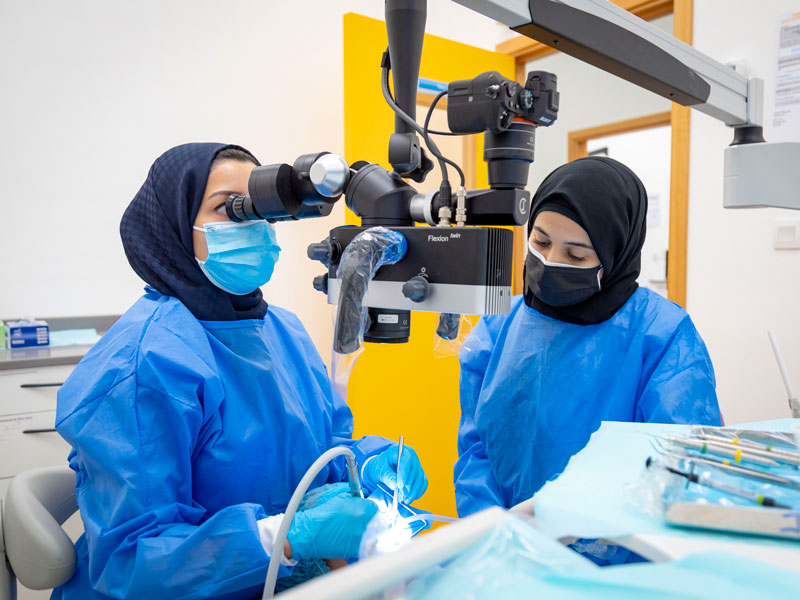
Technological innovation has driven significant changes in dental education and practice in recent years. Technologies such as intraoral scanners, computer-aided design and manufacturing, digital imaging, and patient management software are now common in dentistry. It is crucial to integrate modern technology into dental education to meet current clinical standards and keep up with rapid technological advancements, says Muhammad Sohail Zafar, professor at the College of Dentistry at Ajman University in the United Arab Emirates (UAE).
Ajman University’s graduates need to not only be digitally literate but also resilient in the face of technological change, says Zafar. Established in 1997, the College of Dentistry was the first dental college in the UAE. It is now the largest dental hospital in the country and a leading institution with nearly 1,000 students and trainees.
“Modern technology must be integrated into dental education to fulfil the dynamic and changing learning needs of dental students,” says Zafar. To support its learners, Ajman University combines online and in-person teaching and learning in a hybrid model across its various programmes, including dentistry.
Zafar says that blended learning has boosted students’ learning outcomes and performance, particularly in practice-based courses that encourage self-directed learning. “The flexibility of online learning components allows students to access materials at their own pace and contributes to academic achievement,” he says. “Self-directed learning motivates students, enhances their knowledge retention and psychomotor skills, which are vital for dental professionals.”
The integration of online modules and recorded lectures enables students to review complex topics multiple times as needed. “Interactive tools such as digital simulations and virtual and augmented reality allow students to practice procedures in a risk-free environment, enhancing their confidence before working on real patients,” Zafar says.
However, implementing blended learning comes with challenges. It requires an uninterrupted internet connection, appropriate electronic devices and suitable learning management systems. Common obstacles can include faculty reluctance towards adopting e-learning modalities, the need for more infrastructure support and the rapid development of digital and AI tools. Students and faculty need support to keep pace with fast-developing technology. Some students also struggle to immerse themselves in e-learning environments and require more supervision and support.
“Institutions need to take specific steps to address common technological barriers to blended learning adoption,” says Zafar. “Collaborative efforts are needed to engage all stakeholders, including students, instructors, technical staff and administrators.”
An important advance would be to develop standardised frameworks for using blended learning in clinical education, merging instructional methods with learning theories and principles. Universities also need to regularly update their curricula “to address the dynamically changing needs of learners and reflect the measures taken to incorporate newly developed technologies”, Zafar says.
Find out more about Ajman University.