
From classroom to community: how Ajman University is building a culture of sustainability
Ajman University prepares graduates to join a climate-conscious workforce by weaving sustainability into the university’s curriculum, culture, research and community engagement
Sponsored by Ajman University

Sponsored by
Sponsored by
Sustainability influences every aspect of a university, from day-to-day operations and strategic planning to academic research, curriculum development and community service. Fares Howari, dean of the College of Humanities and Sciences and director of the general education programme at Ajman University in the United Arab Emirates, has spent more than 25 years at the intersection of environmental science, engineering, policy and education. An advocate of a holistic approach to sustainable impact, he believes that sustainability is as much about long-term organisational culture as it is about policy and strategy, and that it must live in an institution’s everyday practice, not just its strategy documents.
“There are a lot of resources and expertise at universities,” says Howari. “But they must do their best to make any sustainability effort part of their culture, across student life, research activities and innovation. This will move things forward and bring genuine impact.”
Ajman University has embedded sustainability into its curriculum, with its guiding principles inspired by the United Nations’ Sustainable Development Goals (SDGs). The university’s courses are specifically aligned with the SDGs promoting health and well-being, affordable and clean energy, sustainable cities and communities, climate action, decent work and economic growth, and global partnerships. This cross-disciplinary commitment means sustainability is not confined to a single department or programme – it is woven into the academic experience of every student regardless of their field of study.
While governments and industry have roles to play, Howari describes higher education institutions as the main “change engines” for sustainability innovation. “Whether we are talking about social or economic change, universities are essential,” he says. “We create knowledge.”
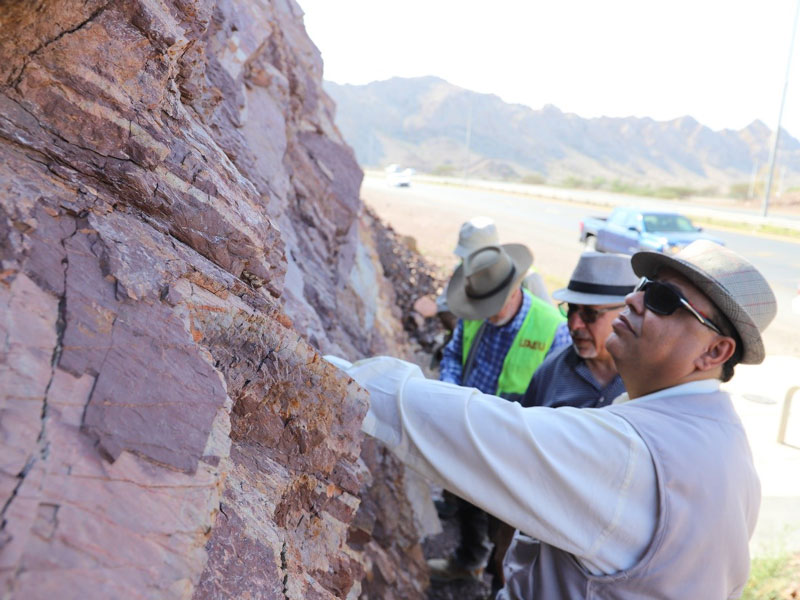
Ajman University offers a range of programmes focused on sustainability, with specialised courses on energy and the environment and a future skills class that teaches the competencies graduates will need in the workplace. These include communication, systems thinking, data literacy and ESG (Environmental, Social and Governance) reporting skills, which are increasingly demanded by employers across sectors.To affect change, graduates must know how to apply their knowledge in the real world. The university offers students from all disciplines opportunities to learn about sustainability concepts and are encouraged to critically evaluate them in interdisciplinary contexts.
“One of the courses we offer to students across the university educates them about population dynamics and how that will impact already pressurised natural resources,” says Howari. “We break down natural resources into different classes, such as living, non-living, water, air and soil, and we talk about how to deal with the pressures on them. We make sense of it by talking about the economics behind it.”
Howari notes that his students are interested in learning how they can make the world a better place, and the skills they are developing in the classroom are transferrable to the workplace. Similarly, he is hopeful that university collaborations can be a force multiplier for innovation in teaching and research.
“It is crucial that universities design and implement sustainability initiatives that translate to meaningful action,” says Howari. “It is not just for reporting or ranking. Good practice should diffuse from the campus into the local community.”
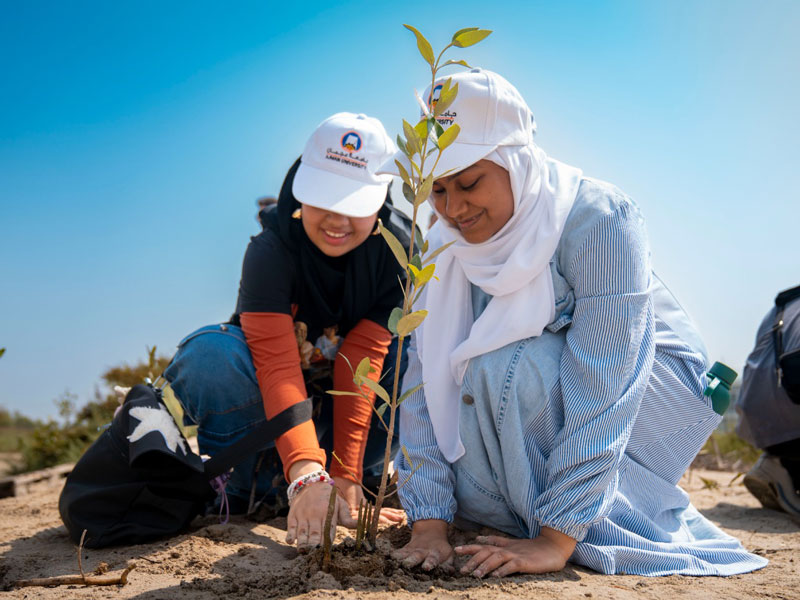
Case in point is the Mangrove Planting Project by Ajman University’s Office of Sustainability, which brings together local volunteers from all walks of life to plant mangrove saplings in Ajman’s tidal flats. Mangrove trees are carbon-sequestration powerhouses, which means the thousands of trees planted as part of the project has the potential to absorb a significant amount of carbon dioxide over their lifetimes.
As sustainability transitions from a strategic priority to a way of life for most institutions, Ajman University’s multi-stakeholder model, rooted in curriculum integration, research engagement and community outreach, offers a compelling blueprint for how universities can move beyond rhetoric and deliver lasting impact.
Find out more about Ajman University.