
Creating resilient buildings in extreme environments
At Abu Dhabi University, researchers are showing how buildings can contribute to people’s well-being and environmental health

Sponsored by Abu Dhabi University

Sponsored by

Sponsored by
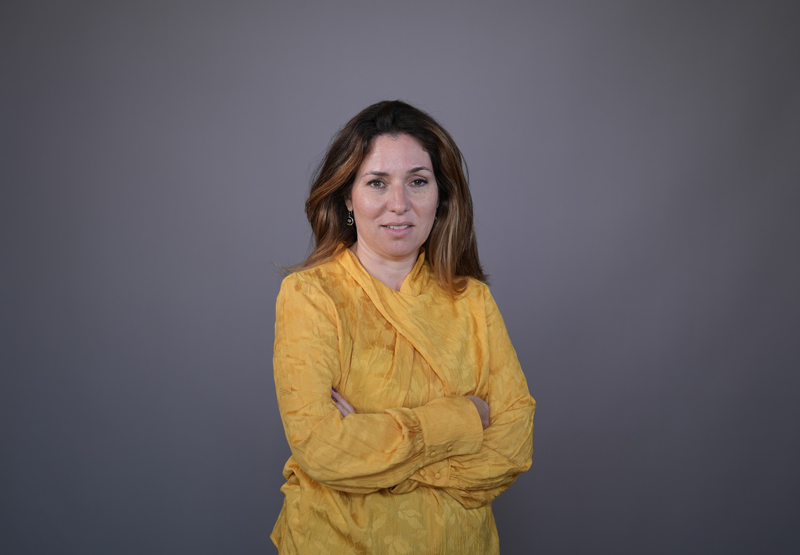
Architecture needs to embrace interdependence with its environment to promote a sustainable future, says Nadia Mounajjed, associate professor of architecture and design at Abu Dhabi University (ADU) in the United Arab Emirates (UAE).
Humanity is currently in a triple planetary crisis, endangered by the interrelated threats of climate change, biodiversity loss and pollution. In the face of this crisis, the disciplines of architecture and design are transforming, and professionals in these areas are now key agents in shaping a sustainable and resilient future for humanity.
“My research investigates how architecture can respond both critically and creatively to this crisis by aligning design practice with ecological thinking and human well-being,” Mounajjed says.
This is particularly important in a city like Abu Dhabi, which has one of the most extreme environments on Earth, Mounajjed says. It is an arid desert with scarce water, high temperatures and fragile ecosystems. “This context compels us to reconceptualise the built environment not as a passive consumer of resources, but as an active agent in ecological and social regeneration,” she says.
The country has launched several initiatives to promote sustainability, including Estidama, which means “sustainability” in Arabic. Estidama is the city’s green building and community development initiative. Launched in 2010, it is a key element of the Abu Dhabi Vision 2030 strategy and mandates minimum standards for developments in Abu Dhabi.
Mounajjed says her research “aligns with these frameworks by examining how design can move beyond regulatory compliance toward genuine transformation”.
For example, her recent study into desert ecologies and the architecture of reciprocity explores how architecture can operate within, rather than against, desert ecologies. The idea is that buildings and the environment are interdependent, and the built environment must respond to the natural environment. Buildings should function “less as autonomous entities and more as responsive systems embedded within broader ecological contexts”, she says.
Other projects include integrating agriculture and buildings to support local food production and investigating the link between the built environment and well-being. “The overarching aim is to redefine architectural agency in the face of planetary crisis, transforming buildings from extractive structures into responsive systems,” she says. Another aspect of her research investigates the link between accessibility and inclusive design.
“Collectively, these lines of inquiry explore how design methodologies such as accessibility, modularity, circular production and adaptive reuse can recalibrate architecture’s environmental footprint while expanding its social purpose,” she says.
Mounajjed is currently part of a large research project with collaborators from architecture, health sciences and urban resilience, as well as international design firm Perkins&Will. A key focus is building-integrated agriculture.
“By integrating food production systems into architectural elements – such as rooftops, facades, atria, podiums and courtyards – building-integrated agriculture transforms built structures into active contributors to urban well-being and resilience,” she says.
“Within the UAE’s arid climate and dense urban fabric, this research offers tangible strategies for improving food security, advancing circularity and supporting community health and well-being,” Mounajjed says. Through such research, design can be framed as “not merely an aesthetic practice, but as an instrument for systemic change and sustainable urban futures”.