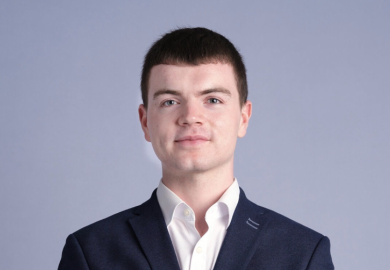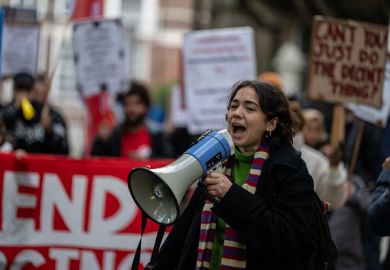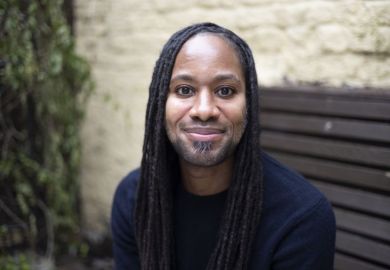
UCL vice-chancellor Michael Spence recently told a parliamentary select committee that “universities are not players in debates: we are the forum for the debate”.
Against that, in a 2025 essay titled “Universities Can’t Be Politically Neutral, but They Can Be Pluralistic”, Enzo Rossi of the University of Amsterdam argued that “as scholars delve into research that challenges existing paradigms or exposes injustices, they inherently engage in political activity. Therefore, the line between scholarship and activism becomes blurry, if not altogether non-existent”.
Both are speaking at an event a group of us from the University of Edinburgh have organised to explore the range of views in this most urgent of debates: how do we deal well and constructively with conflict on campus?
These days, we hear passionate advocacy for freedom of speech within the law – which often comes alongside a view of the university as a neutral forum. But we hear equally strident warnings about the danger of permitting speech that could cause harm to staff and students – which typically reflects scepticism about the possibility of institutional neutrality and stresses the importance of making the world a better place, in line with the university’s supposed values.
The desire to entertain limits on freedom of speech stems from acute sensitivity towards biases that have stubbornly accumulated in higher education over the years. Despite all the work put in to widen participation, universities still overserve the middle class. There is still an imbalance of men and women in STEM and a persistent attainment gap between white and ethnic minority students.
Therefore, the argument goes, the sensitivities of the disadvantaged on campus should prevail over the kinds of “bothsidesism” inherent in debate and curricula that serve to perpetuate the wider social injustices from which their disadvantages arise.
Academic freedom, it is argued, comes with duties – and those duties include not promoting views that “denigrate others and diminish their rights”, as one staff member put it to me recently. There need to be limits on the expression of views that breach “dignity and respect at work and study”, as many of the relevant policies are headlined.
Against this is a more absolute view of the importance of free speech related to the core purpose of a university. In England, the Office for Students states in its regulatory guidance that “the core mission of universities and colleges is the pursuit of knowledge. Free speech and academic freedom are fundamental to this purpose. Without free speech there are no new ideas. There is no productive debate. There is no social progress. There is no challenge to conventional wisdom. Even where conventional wisdom reflects truth, it must be open to criticism and discussion”.
On this view, what may have come from a worthy desire to safeguard minorities from discrimination has, over time, transformed from the removal of blocks to minority talent into a set of prohibitions on speech deemed to be harmful, inhibiting robust discussion and debate and compromising the purpose of academia.
Moreover, too often such prohibitions are based not on objective analysis of harm but on a subjective perception of hurt. Offence, advocates of this view argue, is confused with harassment, disagreement with hostility and difference of view with a lack of virtue.
The consequences of these divergent perspectives are deeply damaging to the core purpose of a university. Because before anyone even gets to arguing about the right and wrongs of the issues, they can’t even agree on how to disagree, with claims of bad faith on one side and wilful harm on the other.
Our forum – held, appropriately, in Edinburgh, the city of the Enlightenment – will attempt to find a way through this impasse by pulling together the widest range of views on the free speech issue, and many in between. Gratifyingly, a number of distinguished voices, experienced in different aspects of these conflicts on campus, have agreed to join us.
We will explore whether concerns around “dignity and respect” safeguard students and staff. Do they empower them to air their views and experiences? Or do they lead to justifying the restriction of some views as unacceptable?
Do demands that a university take a side on, say, the ethics of the firms in which its funds are invested reinforce its place in the world as a force for good? Or do they undermine institutions whose core purpose is built on viewpoint diversity?
Sensitivities often close down discussion on these topics. In a fractious political climate, it appears that institutions would rather keep muddling through than discuss these deep divisions openly and try to reach some kind of consensus. But surely we in higher education, of all sectors, can do better.
In reality, the OfS’ guidance makes the legal situation for English universities perfectly clear. But still the rancour remains, and the implementation is contested.
Although it is not a university’s job to come to a consensus about fractious issues, its job is at least to have the debate.
Simon Fanshawe is former chair of the University of Sussex and current rector of the University of Edinburgh.
- Conflict on Campus is a one-day event for the leaders of Scotland’s universities and those who care about higher education in Scotland to explore the underlying principles that shape institutional responses to contested and divisive issues. It takes place at the Royal College of Surgeons of Edinburgh on 21 October.
Register to continue
Why register?
- Registration is free and only takes a moment
- Once registered, you can read 3 articles a month
- Sign up for our newsletter
Subscribe
Or subscribe for unlimited access to:
- Unlimited access to news, views, insights & reviews
- Digital editions
- Digital access to THE’s university and college rankings analysis
Already registered or a current subscriber?