Recently, I met a mother in Nanning in southern China, who wanted what many parents want: admission to a respected international university relatively close to home for her son. His grades and projected English-language scores made entry to most Hong Kong universities unlikely, yet she was prepared to invest heavily in finding a pathway.
As the founder of an education consultancy serving students and young professionals across China, I have such conversations regularly. What has become increasingly troubling, however, is not parental ambition but the expanding industry that promises to manufacture the credentials needed to satisfy it.
Most Chinese families lack familiarity with international education and its admission requirements. When today’s parents were in high school over 20 years ago, domestic universities were the only option, and the only route was through the gaokao college entry exam. Out of a population of 1.3 billion in 2000, only about 40,000 students studied abroad – mostly for master’s degrees.
Hence, students intent on studying abroad often only realise when they are going through the application process that their English test scores are too low, their extracurricular interests too underdeveloped or real-world experience too limited for the courses and universities they had initially selected (based almost entirely on university rankings).
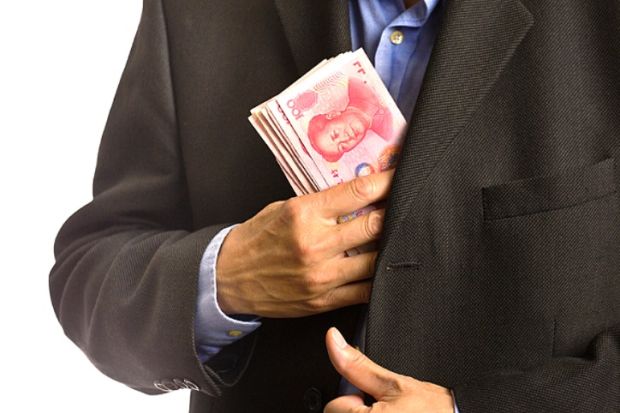
At this point, shortcuts become dangerously appealing. Behind many successful applications to overseas universities lies a little-discussed ecosystem of consultants, brokers and test manipulators, who construct fraudulent academic profiles designed to impress admissions officers rather than reflect genuine student achievement.
The scale of this “merit manufacturing” industry is staggering. I consulted two independent counsellors about getting the student from Nanning into a Hong Kong university for spring 2027 admission, with one condition emphasised: “no falsification in the application.” But they both said that this condition meant it would be impossible.
I have known one of the counsellors for years and collaborated with him on multiple cases before the pandemic. He built his reputation securing admissions to top universities even for students with low GPAs. But our collaboration ended when he asked me to provide answers to the TOEFL Home Edition speaking test, the questions for which he had somehow obtained two hours before the exam. The idea was that the students would read my answers aloud during the non-proctored, remote exam (which, incidentally, is no longer accepted as proof of academic ability).
Still, I asked him about the Nanning student – and he confirmed that Hong Kong admission would require falsified scores. He described two options. One was to install software on the student’s device, which would display real-time answers during the SAT exam – which students can now take in a testing centre via an app on their personal laptops. Still, he conceded that this came with a high detection risk, which is why it only cost about £4,500.
The more expensive option (around £9,000) would be to send the student to one of the test centres with which the counsellor has a corrupt relationship, in countries such as Indonesia and the Philippines. When the student has done the test on site, a predetermined score appears on their screen instantly, regardless of their actual performance.
This conversation echoed another I had recently with the founder of a high-end agency in Shenzhen Bay. Its luxury office sits in Nanshan’s most expensive district – paid for by its offer of “guaranteed admission” to top international universities for between £170,000 and £220,000 (enough to cover a full year’s rent). The existence of this service reflects a deeply rooted parenting culture among high-profile families: investing heavily to secure lifelong security for their children. Proudly, the agency’s founder showed me a medal of gratitude awarded to him by a father whose invitation to China’s military parade at Tiananmen Square last September indicated that he was extremely well connected.
Yet fraudulent university entry fuels cognitive dissonance in students. Despite being praised by parents and peers, they feel like impostors. More seriously, every forged transcript, purchased test score and fabricated extracurricular profile weakens the foundation on which higher education depends: trust.
Universities cannot function if credentials no longer reflect capability. And students cannot thrive if admission becomes a contest of manufactured appearances – because corrupt promises are more profitable to admissions counsellors than honest guidance.
Of course, those admitted without merit aren’t guaranteed to fail: a parallel flaw in the system enables ongoing academic outsourcing – students paying others to complete assignments and exams for them. But sometimes the money for such services runs out and the students are exposed as academically unprepared. Media reports suggest that this is happening increasingly, and it helps explain why many graduates of strong academic programmes overseas struggle to find jobs back in China: they lack the skills those programmes were meant to deliver.
The solution lies in strategic cooperation. Western universities should partner directly with prestigious international schools, vetted agencies and trusted Chinese institutions to establish direct admission pathways. These partners must be empowered to do what they do best: identify and prepare genuinely qualified candidates.
This way, the student pipeline to corrupt agencies would dry up, universities would gain reliable access to well-prepared students, and high-potential students would receive opportunities aligned with their abilities. Meanwhile, average students, like the one in Nanning, would avoid misleading choices and unrealistic expectations.
By contrast, if overseas university admission remains something that Chinese students can buy rather than earn, then employers lose faith in overseas programmes. And so, then, will Chinese students – both the fraudulent and the legitimate ones. The consequences for Western universities’ bottom lines is obvious.
Sabrina Y. Wang is the founder of Aslan Education Planning (AEP), a Shenzhen-based education consultancy dedicated to supporting international students and young professionals in achieving academic and career excellence.
Register to continue
Why register?
- Registration is free and only takes a moment
- Once registered, you can read 3 articles a month
- Sign up for our newsletter
Subscribe
Or subscribe for unlimited access to:
- Unlimited access to news, views, insights & reviews
- Digital editions
- Digital access to THE’s university and college rankings analysis
Already registered or a current subscriber?