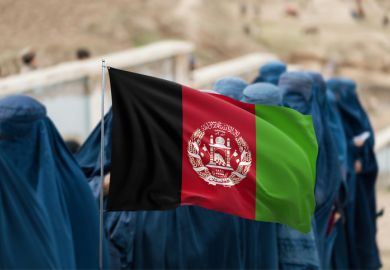
Afghan nationals enrolled in medical and dental programmes in Pakistan have been ordered to leave the country, as the war between Pakistan and Afghanistan rumbles on.
At the start of September, the country’s medical regulator, the Pakistan Medical and Dental Council (PMDC), issued a directive ordering universities and colleges to send enrolled Afghan students home. Universities were also barred from admitting new Afghan students in the academic year.
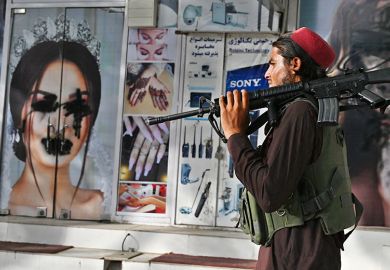
War broke out between Pakistan and Afghanistan in late February 2026, after Pakistan launched airstrikes on Islamic militants in Afghanistan. Pakistan accuses the Afghan Taliban of offering support to the Pakistani Taliban and allowing it to operate in Afghanistan, a claim that the Afghan Taliban repeatedly denies. Those initial strikes have since escalated into a full-scale military operation involving air and ground attacks. Trade between the two countries has ground to a halt.
In justification of its order for Afghan students to leave the country, the PMDC said that Afghan students enrolled in Pakistani medical or dental institutions were not registered with the country’s medical regulator. Of the more than 200 Afghan medical and dental students in Pakistan, only 22 have been registered with PMDC, but Afghan students said they were not told to register, and Afghan scholars have argued the onus was on the regulator to register students.
Many of the Afghan students were awarded scholarships by the government of Pakistan under the Allama Iqbal Scholarship Programme.
Several court hearings have offered temporary relief for Afghan students facing deportation. On 11 September, Lahore High Court suspended the implementation of the PMDC directive upon hearing petitions from Afghan students. And the Islamabad High Court recently suspended an expulsion order in the case of an Afghan doctor, allowing him to continue his postgraduate training. The next court hearing is scheduled for 18 September.
Speaking in a personal capacity, Hamid Khattak, who runs a pathway college in Australia, told Times Higher Education that: “In my discussions with colleagues in Pakistani academia, there is a strong view that these students should be allowed to complete their studies.
“Education is a fundamental human right, and I believe their circumstances should be considered with compassion. I am particularly concerned about the female students, who may have very limited (to no) opportunities to continue their education if they are required to return to Afghanistan.”
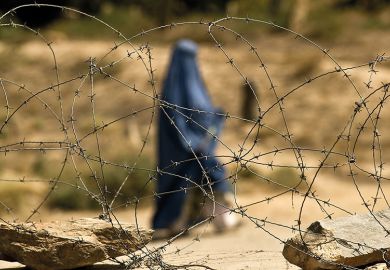
Women are banned from studying in secondary schools and universities in Afghanistan, and they also face severe restrictions on their ability to work.
Bilal Gilani, executive director of research agency Gallup Pakistan, told Times Higher Education that the expulsion of hundreds of thousands of Afghans is part of a suite of measures, including trade restrictions, that “form part of a broader attempt to compel the Taliban government to change its position”.
He added that Pakistanis largely view the airstrikes as a justified security measure against perceived cross-border threats. According to a survey conducted by Gallup & Gilani Pakistan at the end of last year, 77 per cent of Pakistanis who were aware of the border dispute supported the recent airstrikes in Afghanistan.
“In my view, Pakistan’s approach towards Afghanistan increasingly reflects a strategy of applying economic and social pressure to secure cooperation on its security demands,” he said.
He said sending people back to “an already fragile economy places additional pressure on employment, housing and public services”, and he thinks Pakistan is using that to “encourage the Taliban government to take Islamabad’s demands more seriously. I see the Afghan students issue as another extension of this approach. Students are becoming a further source of leverage in a wider dispute between the two governments.”
But Liz Robinson, CEO of Charmaghz, an organisation that runs online education programmes for Afghan women and girls, cautioned that if the Pakistani authorities proceed with expelling Afghan medical and dental students, it would be “the tragic closure of yet another higher education pathway for Afghan women”.
“This would not only dramatically alter the life and career trajectories of the current Afghan women students enrolled in Pakistani medical universities – including potentially putting them at risk if they are deported to Afghanistan – but also destroy a source of hope for Afghan girls and young women, for whom studying in Pakistan could be one of their last options to become a doctor.”
Former Afghan Chevening scholar Naimatullah Zafary called on the global education and medical communities to “speak with one voice” on the issue.
“I hope they will join us in calling for exceptional leave to remain, allowing these women to continue to live, study and work where they are free and safe to do so.”
Register to continue
Why register?
- Registration is free and only takes a moment
- Once registered, you can read 3 articles a month
- Sign up for our newsletter
Subscribe
Or subscribe for unlimited access to:
- Unlimited access to news, views, insights & reviews
- Digital editions
- Digital access to THE’s university and college rankings analysis
Already registered or a current subscriber?