Browse the latest results of the Times Higher Education Sustainability Impact Ratings
Across Africa, sustainability is no longer an abstract concept; it is a lived reality. From climate change and environmental degradation to food systems and urban pressures, young people are experiencing these challenges first-hand. At the All-Africa Students Union (AASU), we recognise that students are not just beneficiaries of sustainability efforts; they are central to shaping Africa’s green and climate-resilient future.
We want students to be equipped, empowered and positioned as leaders in sustainability and climate action. Through our network of national student unions across 54 countries, we are working to ensure that sustainability is not only understood but actively driven by students across the continent.
Driving student engagement
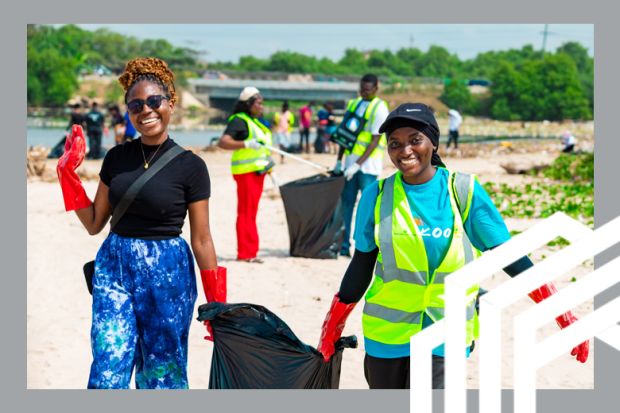
The climate action and environmental sustainability agenda is a priority area in AASU’s work. Our initiatives include tree-planting and climate advocacy campaigns at basic and secondary schools, aimed at building early awareness and fostering environmental stewardship, as well as student-led participation in World Cleanup Day beach and community clean-up exercises, which promote civic responsibility and grassroots environmental action. Through the Eco Ambassadors Training Workshop, we are developing a new cadre of “climate student experts”, equipping young leaders with the knowledge and skills to drive climate action within their institutions and communities.
We are also working on more structured and policy-oriented interventions. The Green Office Africa Pilot Project focuses on embedding sustainable practices within educational institutions by promoting resource efficiency and environmentally responsible campus operations.
Meanwhile our collaboration on the Oxfam Climate Education Project strengthens advocacy for climate-responsive education, supporting efforts to institutionalise sustainability within curricula and policy frameworks.
We believe sustainability in Africa cannot be driven without the active participation of young people. Students are not only the leaders of tomorrow, they are the drivers of today’s solutions. That is why these initiatives focus on enhancing student participation, building capacity and driving the integration of sustainability into Africa’s education systems.
Student-led initiatives and impact
Across the continent, student-led sustainability initiatives are gaining traction. Through AASU’s platforms, students are leading environmental awareness campaigns, promoting green campus initiatives and advocating for policy reforms that support climate-responsive education systems.
Importantly, these initiatives are often locally driven and context-specific. Students are developing solutions that respond to their immediate environments, whether through community engagement, advocacy for sustainable practices or participation in policy dialogue at national and regional levels. We are seeing a shift from students being participants in sustainability conversations to becoming leaders of initiatives that are shaping real outcomes in their communities.
Challenges in the African context
Despite this progress, significant challenges remain. Many education systems across Africa are still not fully aligned with sustainability priorities, and there are gaps in integrating green skills into curricula and training programmes. Limited funding, infrastructure constraints and unequal access to resources, particularly digital tools, continue to limit the scale of student-led initiatives.
In addition, sustainability work in Africa often intersects with broader socio-economic challenges such as unemployment and inequality. For many students, engaging in sustainability efforts requires balancing immediate livelihood concerns with long-term environmental goals.
However, these challenges also present an opportunity to rethink how sustainability is approached by prioritising locally relevant solutions and strengthening partnerships across sectors.
The way forward
We believe that the future of sustainability in Africa depends on how effectively we harness the energy and innovation of young people. This requires moving beyond symbolic engagement and ensuring that students are meaningfully included in decision-making processes at institutional, national and continental levels.
Our focus going forward is on strengthening student capacity, advancing climate education and building partnerships that support youth-led sustainability initiatives. By working with governments, educational institutions and global partners, we aim to create systems that enable students to contribute fully to Africa’s sustainable development.
Ultimately, Africa’s sustainability transition will be shaped by its young people. The responsibility of bodies such as AASU is to ensure that they are not only prepared but empowered to lead.
Belinda Mensah is programmes officer, climate action and environmental sustainability unit, and Divine Edem Kwadzodeh is secretary general, both at the All-Africa Students Union (AASU).
See the full results of this year’s Sustainability Impact Ratings
Register to continue
Why register?
- Registration is free and only takes a moment
- Once registered, you can read 3 articles a month
- Sign up for our newsletter
Subscribe
Or subscribe for unlimited access to:
- Unlimited access to news, views, insights & reviews
- Digital editions
- Digital access to THE’s university and college rankings analysis
Already registered or a current subscriber?