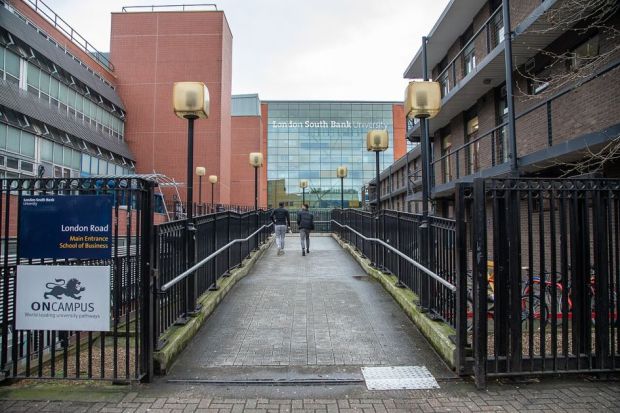
The academic workforce at London South Bank University is set to be divided into two “career pathways” in a move unions fear will “degrade the terms and conditions of all staff”.
Under new plans shared this week, the institution proposes to move many of its existing academics into a new “teaching and scholarship” role, with a focus on “outstanding teaching related activity, student success, and subject leadership”.
Others will be kept in a “teaching and research” position, with producing “high value research and enterprise” added to their responsibilities.
The University and College Union (UCU) said it feared staff who refuse to accept the changes will be “fired and rehired”.
New starters joining the university will also be employed via a subsidiary firm and prevented from being able to access the Teachers’ Pension Scheme, UCU said, adding that teaching-only staff also face losing the union’s current bargaining rights.
The university “also aims to increase the hours of both teaching and research academics without any commensurate rise in pay for either group”, the union added in a statement.
This would involve “ripping up long-standing local and national agreements that protect workload, overtime and the pay and grading structure”. The union also said the institution had failed to commit to remaining within national pay negotiations.
UCU said its members have voted unanimously to reject the proposal and “fight against the changes”.
“LSBU is putting academic jobs at risk unnecessarily and clearly wants to rip up national and local agreements that protect our members,” general secretary Jo Grady said.
She warned the university against forcing the changes “through under the guise of redundancies” and threatened to respond with strike action.
Tara Dean, the provost at the university, said the “financial challenges facing higher education have forced us to be bold and take a radical approach to meet the needs of our students and secure the university’s long-term future”.
“Our proposals protect and elevate our most important activity and bring a sharper focus to the business-critical teaching activities that most directly benefit our students.”
Dean said that the university was “protecting academic roles to focus on what’s most important to our students – delivering the highest-quality professional and technical teaching and contact time that we know changes lives”.
Register to continue
Why register?
- Registration is free and only takes a moment
- Once registered, you can read 3 articles a month
- Sign up for our newsletter
Subscribe
Or subscribe for unlimited access to:
- Unlimited access to news, views, insights & reviews
- Digital editions
- Digital access to THE’s university and college rankings analysis
Already registered or a current subscriber?