“Doing nothing is not an option,” according to the embattled vice-chancellor of the University of Nottingham as the institution embarks on another major restructure which could see more than 600 people leave.
After cutting 350 professional services staff posts last year, Nottingham is now looking to make a further 608 full-time job cuts, one of the largest university restructures seen in the current wave of redundancies. This comes after it reported an £85 million deficit in its most recent financial accounts – up from £17 million the year before.
Staff at the institution have been told that the cuts will be made gradually until 2030, subject to consultation with unions. The university said it would run out of money by 2031 if a major intervention was not made now.
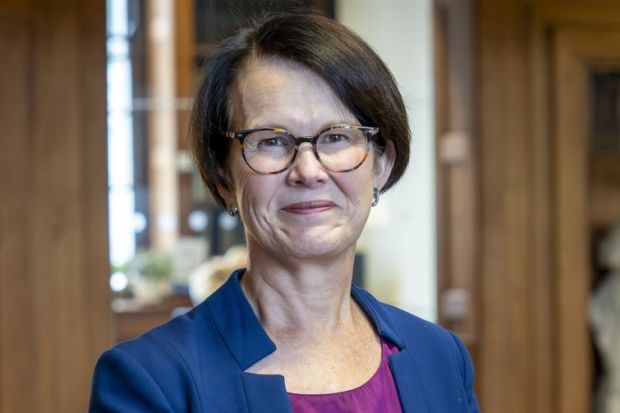
Speaking to Times Higher Education, Jane Norman, who has led the university on a permanent basis since January 2025, acknowledged the scale of the cuts and said that the impact on staff is “at the forefront” of her mind.
“I absolutely understand the scale of this change is never easy, and front and centre of my mind is the impact on staff around this. I know it’s a really difficult time for staff and [we’re] absolutely committed to being as transparent as we can with them, making sure staff have as much support as they possibly can.”
Norman attributed many of Nottingham’s financial woes to the wider challenges facing the sector, including rising inflationary costs, increased energy prices, and the “fairly static” domestic undergraduate fee.
“We are not immune to the financial challenges facing all universities, and we currently spend more than we earn, and we can’t continue to do that…‘Do nothing’ is not an option.”
The proposed job cuts are expected to hit the Faculty of Medicine and Health Sciences hardest, with more than 150 staff cut. This is followed by the Faculty of Arts, which will see 134 academic posts cut, social sciences at 108, sciences at 97 and engineering at 38.
As part of the cuts, the university announced in November that it is planning on closing 42 courses, including music and modern foreign languages courses, as well as programmes in child health, mental health, theology, education, microbiology and agriculture.
These decisions were made after a “real decline in students wanting to study on those courses over the last five to ten years”, Norman said, adding the university will instead focus on “what students want to study” and a greater focus on the university’s “strategic priorities”.
She added the university also “needs to be selective about the research we do”, saying: “This is a big change for our organisation, and I absolutely know that change on this scale is not easy, but we need to make these changes so that we are sustainable for future generations and continue to deliver excellent research.”
But Norman stressed that the institution’s transformation plan, Future Nottingham, represented more than just cuts. She said it will also see the university move to more “digital ways of learning”, will make its courses “more attractive”, with plans to adopt a new student success programme and “professionalise” student support, including mental health support.
The University and College Union (UCU) branch has argued that many of Nottingham’s problems are “self-inflicted”, including spending £80 million on its Castle Meadow campus in recent years, which has now been valued at £14 million.
The university is currently in the process of selling its King’s Meadow campus, and Norman said it will “possibly look” at selling the Castle Meadow site too, once the lease with its current tenant, Nottingham College, comes to an end.
The downsizing of estates follows changing student habits, she said. “Some of our campuses were bought at a different time when we talked differently and we worked differently. It was a pre-pandemic purchase when digital education was less of an issue.”
Overall, Norman believes that the changes are “exciting” and will future-proof the university through a transition period in UK higher education. While she stressed that she did not want to “minimise the adverse impact on staff”, she said the moment represents “huge opportunities” for the university.
“I think it’s a really interesting time in higher education…The world is changing, geopolitics is changing, and what students want is really changing. I think the universities that will survive and thrive are ones like ours that are taking a very proactive view of the environment, and thinking carefully about how they want to not just survive for the next couple of years, but to thrive in 10, 20, 30 years for the future.
“So actually it’s an exciting time for higher education, because I think there’s a real opportunity to shape our response and still stick with our core strengths of excellent research and excellent teaching, but make sure we do it in a way that’s modern, effective and fit for the future.”
Register to continue
Why register?
- Registration is free and only takes a moment
- Once registered, you can read 3 articles a month
- Sign up for our newsletter
Subscribe
Or subscribe for unlimited access to:
- Unlimited access to news, views, insights & reviews
- Digital editions
- Digital access to THE’s university and college rankings analysis
Already registered or a current subscriber?