Student-Centric Classrooms Driving Green Learning at PSAU
Prince Sattam bin Abdulaziz University (PSAU) is reshaping the higher education landscape in the Kingdom of Saudi Arabia and beyond through a student-centric and sustainability-focused strategy that permeate every facet of life at the university.

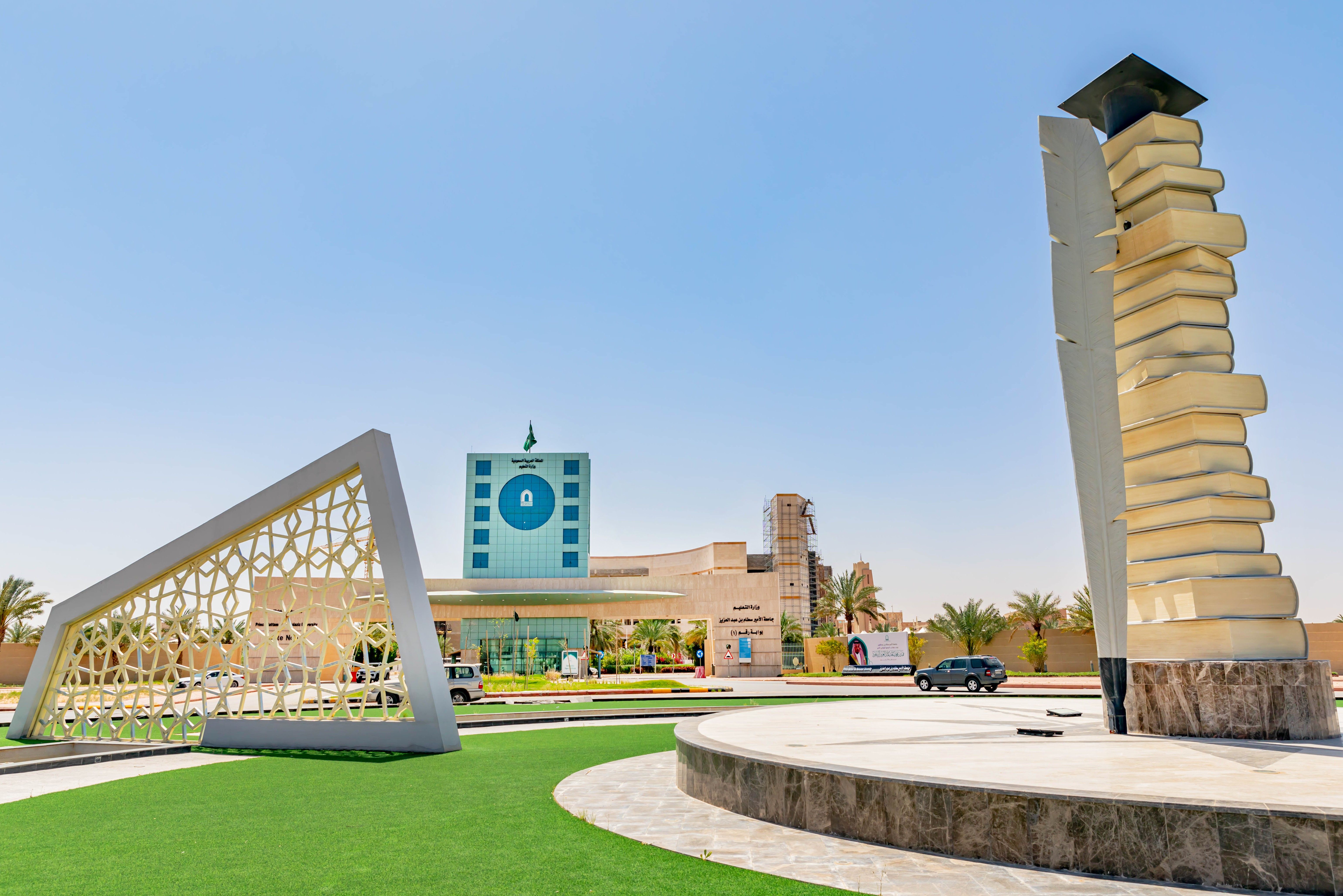
Prince Sattam bin Abdulaziz University (PSAU) is reshaping the higher education landscape in the Kingdom of Saudi Arabia and beyond through a student-centric and sustainability-focused strategy that permeates every facet of life at the university. Anchored in its 2030 plan and aligned with Saudi Vision 2030, the university has committed itself to producing entrepreneurial graduates who are equipped to lead, create jobs, and contribute to sustainable development. PSAU’s initiatives demonstrate an integrated approach where sustainability, employability, and innovation converge.
Student-Centric Learning
At the core of PSAU’s transformation lies its student-centric philosophy. Every student is supported by a dedicated academic advisor, ensuring personalised guidance from admission through to graduation. This support is coupled with project-based learning models that empower students to apply theoretical knowledge to practical, real-world challenges.
Industry partnerships strengthen this approach by providing students with opportunities to engage with sector experts, participate in internships, and receive mentorship that connects their learning directly to market needs. This alignment with real-world competencies ensures that PSAU graduates emerge not only with knowledge, but with the values, mindsets, and skills to succeed in diverse and entrepreneurial pathways.
Saleh Altamimi, who led the PSAU SAQR Falcon team to the 2025 Asia-Pacific and Middle East Regional Shell Eco-Marathon in Lusail, Qatar, reflected: “Through project-based learning, I gained not only technical knowledge but also the confidence to innovate under real-world conditions. Designing the SAQR Falcon, with its teardrop-inspired curves that optimise aerodynamics, gave us a tangible way to merge engineering precision with sustainability. Competing internationally showed me how creativity and teamwork can translate these design concepts into solutions for real sustainability challenges.”
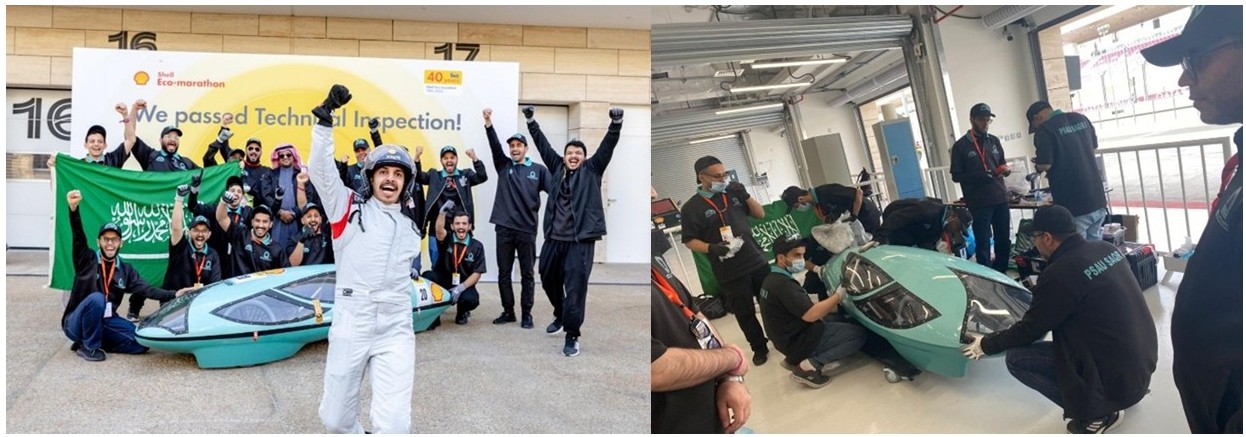
Image: PSAU's SAQR Falcon team at the 2025 Shell Eco-Marathon, Prince Sattam bin Abdulaziz University
Curriculum Redevelopment for Green Skills
PSAU has re-engineered its curriculum to ensure that sustainability and green skills are embedded across every discipline, every course, and every activity. Starting with the first year, PSAU’s curriculum introduces all students to sustainability principles, artificial intelligence, and entrepreneurship, equipping them with an understanding of their relevance across sectors. Courses integrate sustainability challenges such as renewable energy, waste management, and the circular economy, helping students build skills that match global green workforce demands. This approach reflects PSAU’s belief that sustainability should not be treated as an add-on but as a foundational element of education. By weaving green learning into every academic journey, PSAU ensures that its graduates are equipped to lead in the transition towards low-carbon economies.
Classroom Engagement and Innovation
PSAU has designed classroom experiences that are immersive, practical, and future-facing, whose key features include:
- Project-Based and Industry Collaboration: Students solve real challenges in partnership with industry, enhancing their employability and innovation skills.
- Visiting Lectureships: Visiting experts from academia and industry enrich learning with global perspectives.
- Micro-Credentials: Short, stackable courses are weaved into taught courses, complementing traditional curricula and equipping students with job-ready certifications in high-demand fields such as data science, entrepreneurship, and sustainability.
- Social Media Entrepreneurship: Students are encouraged to leverage digital platforms to promote projects, market their ideas, and generate income thereby cultivating entrepreneurial mindsets and digital fluency.
- Essential Skills: Students are introduced to foundational competencies such as public speaking, critical thinking, and prompt engineering—equipping them with the confidence, analytical ability, and digital literacy required for both academic success and professional impact.
Dana Almutairi, who showcased her group’s PSAU FATIMA footfall energy harvesting project at the 2025 Times Higher Education (THE) Global Sustainable Development Congress in Istanbul, Turkey, remarked: “Our classrooms became testbeds for sustainability. We engineered FATIMA, a system where every step generated clean electricity for streetlights and public spaces, supported by real-time data analytics that kept the system efficient. By engaging the community through gamified apps and proving that Saudi Arabia can lead in smart city innovation, we turned simple footsteps into a symbol of technological leadership and sustainable living.”
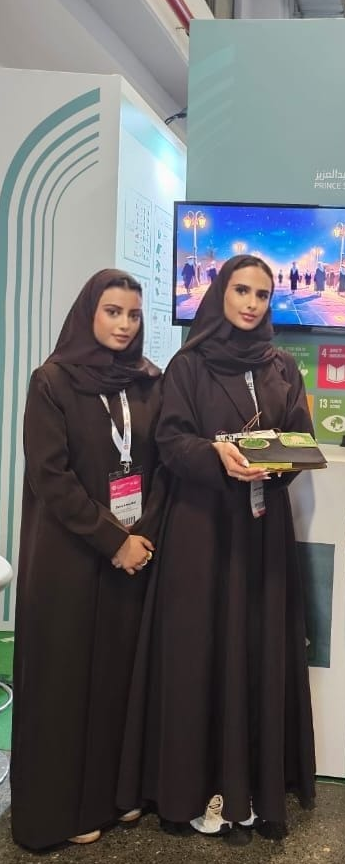
Image: Prince Sattam bin Abdulaziz University
Global Alignment and Leadership
PSAU’s initiatives are deeply connected to global movements in green education and skills development. By participating as a founding partner in the international green skills and learning network, the university is helping to shape global standards for preparing students for the future of work. As another example, alliances under its Global South Partnership (PSAU GSP) extend across Africa, Asia, and Latin America, where PSAU co-develops solutions in areas such as renewable energy, climate resilience, energy justice, and sustainable agriculture.
A defining feature of these collaborations is the active involvement of students from both PSAU and its partner institutions, ensuring that projects are not only academically robust but also student-driven. This approach reinforces experiential learning, cross-cultural exchange, and the co-creation of innovative solutions to shared global challenges. Through these international engagements, PSAU positions itself as a forward-looking institution that advances equitable, sustainable development while equipping its graduates with the global perspectives, networks, and green skills necessary for leadership in an interconnected world.
Supporting Saudi Vision 2030
PSAU’s strategy directly supports Saudi Arabia’s Vision 2030 priorities. By embedding sustainability and entrepreneurship in its curriculum, PSAU contributes to short and long-term goals of diversifying the economy, enhancing employability, and cultivating a generation of graduates capable of creating jobs. Initiatives such as project-based learning, micro-credential integration, and industry partnerships strengthen the university’s contribution to the Kingdom’s knowledge economy and its ambition to become a global leader in innovation.
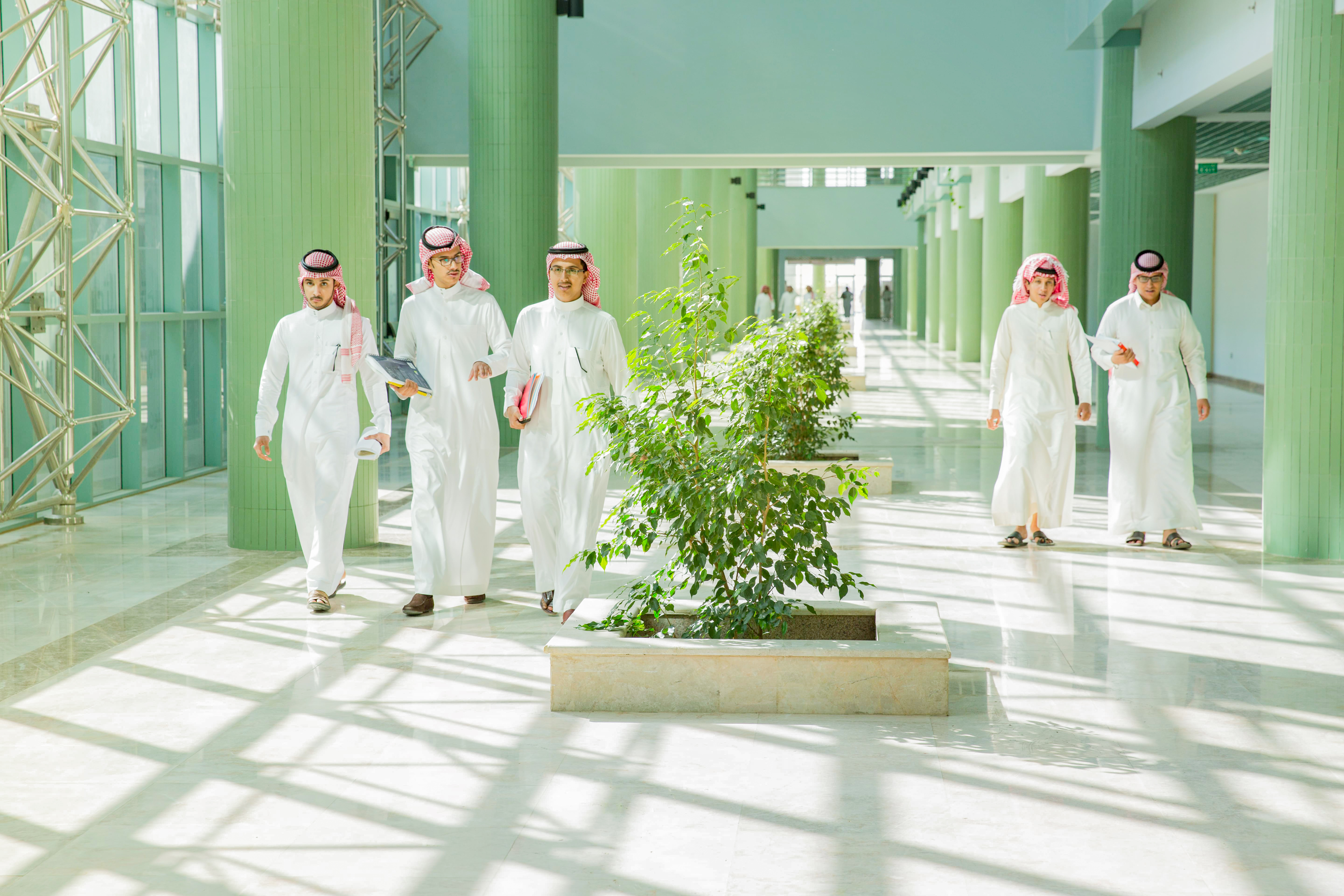
Image: Prince Sattam bin Abdulaziz University
Enhancing Graduate Employability
PSAU’s strategy shifts the paradigm from producing job seekers to developing job creators. Its students are encouraged to cultivate entrepreneurial mindsets, underpinned by sustainability and innovation. By engaging in practical projects, earning industry-recognised micro-credentials, and applying green skills to real-world challenges, PSAU students graduate as adaptable professionals and entrepreneurial leaders ready to shape the future.
Abdulaziz Alobaidi, who led the team that developed the PSAU FAZAA traffic management system presented at the 2025 THE GSDC in Istanbul, Turkey, added: “PSAU encouraged me to take an idea beyond theory. With FAZAA, we created a smart solution that could dispatch drones within minutes to document accidents, minimise congestion through real-time rerouting, and use holographic guidance to keep drivers safe. By integrating AI, IoT, and 5G into an intelligent mobility system, we demonstrated how technology can reduce accident severity, improve emergency response, and streamline legal processes. The university’s focus on entrepreneurship made me see myself not just as a graduate, but as a problem-solver.”
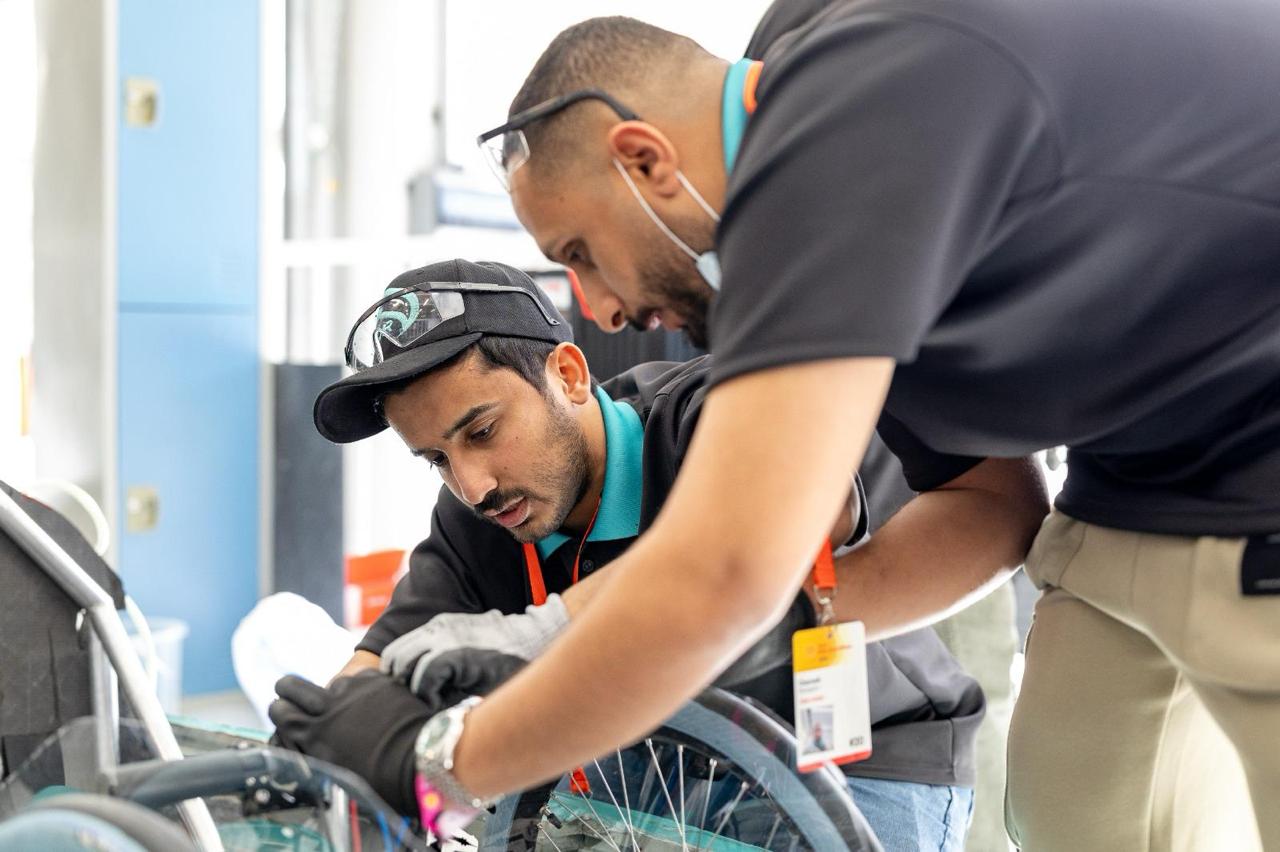
Image: Prince Sattam bin Abdulaziz University
Green skills as practice
Prince Sattam bin Abdulaziz University is pioneering a model of higher education that integrates student-centricity, sustainability, and global engagement. Through its curriculum redevelopment, innovative teaching practices, and strategic partnerships, the university is equipping its graduates to be employers and leaders rather than employees.
By transforming classrooms into laboratories for green learning and skills, PSAU ensures that students do not merely study sustainability as theory but experience it as practice. Its classrooms have become hubs where critical thinking, entrepreneurship, and advanced technologies converge to address pressing challenges in energy, mobility, health and wellbeing, and urban living.
The voices of its students—whether showcasing innovation on global stages, applying advanced technologies to local challenges, or reimagining energy in everyday life—demonstrate the tangible impact of PSAU’s strategy. By aligning with the Saudi Vision 2030 and global green learning efforts, PSAU is positioning itself as a catalyst for sustainable and entrepreneurial transformation both within the Kingdom and beyond.
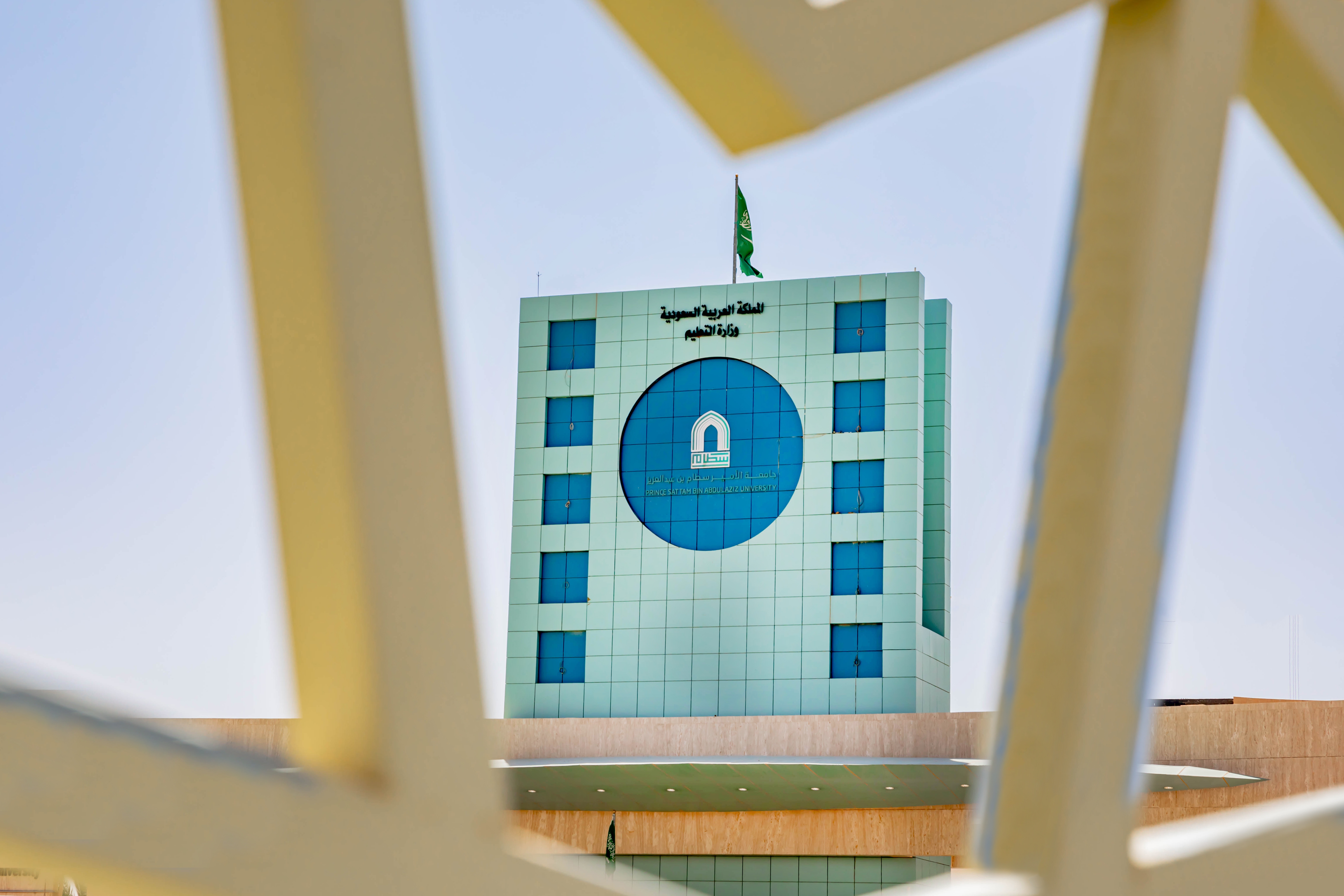
Image: Prince Sattam bin Abdulaziz University