Demonstrating Green Knowledge Acquisition & Green Skills Acceleration: The Role and Value of Assessment, Measurement, and Data Outcomes
Scott G. Blair, PhD, Content Development Editor, Sulitest Impact Jean-Christophe Carteron, Co-Founder, Sulitest Impact Aurélien Décamps, PhD, Co-founder, Sulitest Impact


Demonstrating Green Knowledge Acquisition & Green Skills Acceleration: The Role and Value of Assessment, Measurement, and Data Outcomes
Scott G. Blair, PhD, Content Development Editor, Sulitest Impact
Jean-Christophe Carteron, Co-Founder, Sulitest Impact
Aurélien Décamps, PhD, Co-founder, Sulitest Impact
Business as usual
Equipping students with 21st century knowledge and skills required for tomorrow’s jobs and matching them to market demands, sectoral labour force needs, and trends in the global economy—this is what universities, colleges, business and engineering schools have been doing quite effectively for several generations. Students expect higher education to make them employable via the teaching of both hard and soft skills, and both governments and industry invest in universities to supply workforce expertise and technical knowledge critical to business and the global economy. Universities, in turn, expect to attract the world’s top students, drawn as they are to the institution’s industry partnerships and record of alumni achievement and income. Everyone in the circle—student, university, and employer—maximizes benefit, sees significant return on investment, and gains valuable career and professional opportunities. What’s not to like!
Unfortunately, this process of placing ourselves and the students we teach outside of Nature has been one of the major drivers for our Earth crisis of climate change, biodiversity loss, and less-than-human-well-being. Key metrics alone on both planetary boundaries and progress towards the 17 UN Sustainable Development Goals—not to mention the images of extreme weather and fleeing climate refugees filling our daily news feed—indicate the many dangers of ignoring our urgent global social and environmental crisis.
Business as transition — Green Learning and Skills
What has, in fact, been so lacking in the response and ontological worldviews of student, university, and employer alike is the critical focus on green learning, green skills, green transition, and the green economy. And while each of these verdant terms perhaps calls out for greater definitional clarity and stakeholder consensus, we instinctively know what we are talking about—i.e., the knowledge, skills, and mindsets that help compel an individual to become deeply committed to building a sustainable future and making informed and effective decisions to that end. This means helping students develop a systemic understanding of how things actually work together in a complex and integrated manner, developing the capabilities to engage with a fast-changing environment. Teaching how the long term is not a succession of short terms, and the sum of individual interests does not necessarily equal the collective interest becomes critical for graduate to fit with the future.
For higher education, it means engaging with systemic change, whole institution approaches to sustainability, and transformative curricular revision across the disciplines. Education professionals need to develop a new green ethos for higher education, one that embraces sustainability literacy as the key outcome of the teaching and learning process within any educational activity. And of course, international green learning and knowledge assessment are at the heart of it.
Defining Green Learning and Skills
Speaking about “green learning” in terms of knowledge, skills, and mindsets, what exactly do we mean and how will we know students are gaining such learning? For the first question, the answer comes down to the act of thinking, valuing, and doing—easily remembered with the helpful head-heart-hand trinity of classic human development theory. For the latter question, the answer comes down to measurement and data—an effort to measure the outcomes of learning activities and become data-driven when improving curricula and learning activities.
When faced with societal-wide challenges (such as climate change) requiring both individual and collective behavioral change, a person’s cognitive capacity for sustainability is understood as a generalized individual ability to make qualitatively different choices and decisions that meet the challenge of—and accelerate a transition to—a sustainable future (UN Global Sustainable Development Report, 2019). This general ability is also referred to as sustainability literacy, i.e., the knowledge, skills, and mindsets that help compel an individual to become deeply committed to building a sustainable future and making informed and effective decisions to that end. Similarly, sustainability competency is defined as an individual disposition comprising a cluster of interrelated knowledge, skills, motives, and attitudes that allow the successful completion of a sustainability related task (Wiek, 2011, 2016; Redman and Wiek, 2021, 2022). In brief, sustainability competencies empower learners to embody sustainability values and embrace complex systems, in order to take or request action that restores and maintains ecosystem health and enhances justice, generating visions for sustainable futures (Bianchi, EU GreenComp, 2022).
Following these definitions, eight internationally recognized competencies are: systems-thinking, futures-thinking, values-thinking, strategic-thinking, interpersonal competency, intrapersonal competency, implementation competency, and integrated problem-solving competency. (Global Council for Science and the Environment, 2023)
For example, when business operations are exposed to the additionality of climate change impacts, ecosystem loss, and resource depletion, the value of green skills such as systems-thinking (particularly when combined with, for example, futures-thinking / anticipatory-thinking), becomes more apparent.
In short, students need to know about all eight of these sustainability competencies, what they involve, what elements are included within each, and what complementary and supporting knowledge is required to develop proficiency in each. Similarly, universities need to support faculty in developing dedicated curricular pathways, experiential learning activities, and innovative pedagogies that provide students with learning experiences that foster the development of such competencies in thinking, feeling, and engaging with others across cultures. Finally, if employers need employees who can implement complex business plans and who can engage in wicked problem-solving effectively— even amid complexity and incomplete information, then green skills are what they need most.
Measuring Green Learning and Skills
The development of green skills comes with the need to track and demonstrate the impact of learning, to guide strategy beyond slogans. Getting such data has often been a blind spot in designing impactful green educational strategies and outcomes. Indeed, universities and business schools embed into programming all types of curricular, co-curricular, and community-based learning activities designed to foster the development of green skills and competencies. But it has been devilishly hard to measure the actual impact of such activities on the green learning and sustainability literacy that is supposed to be the key outcome.
Recent instruments for measuring these outcomes, such as TASK™—The Assessment of Sustainability Literacy by Sulitest, has now been developed (Stough et al., 2025). TASK™ explores the multiple interactions between the domains of Earth science, the SDGs, and the levers of action and opportunity available to humans that make sustainability possible although, alas, still uncertain. With more than 75,000 students assessed with TASK™ s its launch in early 2023, more than 100 universities and colleges are now using these data to change the curriculum, guide strategy, and demonstrate impact.
Leveraging the power of data
With an extensive database on students’ progress toward sustainability knowledge, Sulitest is producing trends displayed in a report for the UN High level Political Forum. These trends can be used to inform and support strategies from higher education institutions to embed sustainability in their learning pathways.
For example, they reveal the continuum of sustainability learning over time within both Bachelor and Master programs.
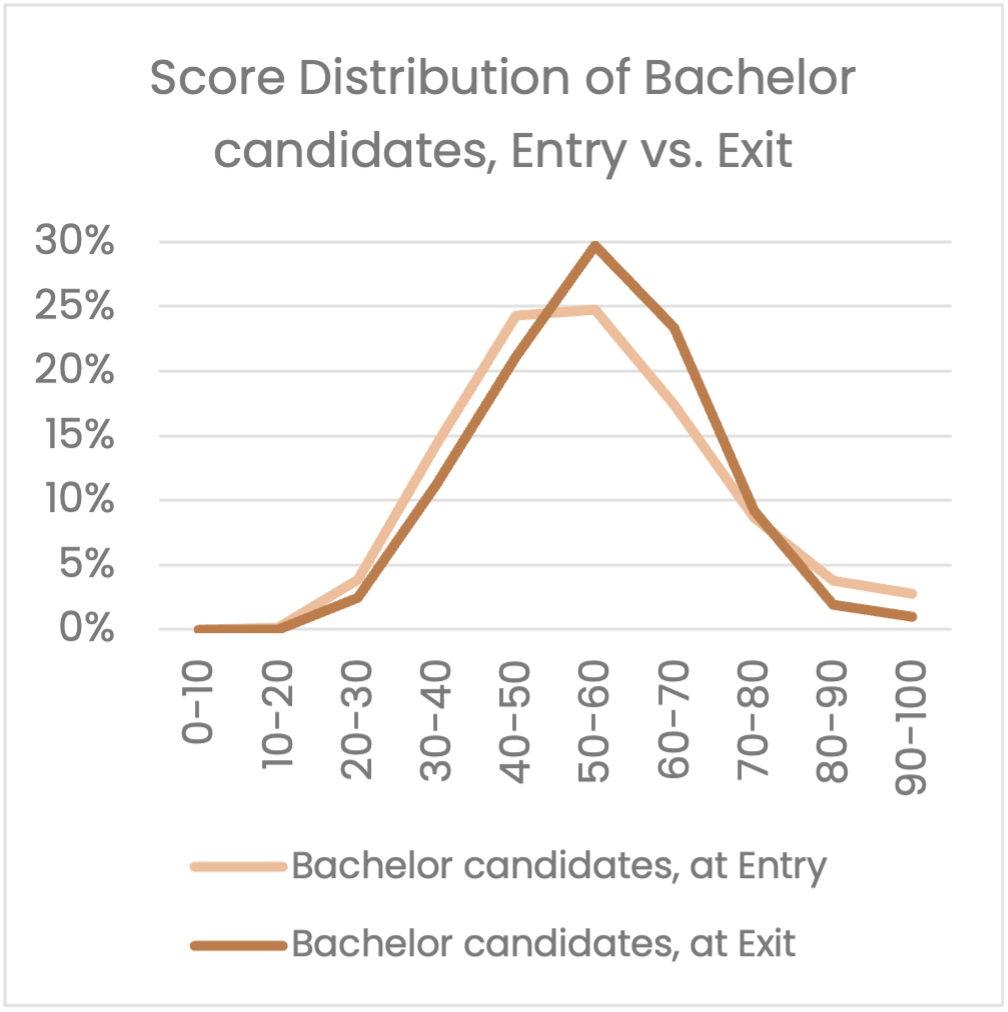
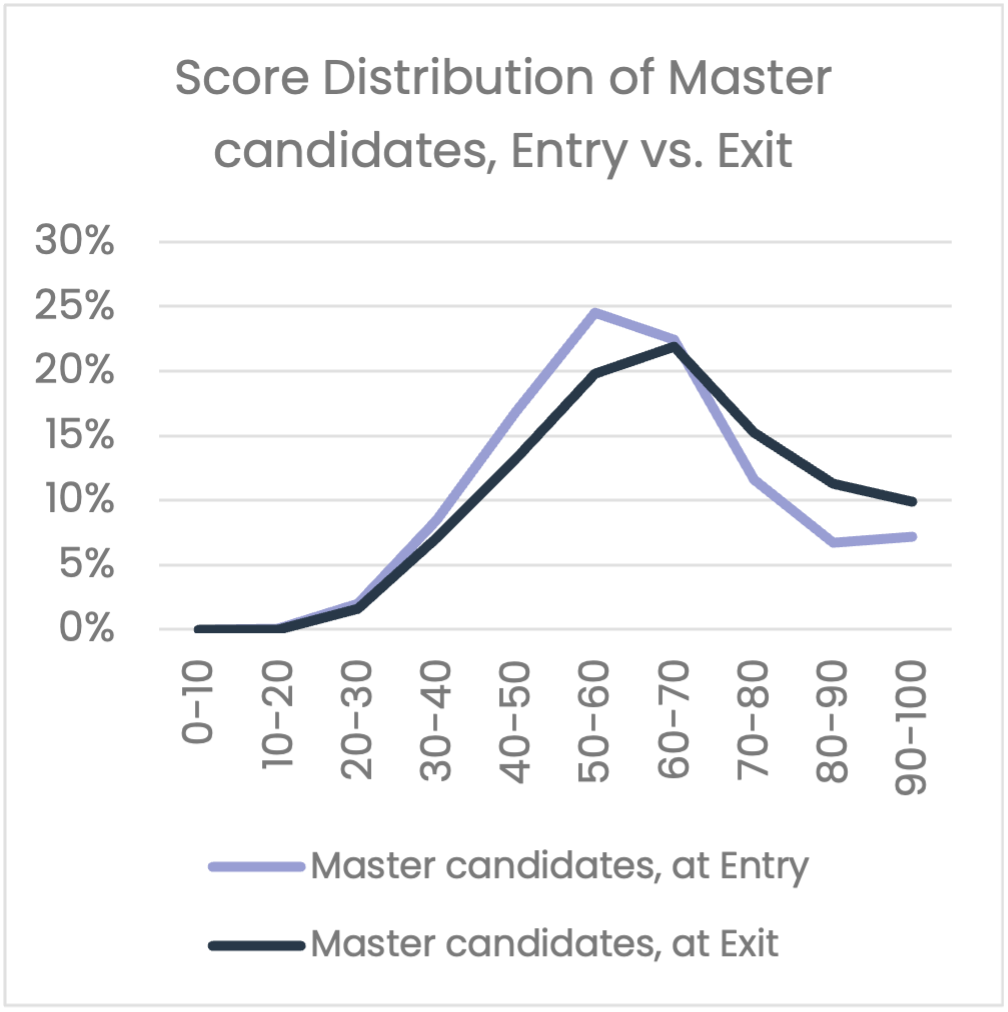
TASK™ data can also be used to compare learning progression among a variety of student majors:
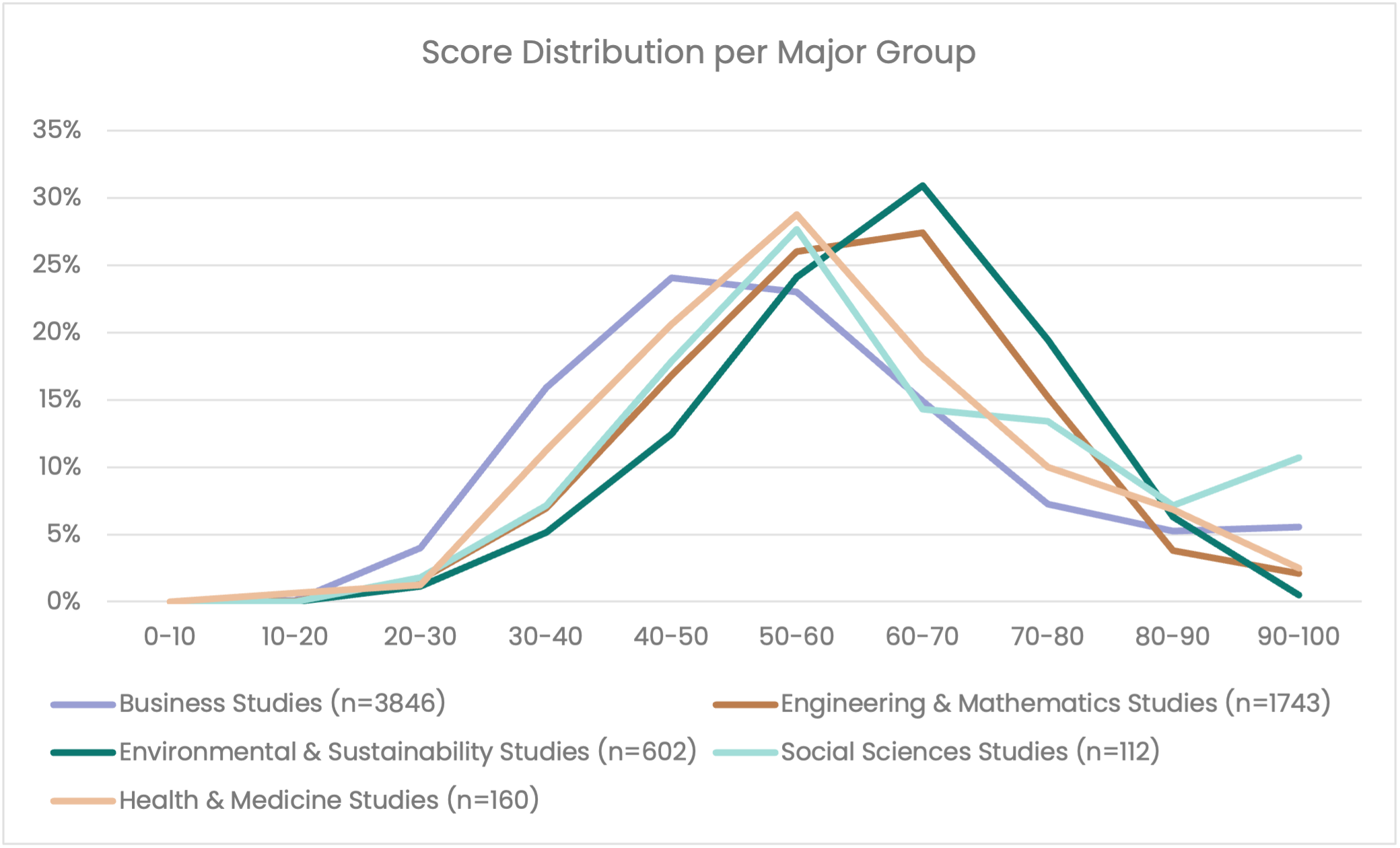
Of course, for programs designed to build green skills for specific professional sectors such as, for example, water and waste management, health and nutrition, or education and culture, and many others, these data also demonstrate the effectiveness of curricular content and pedagogical practices:
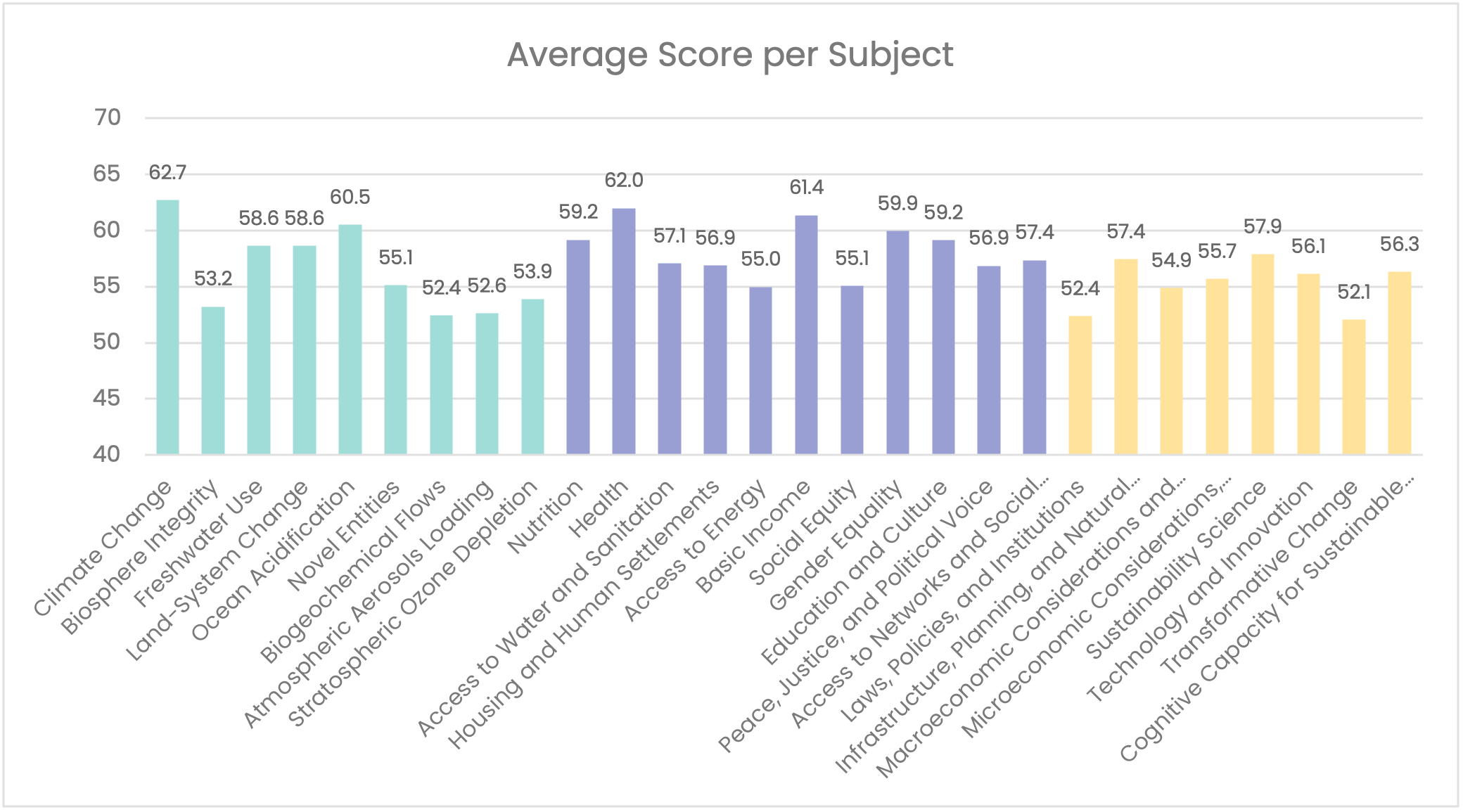
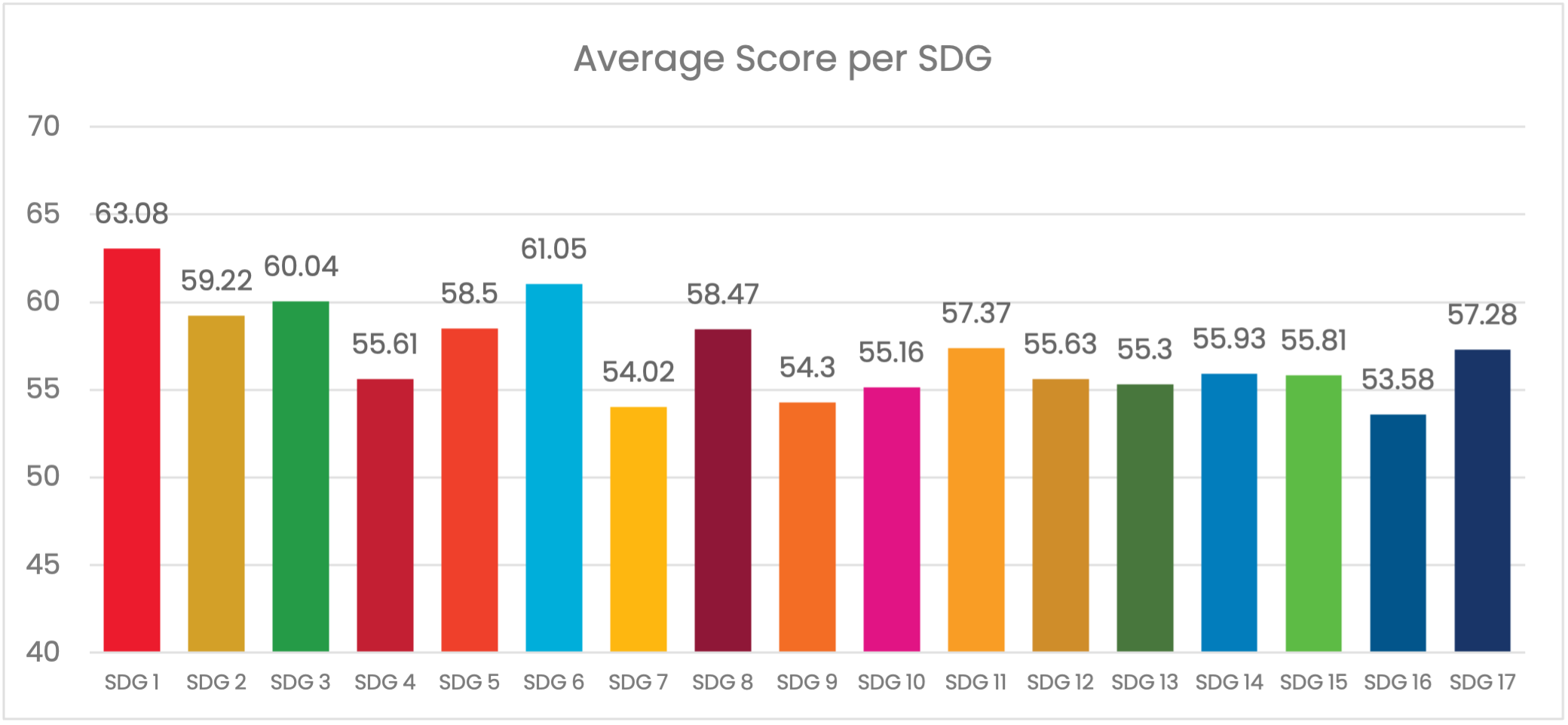
The data also provide an indication on the progress of knowledge and understanding of the UN Sustainable Development Goals.
It's all about leadership
The primary mission of higher education institutions is to equip students with the skills required for today's jobs, enabling them to quickly enter the job market within today’s established companies. This is essential — it’s the foundation of any good school.
The second, more ambitious mission is to prepare students for jobs and organizations that do not yet exist. This involves helping them to understand the world and its challenges, and to imagine alternative, possible futures. The goal is no longer just to learn the fixed knowledge of today, but to learn how to learn across one’s professional career and life.
Finally, the third mission is to help students develop the agility to thrive in an uncertain and complex environment. This involves strengthening their resilience, encouraging them to experiment, bounce back after failure, and capitalize on their successes. The ultimate goal is to train agents of change who are capable of helping invent the world of tomorrow.
References
Brundiers, K., Barth, M., Cebrián, G. et al. Key competencies in sustainability in higher education—toward an agreed-upon reference framework. Sustain Sci 16, 13–29 (2021). https://doi.org/10.1007/s11625-020-00838-2
Redman, Aaron & Wiek, Arnim. (2021). Competencies for Advancing Transformations Towards Sustainability. Frontiers in Education. 6. 484. DOI:10.3389/feduc.2021.785163
Wiek, A., Keeler, L., & Redman, C. (2011). Key competencies in sustainability: A reference framework for academic program development. Sustainability Science, 6, 203–218. https://doi.org/10.1007/s11625-011-0132-6
Wiek, A., & Redman, A. (2022). What Do Key Competencies in Sustainability Offer and How to Use Them. In Sustainable Development Goals Series (pp. 27-34). (Sustainable Development Goals Series; Vol. Part F2707). Springer. https://doi.org/10.1007/978-3-030-91055-6_4
Stough, T., Brewer, A., Decamps, A., Blair, S., Lambrechts, W., Pilz, E. C. F., ... & Carteron, J. C. (2025). Towards valid and reliable measurement of sustainability knowledge. Journal of Cleaner Production, 529, 146762. https://doi.org/10.1016/j.jclepro.2025.146762