ADVERTISEMENT
Gerard Seijts , Lily Bi, Ruchith Dissanayake , Dominique Turpin & Ludmila Hruban
|26 Nov 2026
Business schools: the case against abolition
A professor’s call in the New York Times for business schools to be shut down for normalising the economic system’s harms has heightened the AI-generated sense of an institution at a crossroads. Five insiders suggest the way ahead

Source: Malte Mueller/Getty Images (edited)
Stop pretending to be neutral about character
Higher education has a dangerous delusion: it can teach knowledge and skills while remaining neutral about character. It cannot. Every course rewards certain behaviours. Every assessment system trains certain responses. Every campus culture teaches students what matters when pressure rises and no one is watching.
The only real question, then, is whether universities will shape character intentionally or leave it to personal ambition, anxiety, groupthink and the market.
Character is not personality. Simply put, personality is your wiring; character is your capacity to govern that wiring. It is the ability to prioritise values over impulse, responsibility over convenience, truth over self-protection, and service over vanity. A student can be brilliant and still be reckless, dishonest and morally hollow.
We all know this, and to deny our responsibility for ensuring that we do not produce such graduates is not neutrality: it is abdication.
Employers are explicit that they want more than technical expertise, and in the AI era the premium is shifting to what is distinctly human: moral courage, self-awareness, resilience, judgement and our shared humanity. But when asked whether they intentionally cultivate such things, many universities retreat into vague language about “skills”.
ADVERTISEMENT
Teaching character is particularly important for business schools, given their alumni’s huge influence on society, and Christopher Marquis’ recent New York Times critique of business schools echoes my point about character from a different angle: that institutions can take idealistic students, narrow their field of vision to prestige and optimisation, and call the result leadership.
Here is the blunt truth: universities are already teaching character. The problem is that many are teaching it badly. For example, they teach students to chase status, polish their networks and confuse cleverness with wisdom. They may also teach them, often unintentionally, to treat relationships as instruments of advancement, rather than as obligations of care and responsibility, and to prioritise covering their own backs rather than taking a principled stand when the stakes are high.
If students are taught to build faster without learning to ask what should be built, for whom, at whose cost, and under what constraints, then higher education is not preparing them for responsibility. It is preparing them to scale consequences they do not know how to judge.
Character grows where reflection is structured, expectations are explicit, and a community reinforces the work. So embed character formation in the curriculum, in faculty expectations, in student leadership and in the everyday norms that shape what is rewarded, excused or ignored. If it is left to student life programming or a voluntary workshop, driven by a single academic, the institution has already revealed its priorities.
Second, connect it to the decisions students face. Character is formed in moments of pressure, ambiguity, conflict and consequence. Students should wrestle with real dilemmas in business, health, technology and community impact, and they should ask not only what is efficient or legal, but what is right, responsible and worthy of trust.
Third, build in reflection and mentoring through guided practice, feedback and honest conversation. And, finally, assess judgement and integrity. If universities only measure grades, outputs and placement, students will learn that everything else is decorative.
The good news is that some institutions have already moved in this direction. One has redesigned the degree around three capabilities: intellectual curiosity, future readiness, and practical wisdom. Students progress from discovery, to challenge, to creation. In the first stage, they build habits of enquiry and reflection. In the second, they work on real-world problems with external partners. In the third, they complete substantial research, design or innovation projects that demand evaluation, communication and judgement.
ADVERTISEMENT
A second has embedded the same ambition across campus through purpose workshops, mentoring, discussion groups, faculty development, great-books seminars, classroom virtue formation, professional ethics initiatives, and cross-campus communities of practice. The outcomes include greater moral awareness, less conflict avoidance, stronger trust across teams, and more constructive dialogue across power differences.
Character is the inner architecture that determines whether talent can be trusted. Refusing to teach it is irresponsible. And in this century, irresponsibility dressed up as neutrality is one of the most damaging lessons a university can teach.
Gerard Seijts is a professor of organisational behaviour at the Ivey Business School, Western University, Canada.
Strengthen accountability frameworks
Are business schools delivering on their promise to society? It is a question worth asking. I am especially pleased that business schools are asking it themselves. But the criticism tells only part of the story.
Business schools emerged as growing economies and increasingly complex organisations created a need for stronger management and leadership. Their relevance has always been connected to society’s needs, and that responsibility has grown. Today, business education must do more than prepare individuals for successful careers. It must equip them with the knowledge, judgement and accountability to create value for the organisations and communities they serve.
In 2020, AACSB wrote societal impact into our accreditation standards. Rather than simply say they care about the problems around them, schools have to name which problems they intend to tackle – and share evidence of change. Schools have reported nearly 5,000 societal impact activities, spanning economic, social and environmental priorities, and, over the past five years, 86 per cent of schools named community and societal impact as a strategic priority.
That is no marketing exercise. Among schools visited in 2025–26, 88 per cent now have a separate societal-impact statement in their strategic plan, up from 75 per cent in 2021–22. A commitment that sits in a plan is a commitment that can be held to account.
ADVERTISEMENT
It reaches the classroom, too. Ethics and social responsibility appeared in 65 per cent of the optional programme assessment tables submitted for 2025–26 and was the most assessed competency at master’s level, at 66 per cent – although these findings only cover participating schools, and assessment alone cannot establish how graduates behave.

A good example of the positive impact business schools are having can be found in Taiwan, where National Cheng Kung University came up with the idea of AI-powered ECOCO recycling machines, which have spread from campuses and city centres to rural areas and offshore islands nationwide. Whole communities return everything from plastics to batteries, and a gamified mobile app rewards them for it.
In this recent New York Times essay, Christopher Marquis cites research showing that managers with business degrees tend to move value away from workers and toward shareholders. But, here, the same toolkit of entrepreneurial strategy, behavioural design and ESG frameworks has moved a whole nation towards more sustainable habits.
Marquis also wrote of nonprofit leaders who watched good missions fail because of weak management. But evidence from Australia suggests that the remedy is more management education, not less. There, charities facing a crisis have stayed focused and coordinated their response, guided by research from accounting academics at Monash Business School. Working with the food charity The One Box, they built a framework for measuring beneficiary outcomes that any charity can use. Their findings showed that budgeting, forecasting and performance reporting held operations together under pressure.
However, while most reported business school initiatives currently show outputs or outcomes, only 8 per cent demonstrate longer-term impact and fewer than 1 per cent reach what our model calls the transformation stage. This is the next challenge, as peer review is the solution to it.
We send out teams of independent peers to offer candid feedback. They most often ask schools to define specific impact focus areas tied to their missions, and to separate activities and outputs from measurable outcomes. The mid-cycle report that every school files with us helps them spot risks early. That is how the measurement improves: schools learn what is missing, have time to address it, and act on it.
The standard is rising and reviewers now expect more mature evidence. This is shown by the increase in the share of business reviews giving a school an extra year to resolve issues, from 5.5 per cent in 2021–22 to 9.4 per cent in 2025–26.
But business education cannot fulfil its responsibility for positive social impact without a strong connection to the businesses and organisations that employ its graduates. Businesses must be active partners in shaping education, not occasional guests in the classroom. This means co-designing learning experiences, bringing real-world challenges to students, and advancing research that serves business and society. Employers also share responsibility for developing future talent, through practical learning opportunities and candid feedback on graduate readiness.
Business schools have different missions and serve different communities. Accreditation provides a common framework for accountability while recognising those differences. Strengthening that framework, alongside deeper engagement with business, is a practical path to reform.
Closing business schools would eliminate the very institutions we should be challenging to improve.
Lily Bi is president and CEO of AACSB International, which accredits 1,103 business schools across 70+ countries.
Only teach what the evidence supports
One of the studies Christopher Marquis cites in his New York Times essay calling for business schools to be shut down links the appointment of CEOs with business degrees to lower wages for a company’s workers. I teach finance to MBA and executive MBA students, and I take that finding seriously.
In a study forthcoming in the American Economic Review, economists Daron Acemoglu and co-authors examined firms in the US and Denmark that appointed CEOs with business degrees. Five years after the appointment, wages were about 6 per cent lower in the US and 3 per cent lower in Denmark, relative to firms that appointed managers without business degrees. The researchers found no corresponding gains in output, investment or employment growth. When demand rose, the new managers shared less of the gains with workers.
Why? Some may have learned to give shareholders more weight in class. Others may have arrived at business school with those priorities – or been hired by boards that wanted them to hold down labour costs. Whether pay was too high before the appointment or too low afterwards is a separate question. To make the case for changing what we teach, we need to know whether the classroom shaped those decisions, what managers should have done differently and why.

The question of who benefits when managers put their skills to work is a key one. It comes up when we evaluate investments in my executive MBA finance unit. Students use net present value to weigh the upfront cost of a factory upgrade against what future energy savings and avoided emissions penalties are worth today. That tells them whether the upgrade benefits the company. If the upgrade also means cleaner air for nearby residents, the board has another benefit to weigh. To assess it, we need evidence about what the factory emits and who is exposed.
Now suppose the company closes the factory and buys the same goods from a supplier. Its own emissions may fall while total emissions rise. Economics gives students a way to model that shift. To tell whether the decision reduces pollution or moves it elsewhere, they need data on where the goods are made and how much pollution each site generates to produce them.
The case for changing what we teach should be held to the same standard. Consider degrowth, which some scholars propose teaching in business courses. It calls for wealthy economies to use less energy and fewer materials while protecting living standards. However, a review of 951 papers on degrowth and related ideas found few concrete proposals for how income would be shared or how monetary policy would work. Before presenting degrowth as a solution, ask how it would deliver those results and what evidence supports the answer.
Take shorter working weeks, which some degrowth proponents suggest as a way to protect jobs. In 2000, France cut the standard week from 39 to 35 hours at the same monthly pay. Paying the same for fewer hours raised the wage cost of each hour worked. The government offset some of that cost to employers by cutting the social security contributions they pay on wages, giving up some tax revenue. This kept overall employment broadly unchanged, but jobs rose among managers and professionals and fell among other workers, and output fell by about 1 per cent despite gains in productivity.
On 5 November, hundreds of thousands marched across France over pay and living costs. But public debt reached 119 per cent of GDP in June and the government projects a deficit of 5.4 per cent of GDP for 2026. It would be reckless to sell degrowth as a remedy for France’s cost-of-living crisis without a credible plan to protect jobs and household incomes and pay for the measures needed to do so.
In that sense, degrowth is too underdeveloped to warrant a stand-alone place on a business school syllabus. A deliberate national transition that reduces resource use while protecting living standards remains untested in practice. A lecturer could mention degrowth briefly as a hypothesis and explain what evidence would be needed to test it. But giving it the same standing on the syllabus as established analytical tools, such as net present value or game theory, would be premature.
Some of the people we teach will go on to lead companies and shape public policy. They will make their own decisions about where to invest, what to pay workers and which costs to pass on to others. We owe them tools that have been tested against evidence, along with a clear account of where those tools fall short. When we teach a policy as a solution, we should be able to show where it has worked, under what conditions and who bore the costs.
Ruchith Dissanayake is a senior lecturer in finance at Queensland University of Technology.
Develop independent judgement
Recently, I was in Switzerland leading a discussion with senior executives when a Microsoft representative demonstrated a new AI tool. She asked the audience to suggest a topic for a presentation. One participant proposed an analysis of the future of the oil industry and its impact on the Saudi economy by 2050.
How many slides? Thirty. Which language? English.
She pressed a button and, within moments, the presentation was ready. Five minutes later, she updated it with additional information that had been loaded on the internet within this short span of time.
This was an impressive demonstration, but it also underlined that business schools can’t continue asking students to produce presentations and analyses in the same way when these tools are becoming available to everybody.
So what should we do instead? One important answer lies in developing critical thinking. Students need to know how to challenge information, question assumptions, recognise what may be missing and assess whether a recommendation actually makes sense. But this won’t be enough to safeguard their future employability either, as AI itself is becoming increasingly capable of questioning its own assumptions, identifying weaknesses in its reasoning and refining its conclusions.
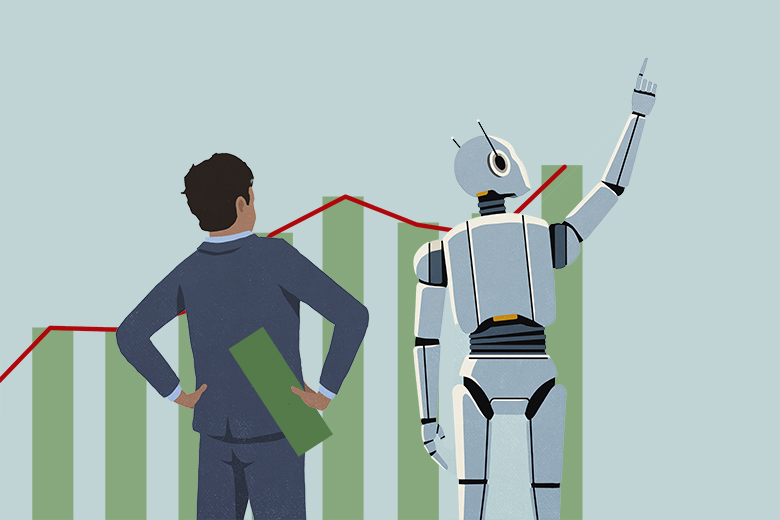
We must produce graduates who are not only better critics of AI but who can also exercise independent judgement, take responsibility for decisions and respond intelligently when the situation is uncertain or the information is incomplete.
Let me give another example from my own teaching. I once developed a three-page case study about a fictional Brazilian family-owned bicycle manufacturer. The company was approached by a large retail chain interested in purchasing the same bicycles it was already selling through traditional retailers.
Initially, I presented the case as an accounting exercise. After analysing the financial implications, approximately 70 per cent of the students favoured accepting the deal.
Then a marketing professor unexpectedly entered the classroom and challenged the participants from the perspective of marketing. What would be the reaction of existing retailers? What if the large chain subsequently expanded into other markets and began sourcing directly from Chinese manufacturers? And what about the owner, who was approaching retirement and had to consider the future of his family business?
Of course, an AI system could be instructed to consider these wider questions, too. In theory, it could be prompted to examine the decision from the perspectives of marketing, finance, strategy and family succession. But in my class, the students are cold-called and have to think on their feet, just as they would in real business environments.
This is one of the enduring value propositions of business education: a classroom environment that forces students to engage with new information and competing perspectives in real time, explaining their reasoning, listening to others and adapting their conclusions rather than simply submitting a polished answer produced with the help of a tool. In business, a technically correct answer does not necessarily mean that you have understood the problem.
In another experiment, I distributed seven slightly different versions of the same case study to different groups. It was only when they subsequently discussed their conclusions that they discovered that they had been working with different facts. This is much closer to real business life, where people rarely have access to exactly the same information.
Assessment must also adapt. Simply banning AI is unlikely to be sustainable, and nor should we assume that traditional examinations without internet access will adequately prepare students for the business world they will enter. The point, in the AI era, is to judge students on more than the final product. We need to understand how students reached their conclusions, whether they can defend their assumptions and how they respond when someone challenges their reasoning.
Live discussion and questioning can reveal how students think when they cannot rely on a prepared response: whether they can explain their reasoning, respond to an unforeseen objection and revise a conclusion when the facts or perspective change.
All this has important implications for professors.
Their traditional role was primarily to provide information and explain frameworks, but increasingly they need to become coaches, mentors and challengers. The classroom should become less about transmitting information and more about creating intellectual exchanges. We need to encourage students to challenge one another, defend their reasoning and learn from different perspectives.
This requires the space and incentive to experiment. At CEIBS, we have established a group of interested faculty members to explore the implications of AI for teaching and research. Interestingly, I have encountered relatively little resistance; younger faculty, in particular, are helping to drive this process.
There is still much to learn. I have yet to see one business school that can confidently claim to have found the definitive model for AI-enabled education. But this should encourage more experimentation and the sharing of successful practices.
Technology will continue to evolve, perhaps faster than any of us currently imagine. Our responsibility is to ensure that education evolves with it.
Dominique Turpin is president emeritus and professor of marketing at China Europe International Business School (CEIBS), where he previously served as European President (2022–25). He was president and dean of IMD Business School in Switzerland from 2010 to 2016.
Lead the green transition
When a veteran management scholar takes to the pages of The New York Times to declare that it is time to shut business schools down, higher education leaders should pay attention.
In the widely debated essay, the author argues that business education has narrowed students’ moral horizons, prioritised shareholder primacy over the public good, and treated sustainability too often as an exercise in reputation management rather than structural change.
That last claim hit close to home. Across central Europe and beyond, higher education has too often treated sustainability either as a superficial branding exercise or as an isolated elective module tacked on to traditional finance and strategy courses. For the past two decades, classrooms framed corporate social responsibility as an effortless “win-win” story while glossing over hard trade-offs between short-term quarterly returns and long-term planetary health.
Yet calling for the abolition of business schools confuses a flawed curriculum with a failed institution. If we want investment banks, technology firms, energy companies and consultancies to hire executives capable of systemic, ethical and stakeholder reflection, we need to educate them – not abandon the market.
Indeed, sustainability is no longer a moral add-on for enlightened executives; it is a defining strategic and operational challenge. Navigating climate disruption, resource scarcity and tightening regulatory frameworks requires leaders who can price ecological externalities into capital allocation and redesign linear supply chains into circular models. Those are complex management challenges, and universities are uniquely positioned to address them, provided we break out of disciplinary silos.
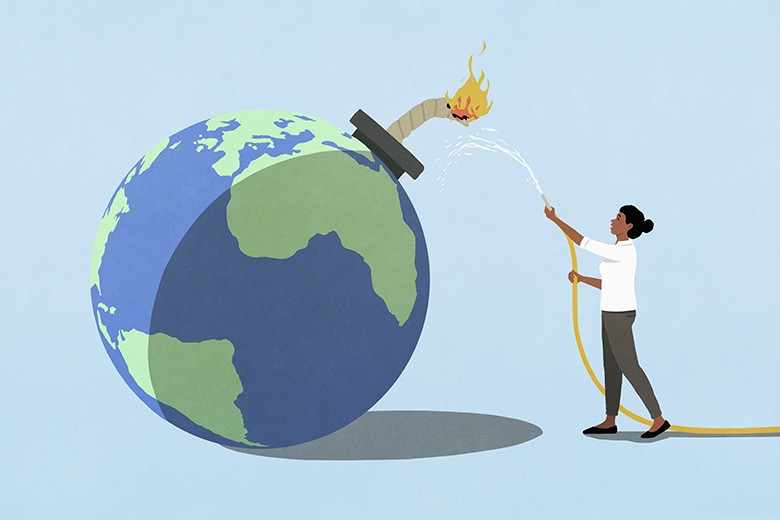
At NEWTON University in the Czech Republic, our English-taught master’s programme in economics and sustainable management systematically fuses economics with artificial intelligence, behavioural psychology, material design and public communication. Students use data analytics and machine learning to audit corporate carbon footprints and predict supply chain risks, while simultaneously examining the environmental footprint and governance of AI itself, together with guest lecturers in the classroom or directly in the companies.
Drawing on corporate and consumer psychology, they learn how to close the gap between sustainable intentions and actual purchasing behaviour without resorting to greenwashing.
Crucially, this model extends beyond lecture halls and sanitised case studies. Through mandatory sustainable tours of creative studios and ethical enterprises in Prague and Brno, students work alongside eco-entrepreneurs to calculate raw material life cycles and “cost-per-wear”, connecting circular design directly with margin optimisation.
When sustainability forms the backbone of a degree rather than an afterthought, students respond. All of the current third-semester cohort on our international programmes are researching and writing their master’s theses on sustainability-related challenges, while alumni and students are launching circular ventures and contributing to European green-transition research consortia.
But business schools must do more. Academic incentives must reward interdisciplinary research that tackles messy ecological realities, and core accounting and finance courses everywhere must treat natural capital as seriously as financial capital.
Higher education should never shy away from fierce self-criticism. But shutting down business schools in the name of sustainability would be an act of academic abdication at the exact moment responsible management is needed most.
Ludmila Hruban is director and product owner for international programmes and sustainability ambassador at NEWTON University.
Read more about




Featured jobs
ADVERTISEMENT