Why a medical degree should be about compassion, not just knowledge
At the new School of Medicine at St Mary's, we emphasise compassion and integrity – because nuturing our students helps them to become thriving, confident and resilient doctors

You may also like



This is a sponsored article, created by the School of Medicine at St Mary's
Opening our new School of Medicine at St Mary’s has felt like a real gift – a blank sheet on which to design health education that is fit for the future.
We wanted to design a school that aligned not only with the NHS 10-year plan, but also with the values we really need in medicine, such as compassion, integrity and dignity.
I’ve worked in healthcare for 25 years: as a GP in some quite deprived areas of South London, and also in medical education, at institutions including Imperial College and King’s College London. My goal has always been to bring these two parts of my world together: education and service.
Our guiding principle at St Mary’s is social accountability: we are training doctors who have a commitment and accountability to serve our local community. This works both ways: we want our students to make a difference in the community, but we also want to make a difference when it comes to looking after them, too.
Community-based medical education
The World Health Organisation and the NHS 10-Year Plan have both put an emphasis on community-based care and prioritising prevention. In the UK, we’re moving towards a model where specialist services, such as cardiology, maternity services and neurology, can be delivered in community settings.
So why wouldn’t medical education follow suit? Why would we still continue to place students in decreasing services in hospitals, when we know that 90 per cent of care is delivered in the community? Our new School of Medicine really aligns itself with the move of healthcare into the community, addressing inequalities in the heart of those communities.
Our students will be prepared for their practice right from the start of their degree. By January of their first year, they’ll be going out on placement with a GP, and will get to know them over an extended period of time.
Students will also have non-medical placements, in areas such as music therapy, where they will work with patients with dementia or learning difficulties, or suffering from social isolation. In that way, our students will start to learn about patients and their stories in a very nurturing and non-clinical environment.
Doctors with compassion and integrity
Beyond where we place our students, we also need to think about the values and attributes we are instilling in our future doctors.
Medical knowledge is in some ways the easy part of medicine – and needless to say it goes out of date very quickly. Whatever we teach our students today will need to be continually updated – and may even be out of date by the time they graduate.
The harder part of medicine is ensuring you embed the right values and attributes in your doctors, so they truly understand compassion and integrity.
There are different types of compassion. Firstly, there’s compassion for your patients, which hopefully your teachers will be modelling. Then there’s compassion for your peers – we want to ensure that our students are looking out for one another and caring for each other.
But self-compassion is also key: being kind to yourself. Medicine is a really hard job. The health system is under pressure, and doctors are asked to do more with less support. Really early on, at the age of 18 or 19, you're being asked to take on an oath to serve. We have really young, bright students who choose to do medicine, but then they end up feeling overburdened and burnt out early in their training. You need the emotional toolkit to truly deliver selfless service over your career.
A doctor – but a human first
At St Mary’s, we’re working to instil in our students a core sense of self-belief and self-compassion. We’ll nurture them, so that by the time they graduate, they're able to thrive as doctors – rather than simply surviving under the pressures of what's expected of them.
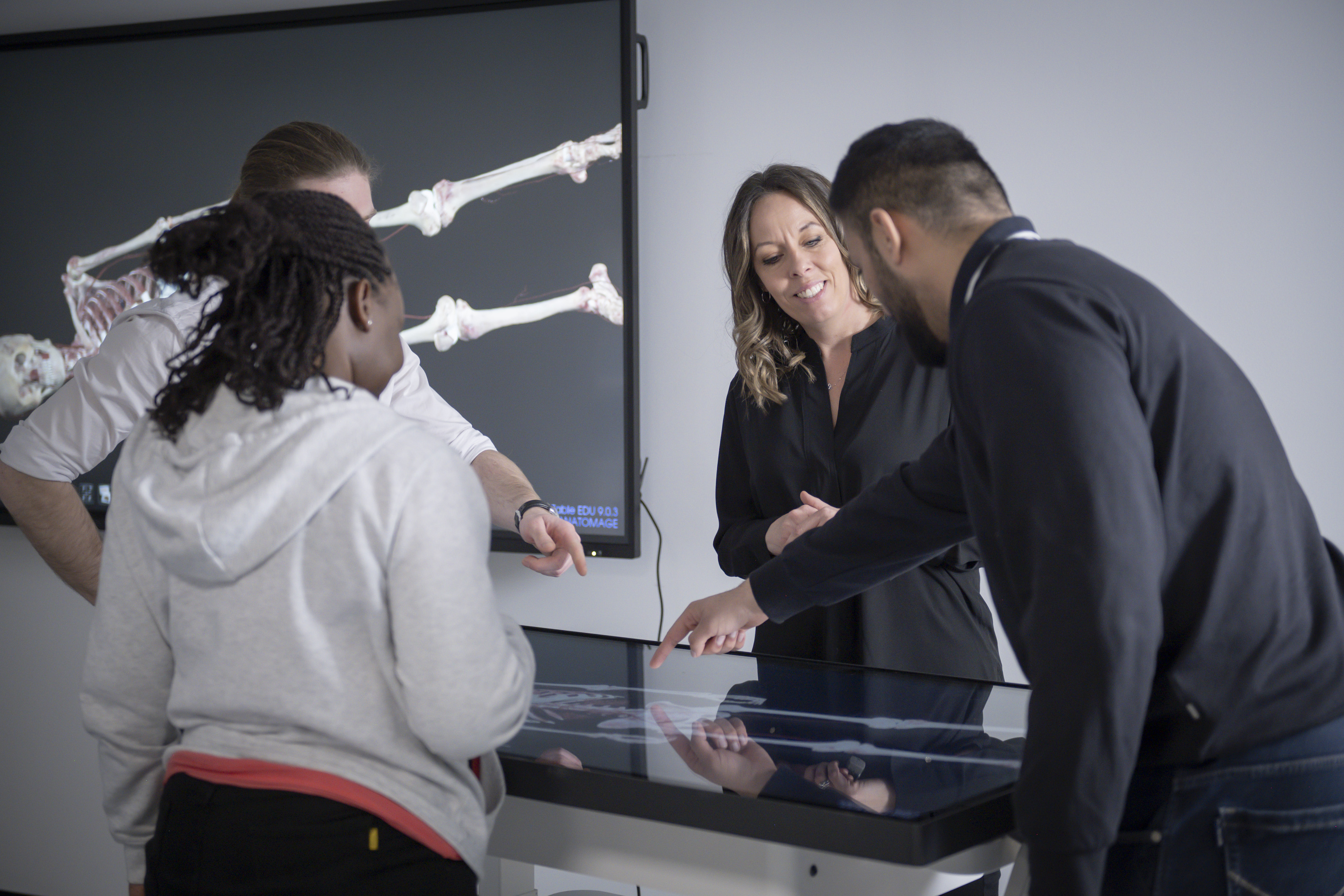
We have a brand new simulation suite – so new that it’s still in the process of being built. Here, students will be able to practise the thorny bits of medicine – where patients are bereaved or facing a new cancer diagnosis or an ill child – with a trained actor, before they go out and see it in real life. They’ll work through these situations with their peers and with a trained facilitator – we’ll talk them through not only what they’re saying, but the emotions they’re feeling as well.
We choose this job because we care. The best way to nurture that caring part of ourselves is to surface those emotions and talk about them. Perhaps that case was hard. Perhaps it made you cry. Why did it make you cry? Let's think about how you might have done that differently or how you might be able to take a break afterwards.
Every week, our students will also have a weekly debriefing session, overseen by a trained clinical facilitator. The aim is to surface the hard stuff they’re seeing, and to remind them that it’s OK to get it wrong. It's OK to cry. It’s OK to feel things are difficult. We need to start normalising the fact that, yes, you’re a doctor – but you’re a human first. If we try to squeeze out the human element, then it can feel very suffocating for a doctor, from very early on in their career.
We know the job that lies ahead of our students. So, we know that if we put in this support from the beginning – if we really frontload it and look after our students – then by the time they qualify, they will be nurtured, thriving, confident and resilient doctors. And they will be doctors who are prepared to meet the challenges of caring and healing – wherever they practise in the world.
For more information about the school please visit: St Mary's, School of Medicine
To watch the recording for the St Mary's webinar outlining the new medical programme, click here.