Global Higher Education Interdisciplinary Network
Connecting leaders to advance global interdisciplinary science
The Global Higher Education Interdisciplinary Network (GHEIN) is a senior-level collaboration platform bringing together leading research universities to strengthen interdisciplinary research systems globally.
Stakeholder research had identified key barriers to interdisciplinary science, including funding structures, disciplinary promotion and tenure norms, siloed hiring practices and lack of community for researchers working across disciplines. The GHEIN initiative evolved from Schmidt Science Fellows' programme’s broader mission of changing how science is done, and builds on the Interdisciplinary Science Ranking published in partnership with Times Higher Education, now in its third year.

The Global Higher Education Interdisciplinary Network (GHEIN) advances interdisciplinary science by creating a space for senior university leaders responsible for research to:

Identify unique regional challenges and solutions

Shape the global agenda for interdisciplinary research

Build a collaborative community
- 77
- member institutions
- 31
- countries
- 6
- regions globally
By connecting research leaders across regions and systems, we hope to build a community of collaboration and best practice. Through this network, driven by self-identified priorities and challenges, we can create stronger research environments responsive to the needs of interdisciplinary approaches and focused on delivering impact.

Dr Megan Kenna
Regional and global insights
Middle East and North Africa
Insights from the GHEIN Network Middle East and North Africa Regional Chapter
Pioneers in the Interdisciplinary Science Rankings
The Times Higher Education (THE) Interdisciplinary Science Rankings (ISR) is the first global ranking system measuring universities' commitment to research that blends multiple scientific fields, launched with Schmidt Science Fellows to highlight collaborative breakthroughs in tackling global challenges.

- 911 ranked institutions
- across 94 countries
- 22% increase
- from ISR 2025
- 11 metrics
- including funding, facilities and publications
Featured reports and articles on interdisciplinary research
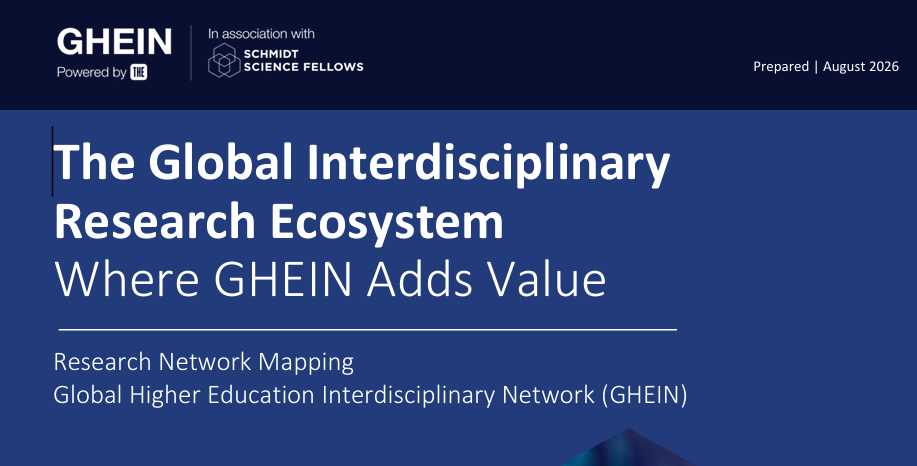
GHEIN: The Global Higher Education Interdisciplinary Network Ecosystem Mapping and Value Proposition Report
Many networks support collaboration, but GHEIN places interdisciplinary research at its core. This report, the first of four we will publish over the coming year, sets out the ecosystem we found and the role GHEIN can play in advancing interdisciplinary science globally
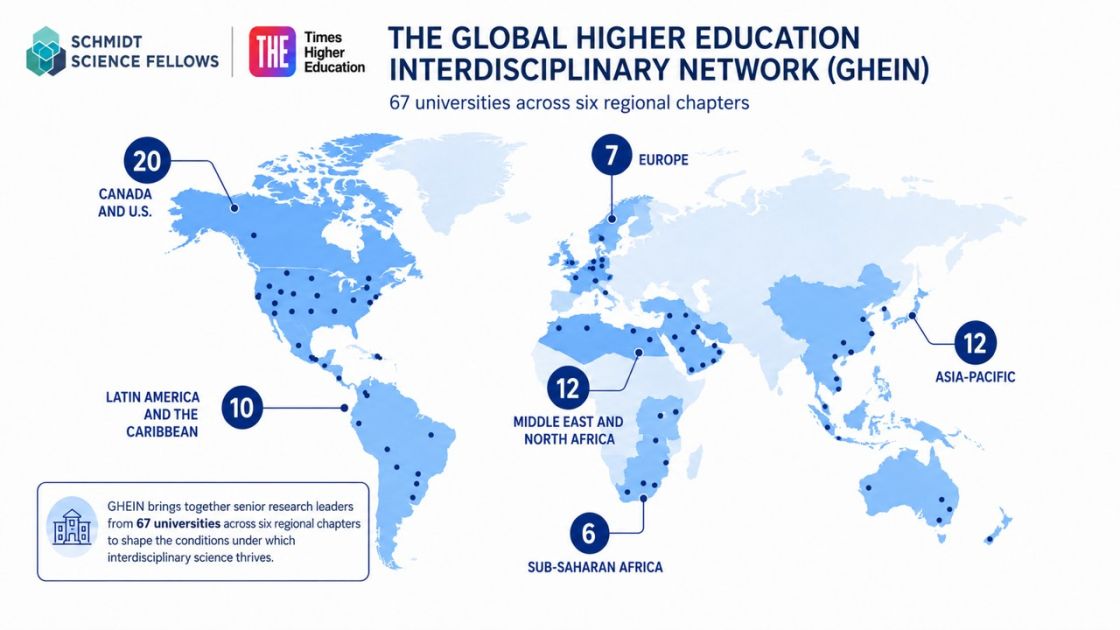
Scores of universities join interdisciplinary research network
Higher education institutions across 15 countries join global programme focusing on best practice and cross-border partnership.

Getting out of the way: how ‘water cooler’ moments drive academic innovation
Creating an environment in which interdisciplinary research can tackle complex real-world problems is about institutional culture and allowing scientists to follow their intellectual curiosity.

Answering science’s toughest questions through interdisciplinary collaboration
When the most impactful research collaborations often start with a conversation, it pays for universities to put like-minded scientists in the room together, no matter their expertise.
Upcoming THE x Schmidt events