Counselling activity: creating a personal vision board
This creative art exercise allows students to express ideas and emotions that may be difficult to communicate in traditional counselling conversations

Margarita Andrade






When I first started working as a college counsellor, I believed my main responsibility was guiding students through university applications. Over time, I realised that college counselling is much more than helping students get accepted into a university. Before discussing majors or institutions, we need to understand who our students are, what motivates them and what challenges they may face. Only then can we help them find the university that is truly the best fit for them.
One technique that has become important in my counselling practice is using creative and visual activities to help students explore their identity before the college search process begins. Because I have a background in art, I believe creativity allows students to express ideas and emotions that are difficult to communicate in traditional conversations.
A personal vision board
Many students struggle with questions such as, “What career do you want to study?” or “Where do you want to go to college?” However, when they work with images, colours, drawings and visual organisers, they often express ideas they could not explain in words.
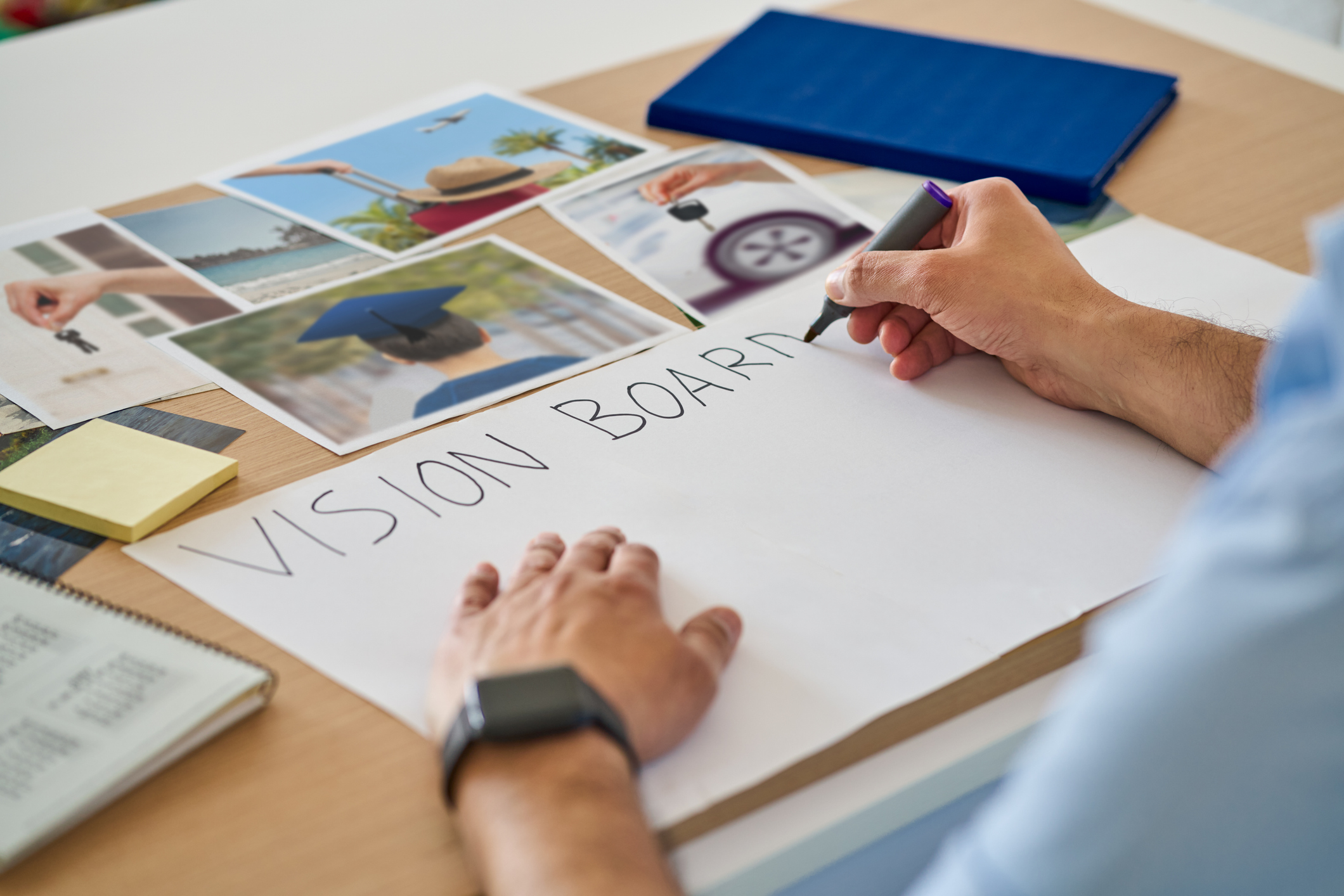
I therefore encourage them to create a personal vision board. While vision boards are often associated with coaching or personal development, I have adapted this activity specifically for college counselling. Instead of asking students to visualise success, I encourage them to connect their interests, values, strengths and aspirations with possible academic and career pathways. This changes the conversation from choosing a university to first understanding the student.
Students use magazines, printed images, drawings, or digital tools such as Canva to create a visual representation of their future. Rather than asking them to choose a university or career immediately, I encourage them to represent their interests, strengths, values, career aspirations and future goals. I explain that there are no right or wrong answers, because the purpose is self-discovery, rather than evaluation.
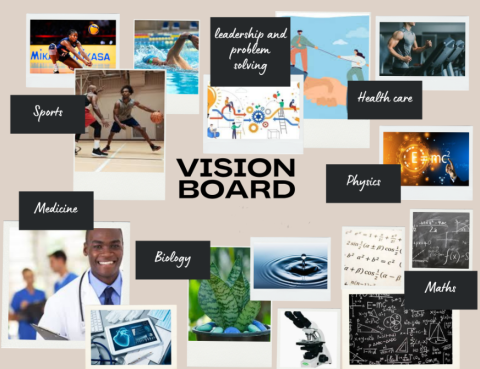
Analysing the image
Once the vision board is complete, the most valuable part begins. Together, we analyse the different elements the student selected, using open-ended questions that encourage reflection. Students begin recognising patterns in their interests, motivations and values, allowing the conversation to move naturally from “What should I study?” to “What kind of environment will help me grow?”
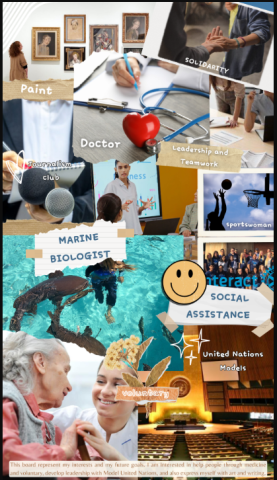
I worked with one student who felt overwhelmed because she enjoyed so many different subjects and she believed she had to choose only one passion. Through this activity, she realised that creativity, communication and helping others appeared repeatedly across her board. She finished the session with greater confidence and a clearer direction for her university research.
Tips for implementation
I believe this activity can easily be implemented by other counsellors, regardless of the resources available at their school. The most important element is not the artistic quality of the final product but the conversation that follows.
This activity can be used during counselling sessions, workshops or small group activities. I recommend creating a welcoming environment, using open-ended questions and allowing the vision board to guide future conversations about university options and career exploration.
Creativity is not simply an artistic exercise. It is a practical counselling tool that encourages self-awareness, meaningful conversations and confident decision-making. When students understand themselves first, the college search becomes more authentic – and then they are better able to identify the university that is the best fit for their goals.