
We need to teach ‘uncommon sense’


You may also like
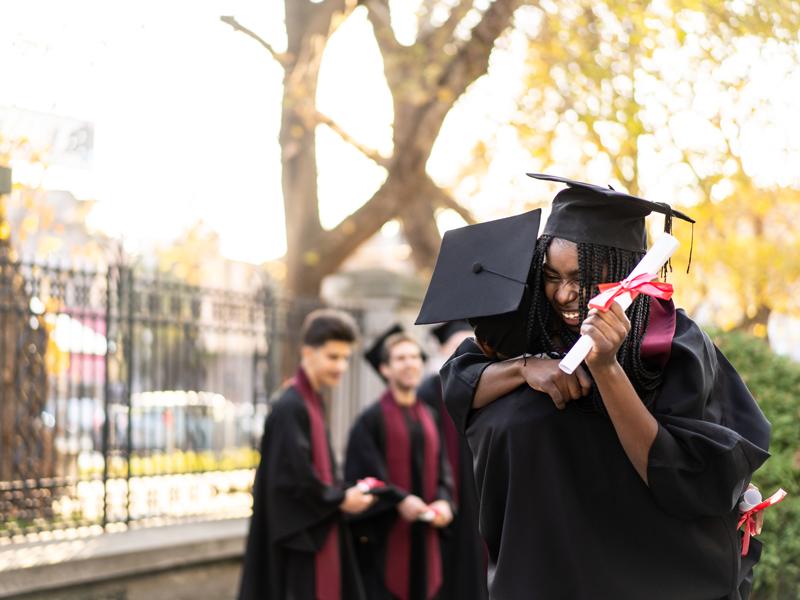
Each spring, commencement speakers remind graduates that the real education begins now. The graduates nod, collect their diplomas and quietly assume that the speaker is wrong. After all, they have just spent four years demonstrating, in the most rigorous possible way, that they are capable of mastering complex material and getting the answers right.
Yet study after study finds little or no correlation between college grades and ultimate career success. When I was president of Johns Hopkins University, I spent years puzzling over that gap. Eventually, I stopped puzzling and did something about it. I designed a course called Uncommon Sense, which was open to juniors and, especially, graduating seniors, hoping that there might be interest. I was swamped with applicants.
I should not have been surprised. These were talented students who sensed that something essential was missing from their education. Not more knowledge, exactly, but a different kind of thinking. They wanted to know how to navigate a world that does not grade on a curve and rarely offers multiple-choice answers.
The course ran during the January intersession, an intensive few weeks deliberately set apart from the regular academic calendar. That format turned out to be right. Breaking away from the semester structure was itself part of the message: the goal was to disrupt the receive-wisdom-then-regurgitate-it reflex that four years of conventional coursework subtly reinforces. An intersession, or any equivalent compressed format, is ideal for this kind of learning. It signals, from the first day, that the rules are different here.
Flipping random
My favourite exercise began with what sounded like an invitation to slack off. I told students to go home and flip a coin 200 times, recording every result. Then I mentioned, almost as an afterthought, that they were also welcome to fake it.
Next class, as returning students handed in their results, in my best Houdini-like voice I would announce, “Ah, you did the work” or “Oh! You cheated.” Almost always I was right and the students were amazed, but the trick was simple. Students who fabricated their sequences made them too orderly: too balanced, too alternating, suspiciously free of long runs in either direction. The real coin-tossers had sheets that looked chaotic, with seven heads in a row, five tails, streaks that felt statistically wrong but were, across 200 flips, nearly inevitable.
The lesson was not about coins. In Uncommon Sense: Rethinking Ordinary Problems in Extraordinary Ways, my book derived from these classes, I show how poorly we intuit randomness and how automatically, almost helplessly, we impose patterns on events that have none. That tendency leads us astray in investing, in medicine, in management and in dozens of everyday decisions. The students who cheated were not lazy. They were being entirely human. They just did not know it yet.
- Spotlight guide: Soft skills for hard times
- Spotlight guide: Course design for a new age
- Solving the soft skills crisis using artificial intelligence
Will it rain? Probably more than you think
Another exercise involved nothing more exotic than a weather app. The forecast shows a 50 per cent chance of rain on Saturday and 50 per cent on Sunday. Your partner asks whether it will rain this weekend at all. What do you say?
Less than half of my students got the right answer on the first try. Most said 50 per cent, either by assuming that the same probability held across both days or by adding the figures and capping the result at 100 per cent. The correct answer is 75 per cent. The only scenario in which it stays dry all weekend is if it fails to rain on Saturday and on Sunday – a 25 per cent chance – which means that there is a 75 per cent probability of rain on at least one of the two days.
The math is not difficult once you see it. But seeing it requires resisting the mental shortcut that feels most natural. Probabilistic thinking, holding a range of possible outcomes in mind rather than defaulting to a single intuitive answer, is one of the most practical skills a person can develop, and it is almost never taught explicitly in a university course.
Three minutes to get into med school
The exercise that stayed with students longest was one I called the medical school interview. Imagine, I told them, that you are applying to the Johns Hopkins University School of Medicine. So is everyone else in this room, and so are two or three hundred other candidates just as qualified as you. Grades, test scores: identical to the competition. There are only one or two spots. You have a few minutes in front of the admissions committee. What are you going to do?
One student sang opera. Another juggled. Others brought photographs, told family stories or produced unexpected objects that said something about who they were. Some moments were awkward; others were genuinely surprising. Some of them just recited their résumé.
The winning presentations had understood that the assignment was to stand out. In a world of equally qualified candidates, credentials are table stakes. What distinguishes a person is everything that credentials cannot capture: the willingness to take a risk, to think on your feet, to be a little surprising to be remembered. These are not soft skills. They are the hard skills of a life lived in conditions of genuine uncertainty.
What universities can do
Not every institution has an intersession. But every institution has students who are about to graduate into a world that will not give them partial credit for showing their work. A short, intensive course of just a few weeks can disrupt the usual habits of mind and is enough to begin the work. The format matters less than the intention: to give students practice at problems for which no answer key exists.
That, in the end, is what Uncommon Sense was always about. The capacity to make good decisions under genuine uncertainty, to stand out when everyone around you is equally qualified, to act with integrity when the right move is not obvious; these are things that no transcript measures. But they are, by any honest accounting, what a life after graduation actually requires.
Bill Brody is the former president of Johns Hopkins University. His book, Uncommon Sense: Rethinking Ordinary Problems in Extraordinary Ways, is published by Johns Hopkins University Press.
If you would like advice and insight from academics and university staff delivered direct to your inbox each week, sign up for the Campus newsletter.
