
The colour of comprehension: how to make student understanding visible


You may also like
Popular resources
Halfway through a lecture, I look around the classroom and wonder: Are my students following me? I can see that they are taking notes, some are nodding, and no hands are raised. From the front of the classroom, everything appears normal, but silence is difficult to interpret. It could mean understanding or perhaps confusion, hesitation – maybe some combination of all three.
Asking “Any questions?” rarely resolves the uncertainty. Students who are confused might not know how to formulate a question. Some hesitate to admit that they are lost, while others assume that everyone around them understands and decide to remain quiet. Instructors can therefore leave class with little insight into what students understand, and we might not discover the gaps until the next assignment or exam.
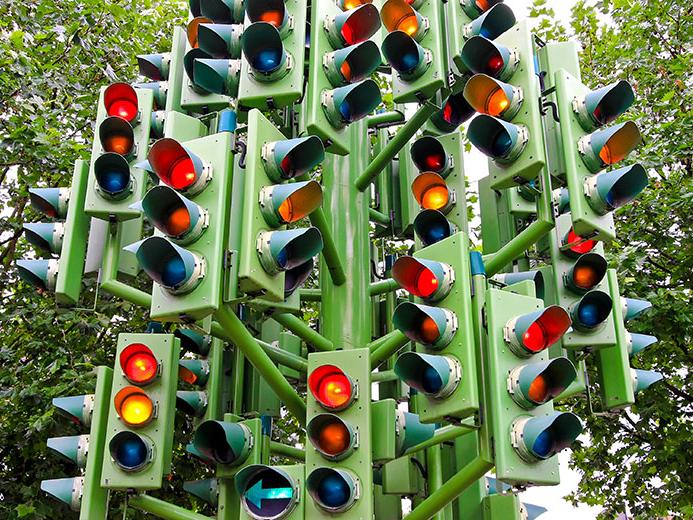
In my teaching, I use a traffic-light strategy to make that invisible understanding visible in real time. At the end of class, I list three to five key topics covered in that session and ask students assign a colour to each one: green means “I understand this well”; yellow means “I am somewhat unsure”; and red means “I am confused or need help.” Students can submit their responses on an index card or through a digital poll.
- Five ways to turn students from spectators into collaborators
- ‘Close your laptop, use your brain’
- The balancing act involved in teaching a class of mixed-ability students
This produces more useful information than asking students to rate the lesson as a whole, and the exercise is not simply a colourful end-of-class poll. Its value comes from asking about specific concepts, identifying patterns in students’ responses and allowing those patterns to shape what happens next.
A map of understanding
Breaking a lecture into three to five key topics produces a useful map of students’ understanding. It also asks students to pause and reflect on their own learning. To assign a colour to a topic, they must ask themselves: Do I understand this? Where am I uncertain? What clarification or practice do I need? That pause might be brief, only a minute or two, but it shifts students from receiving information to evaluating their learning. Over time, I want students to become more capable of recognising uncertainty, identifying what they need to work on and deciding what to do next. The activity is therefore both a source of information for the instructor and a recurring exercise in metacognition that encourages students to take a more active role in monitoring their learning.
The strategy also gives students a low-risk way to communicate. A yellow or red response merely signals that something is not settled yet, giving the students and the instructor a place to begin. The goal is not to produce a classroom full of green responses. Instead, instructors need to present honest uncertainty as valuable information that can guide practice, clarification and support.
Close the feedback loop
Collecting the responses is only half of the strategy. The most important part is what instructors do after students choose their colours. Suppose a large portion of the class marks one topic yellow. At the beginning of the next class, I might say: “Many of our class marked this topic yellow last time. So, before we move forward, let’s look at it another way.” I can then provide another example, ask students to work through a problem, invite peer explanation or revisit the connection between that concept and something we learned earlier.
Making that response visible matters. The process becomes a feedback loop: students reflect, I identify patterns, I respond, and students see the response. When students see that yellow and red responses lead to clarification, additional practice or a different explanation, they grasp that instruction can respond to learning rather than simply proceed according to a predetermined plan.
That visible response is what distinguishes a meaningful feedback loop from a quick end-of-class poll. Red, yellow and green provide an efficient language for beginning a conversation that might otherwise never take place. What matters is whether the information influences what happens next.
Start with the next class
Instructors interested in trying the traffic-light strategy do not need a new platform or a course redesign. At the end of your next class, identify three to five key topics that students should understand before moving forward. Ask them to classify their understanding of each as green, yellow or red. Then look across the responses. Where is the green concentrated? Where does yellow appear? Is there a cluster of red? Most importantly, ask yourself: What will I do differently based on this new insight?
The answer does not require reteaching an entire lesson. It might involve beginning the next class with one additional example, giving students a short practice problem, inviting them to compare explanations with a partner or recording a brief supplemental video. A small instructional adjustment might be enough to help students move forward.
As instructors, we cannot know exactly what is happening in every student’s mind. But we can give students a simple way to tell us where they are while there is still time to respond. Asking them to rate three to five topics as red, yellow or green takes only two minutes. When their responses visibly shape the next class, a silent ending becomes a conversation about what students understand, what remains uncertain and what should happen next.
The power is not in the colours themselves. It is in showing students that what they tell us matters.
Yunteng He is a chemistry instructor at Central Community College in Kearney, Nebraska.
If you would like advice and insight from academics and university staff delivered direct to your inbox each week, sign up for the Campus newsletter.
