ADVERTISEMENT
Public academics should be intellectually open, not dogmatic
More than just publicising our claims, we should acknowledge uncertainty and invite challenge and response, says Ahmet Soylu

Source: Noko LTD/Getty Images
Over the past year, I have taken a more active public role than previously, writing op-eds and posting frequently on social media. I must admit that this never sat entirely comfortably with me. I had an instinctive sense of what I was trying to do and why, but I lacked the concepts needed to distinguish it from visibility for visibility’s sake.
Part of my aim was straightforward dissemination, particularly when I wrote about academic and institutional activities. I hoped to make our work better known, widen the network around it, create possibilities for collaboration and contribute to the profile of my institution. There is nothing inherently wrong with any of this. Academic work that is never communicated may not reach anyone beyond its immediate circle.
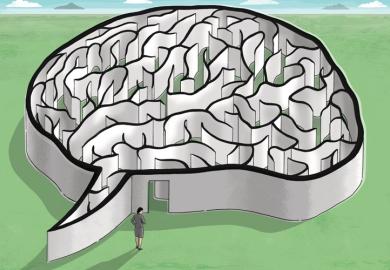
But the need for dissemination explains only one part of my activity. My other motivation was something I had come to call “public thinking”: writing about social issues, academic life and other matters of common concern not merely to state a conclusion but to approach an issue with nuance by making distinctions, considering competing perspectives and leaving room for further discussion.
This impulse arose partly in response to the black-and-white thinking that increasingly shapes public discourse, even in outlets devoted to academia. It has often struck me that academics who would never accept imprecision or a lack of rigour in their research can sometimes succumb to both when entering public debate.
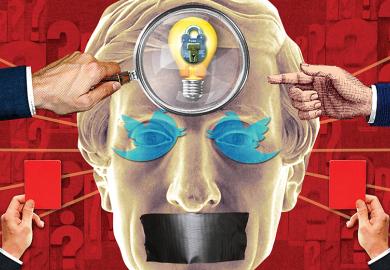
It is not unusual to encounter sweeping claims from academics in national and international media. Perhaps this partly reflects the influence of mainstream media, where provocation is often treated as a contribution to public debate and certainty is easier to package than doubt. Yet the problem seems to go deeper. Social media discussions frequently involve not so much the offering of arguments as something closer to the assertion of beliefs: a strong and almost dogmatic attachment to the claims being made. The discussion then becomes less about examining the claim than defending a position already taken.
ADVERTISEMENT
More concerningly, this tendency is not limited to commentary on general social or institutional matters. It can also appear when we speak about our own research areas. The continuing debate about artificial intelligence offers many examples. A study of one tool, used by one group for one task in one context, can quickly become the basis for a general verdict that AI is good or bad, liberating or destructive, making us more intelligent or less capable.
When this happens, the analytical distance that academic work is supposed to cultivate is weakened. And this not only affects the public perception of academic enquiry but also potentially shapes and narrows the questions we ask, the assumptions we make and the way we interpret results.
Not all public contributions by academics draw directly on their own research. Higher education is an obvious example. Those of us who work within universities can bring relevant experience to public debate even when higher education is not our field of research. But such experience is always situated. What I have experienced in my institution, discipline or career may illuminate a wider problem; it does not automatically represent academia as a whole.
When we draw on experience or personal judgement rather than systematic research, particular care is needed. We should distinguish what we have observed or come to believe from what can be supported as a more general claim. The same humility is needed when communicating research. Every study has a particular scope, and its findings emerge from specific assumptions, methods and contexts. Communicating clearly does not require concealing those limitations.
Recently, while skimming articles published in higher education journals over the past few years, I encountered concepts that gave language to the tension I had been feeling. In their recent article in Studies in Higher Education, Mark Murphy and Cristina Costa contrast universities’ tendency towards publicity and dissemination with the possibility of publicness and deliberation. Their analysis concerns universities as institutions, but the distinction also offers a useful way of examining the public activity of individual academics.
Publicity largely flows in one direction. It says, in effect: this is what we have done and this is what we know. It may be informative and valuable, but the public remains primarily an audience.
Publicness demands something more. It is not achieved merely by publishing frequently. It depends on how one participates in discussion, both before and after publication. It treats the public not simply as recipients of finished claims but as participants in reasoning. It opens claims to examination, acknowledges uncertainty and allows for challenge and response.
ADVERTISEMENT
Publicness does not mean treating every position as equally defensible. Nor does it require academics to avoid strong conclusions. It simply asks that we explain what our conclusions rest upon, acknowledge their limits and remain open to evidence or arguments that may complicate them.
So why, I asked myself, does publicity so easily displace publicness? That brought me back to two familiar concepts: managerialism and New Public Management. I had already been writing about many of the tendencies these concepts describe, although in a different vocabulary: the transformation of academic life through competition, measurement, performance indicators, institutional branding and demands for demonstrable impact.
Academic systems increasingly reward visible results and measurable impact, while public debate rewards clear and readily recognisable positions. When public communication becomes another measure of impact or an instrument of branding, academics may feel pressure to present themselves as people with answers rather than as people still engaged in enquiry.
But this belies universities’ true purpose.
Managing academics is frequently compared to herding cats. The metaphor presents academics as independent-minded, resistant to direction and unwilling to move obediently in formation. Yet when I observe how readily we form camps, repeat the conclusions of those with whom we already agree and defend positions with greater certainty than the evidence permits, I sometimes wonder whether the cats are now herding themselves – and making a public show of doing so.
I do not claim to be a “public intellectual”, but I feel a need to genuinely participate (in that sense, it may be more useful to understand public intellectualism as a practice rather than an identity). Nor do I claim to have handled my own public activity correctly in every instance. I am still learning.
But the key point is that the “public” in public intellectualism should be about publicness rather than publicity. That does not guarantee nuance. But the intellectual openness it demands, including a willingness to question the positions of our own camps, should be the very stuff of academic life.
Ahmet Soylu is professor and head of doctoral studies and research centres at Kristiania University of Applied Sciences in Oslo, Norway, and visiting professor at Seoul National University in South Korea.
ADVERTISEMENT