
Preparing for the Duolingo English Test: how to practice for ‘fill in the blanks’ and ‘read and complete’ questions
Learn how to complete ‘fill in the blanks’ and ‘read and complete’ questions on the Duolingo English Test. Find tips on formats, scoring and strategy, plus official practice links

Duolingo
Published on September 21 2026
Last updated September 24 2026
Share
Sponsored content: created in partnership with the Duolingo English Test.
For international students preparing to study abroad, mastering the structure of the language proficiency exams they will have to complete can be just as important as learning new vocabulary.
If you’re preparing for the Duolingo English Test, two sections should be on your radar as critical to achieving a positive score: ‘fill in the blanks’ and ‘read and complete’.
Both the ‘fill in the blanks’ and ‘read and complete’ sections will contribute to your reading, literacy and comprehension subscores. While these sections require similar approaches, they are subtly different.
The primary difference between the ‘fill in the blanks’ and ‘read and complete’ sections is the way they test your language skills in micro and macro contexts, respectively.
Fill in the blanks
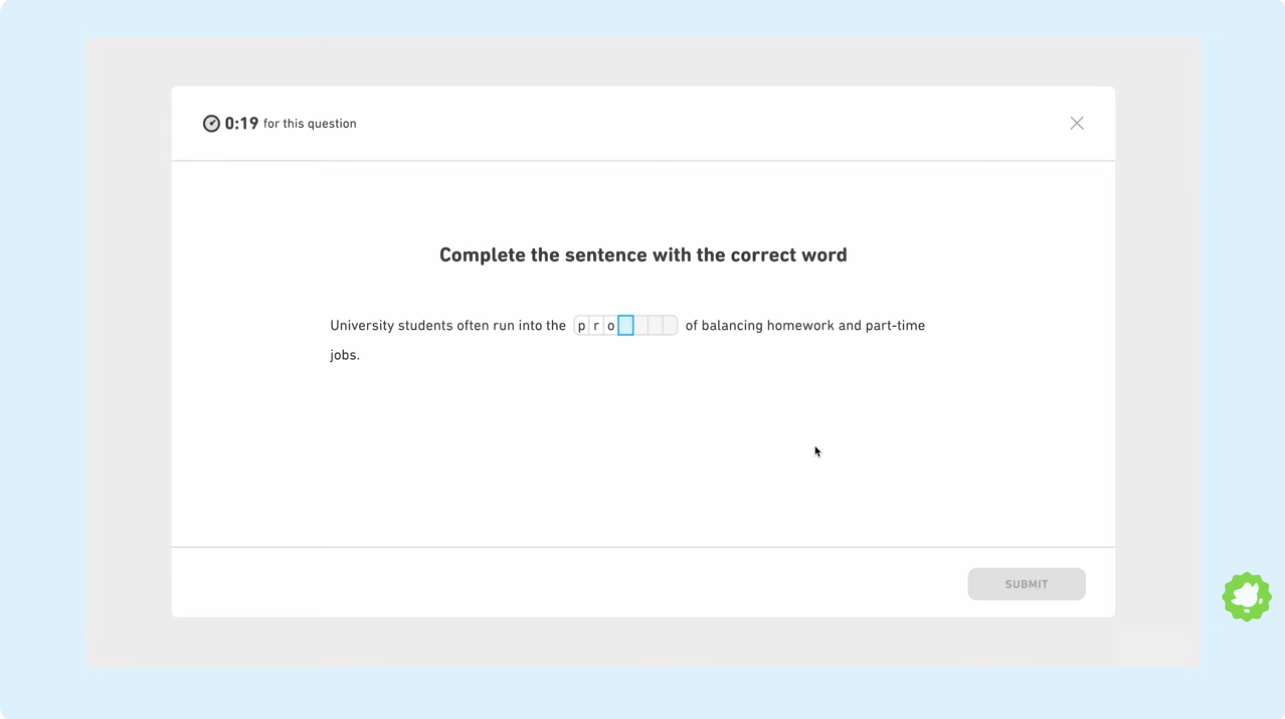
This section tests your ability to use your linguistic skills quickly. You will be given a single sentence with one missing word and a short timeframe (about 20 seconds) in which to figure out what the word is and spell it.
Read and complete
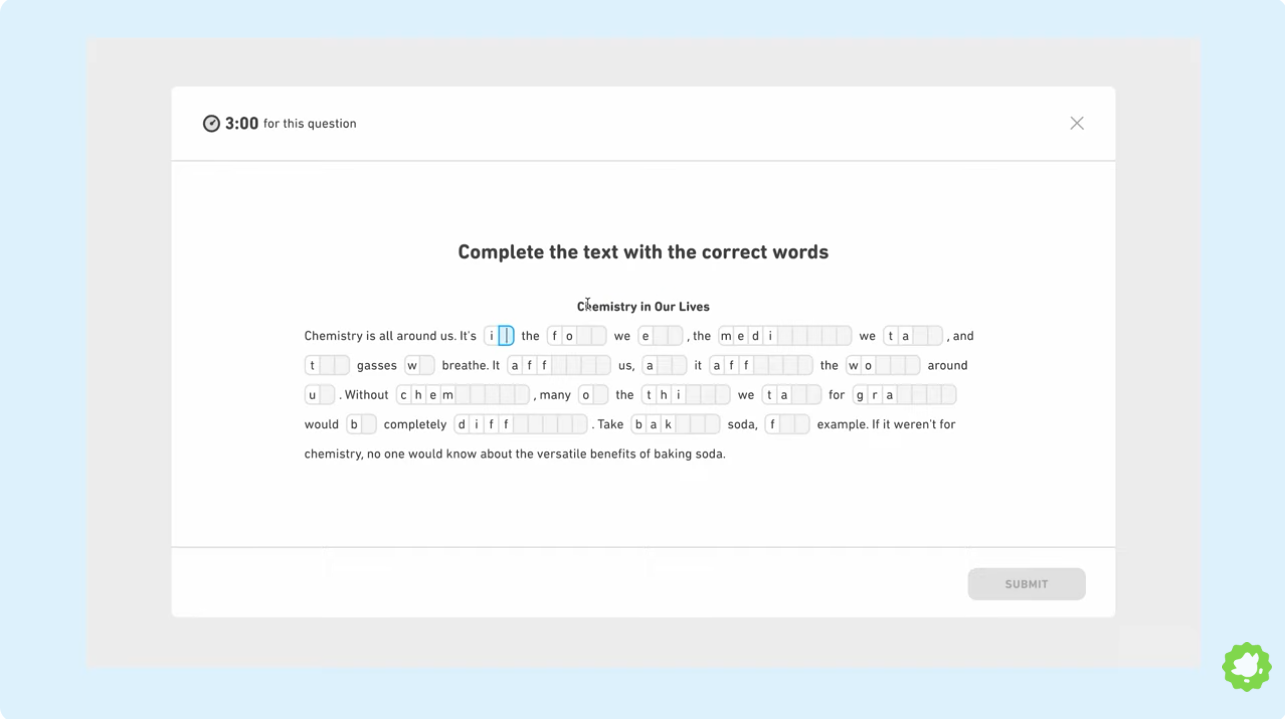
This subsection challenges language learners in a different way, as you will be given an entire passage with several incomplete words. You have three minutes to fill in the missing letters and complete each word in the passage.
The shared strategy
Although the tasks present text of different lengths, they rely on the same fundamental language skill: contextual analysis.
The most effective way to approach each task is to resist the urge to start typing instantly. Read the entire text before you focus on the incomplete words. For ‘fill in the blanks’, read the full sentence to understand the grammatical function and overall meaning before attempting to fill in the missing letters. For ‘read and complete’, read through the entire passage from start to finish so you can contextualise the incomplete words.
Words in the English language depend significantly on context. Often, the surrounding syntax and narrative will reveal the exact word or phrase needed. Skipping straight to the missing letters without reading the surrounding sentences increases the risk of misidentifying the tense, grammar or phrase required.
Don’t skip any words
One of the most important things to remember when tackling these sections is how they are scored.
On the Duolingo English Test, entering an incorrect word or misspelling a response is not penalised any more than leaving the input field blank. Because there is no negative marking for incorrect attempts, leaving a blank guarantees zero points but entering a guess gives you a chance to receive credit. Always type something into every box before your timer runs out, even if you are unsure of the spelling.
How to practice for ‘fill in the blanks’ and ‘read and complete’
Building accuracy and speed for both tasks requires consistent exposure to authentic reading materials and adaptive practice tools. To ensure your Duolingo English Test prep puts you in a position to perform at your best during the assessment, be sure to follow these tips:
- Carefully consider syntax and context: Don’t just focus on vocabulary. This could lead you to make an incorrect assumption about a missing word. Instead, during your practice, examine common prefixes, suffixes and root words. Recognising how words change form will help you quickly fill in partial word stems under tight time limits.
- Build time awareness: With only 20 seconds to complete each task during the ‘fill in the blanks’ subsection, quick decision-making is vital. Train yourself to scan the prompt, identify the missing word and type without second-guessing.
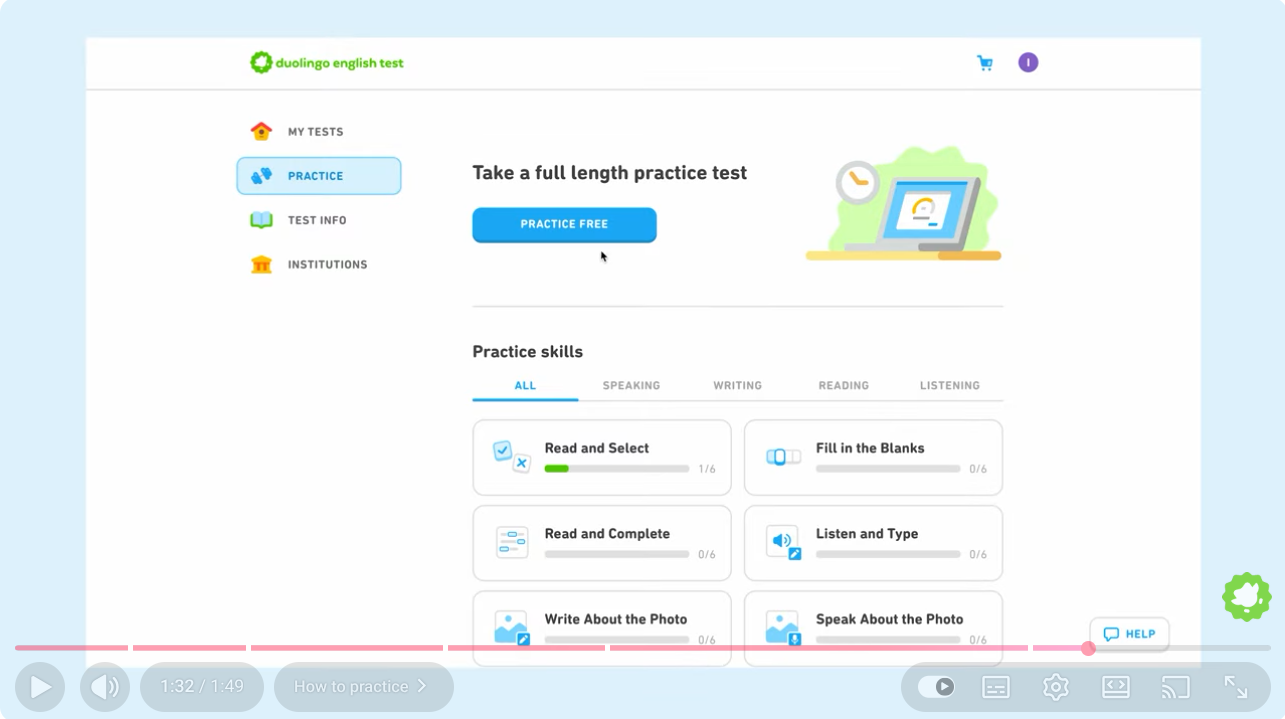
- Use official practice tests: To get comfortable with the adaptive nature of the exam and its user interface, regularly complete timed practice runs on the official Duolingo English Test practice page.
FAQs
What's the difference between ‘fill in the blanks’ and ‘read and complete’?
‘Fill in the blanks’ gives you a single sentence with one incomplete word alongside a 20-second timer. ‘Read and complete’ gives you a whole passage with several incomplete words and three minutes to complete the task. Both ask you to type out the missing letters.
How much time do I get?
You have 20 seconds per task for ‘fill in the blanks’ and three minutes for each full passage in ‘read and complete’.
Which subscores do these items affect?
Both ‘fill in the blanks’ and ‘read and complete’ contribute to your reading, literacy and comprehension subscores.
Should I guess if I'm unsure?
Always put down an answer, even if it’s a guess. An incorrect or misspelt answer is not penalised any more than leaving a space blank, so you should always put forward an attempt.
How many of each question type appear on the test?
Because the Duolingo English Test is computer-adaptive, exact item counts can vary. However, test-takers typically encounter around six to nine ‘fill in the blanks’ sentences and three to six ‘read and complete’ passages during an exam session. For full details on exam breakdown, consult the official Duolingo English Test guide.
Where can I practice for the Duolingo English Test?
On the official Duolingo English Test practice page, either item by item or as part of a full-length practice test.
When it comes to language, context matters.
Achieving the best scores across the ‘fill in the blanks’ and ‘read and complete’ subsections of the Duolingo English Test depends on more than simply knowing how to spell particular words. Instead, you will need to understand the context within each phrase and the mechanics of each question type.
Students around the world realise how important learning a new language is – that’s why so many pursue it. According to the American Council on the Teaching of Foreign Languages, 92 per cent of students in Europe learn another language in school, while almost one in four Canadians can hold a conversation in both English and French. And it’s not just important for academic and workplace success – it’s extremely rewarding too.
To start sharpening your skills for all subsections in the Duolingo English Test, visit the Duolingo English Test practice page to take a free practice test.
Watch the official walkthrough video for more tips directly from the Duolingo English Test team.
