United World Colleges pilots new learning model that puts real-world challenges at the heart of education


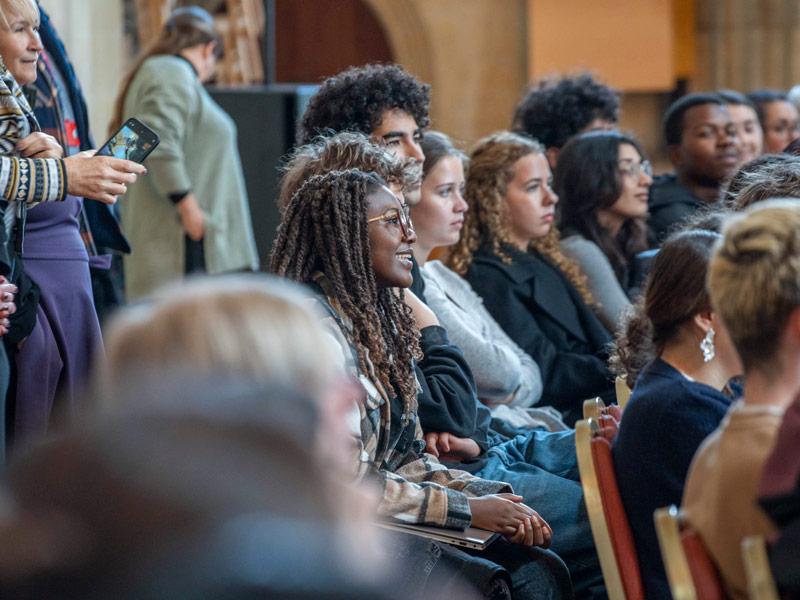

“Education should do more than help young people understand the world,” says Faith Abiodun, executive director of United World Colleges (UWC) International. “It should prepare them to make a difference in it.”
UWC and the International Baccalaureate (IB) are reimagining learning through the Systems Transformation Pathway (STP), a new programme being pioneered at UWC Atlantic in the UK and UWC South East Asia in Singapore, which combines academic rigour with global responsibility.
With the STP, “students don't just learn about challenges like climate change or food insecurity”, says Abiodun. “They work with communities to find solutions and put their ideas into action.”
Founded in 1962, UWC is a global movement uniting people, nations and cultures for peace and a sustainable future. It operates 18 schools and colleges across four continents, bringing together students from more than 150 countries and an alumni network that has grown to more than 91,000 people worldwide. UWC helped create the IB diploma in 1968.
The STP lets students replace two of the six courses that make up the IB diploma with learning built around real-world collaborative project work rather than final exams. While the traditional IB diploma encourages independent thinking and community engagement, STP makes this work part of the assessed academic curriculum. Over two years, students investigate complex problems, develop responses and put them into practice.
“It feels like working in the real world,” says an STP student at UWC Atlantic. “It teaches life lessons which are a greater asset than expected.”
Since 2023, researchers from the University of Cambridge’s Faculty of Education have been embedded in the STP at UWC Atlantic to evaluate the programme. Their research identified developments in systems thinking, collaboration, experiential learning, resilience, confidence and agency. For universities, this raises a question: how should they recognise and assess the skills students develop through real-world projects alongside more traditional measures of academic achievement?
“The STP represents a significant and timely contribution to global education, equipping young people with the capability to engage meaningfully with complexity and change,” says Mark Winterbottom, a professor of education at the University of Cambridge.
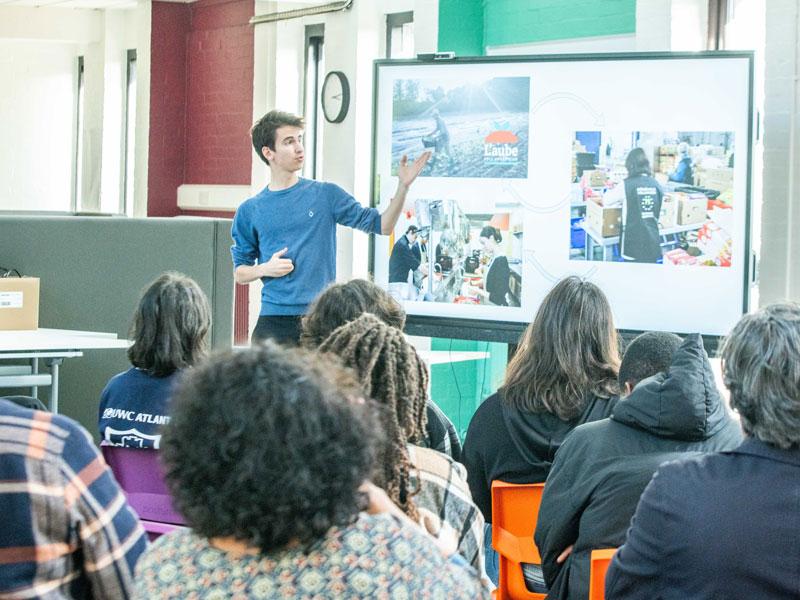
The pathway is designed to adapt to different contexts. At UWC Atlantic, students work across five impact areas: biodiversity, energy, food, migration and water. Meanwhile, at UWC South East Asia, the programme focuses on sustainability, intercultural understanding and peacebuilding.
Projects can extend beyond college campuses, allowing students to apply their learning to challenges in their home communities. Yuki, a student who graduated from UWC South East Asia in 2026, helped to establish an arts space at Kenya’s Kakuma Refugee Camp. When practical barriers halted this work, he collaborated with others to create a weekly arts newsletter instead. Feedback suggested the project had a positive effect on recipients’ mental health.
“The last two years were characterised by the most meaningful, reflective and intellectually demanding learning and growth I had experienced throughout my 14 years in the school system,” says Yuki.
The first STP graduates are headed for universities around the world, including in the US, the UK, Canada and across Europe, in fields ranging from sustainable development and engineering to computer science and finance.
In May 2026, the IB approved STP for wider rollout. Another 20 schools are expected to offer the programme from 2028, ahead of it becoming available to schools across the IB’s global network from 2030.
“Graduates will learn how to organise at scale and address systemic challenges, balancing the ‘why’ of systems thinking and the ‘now what?’ of transformative change,” says IB director-general Olli-Pekka Heinonen.
As the STP expands, it could challenge traditional ideas about how students learn, demonstrate their abilities and prepare to make a difference beyond the classroom.
Discover how UWC is shaping the future of education at UWC Atlantic and UWC South East Asia.
