
Redefining leadership for early career researchers


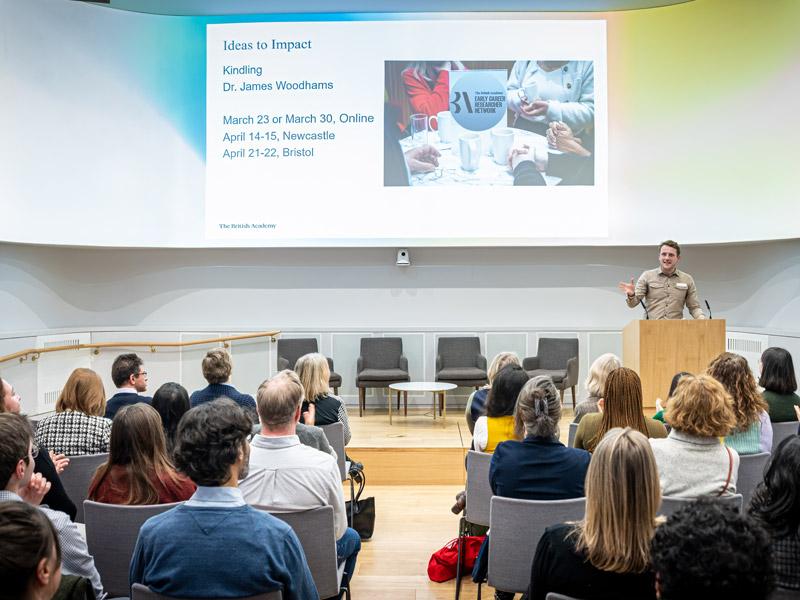

Simon Swain, professor of classics at the University of Warwick and chair of the Early Career Researcher Network (ECRN) at the British Academy, speaks with THE about the principles and objectives of the British Academy Elevate Programme for early career researchers.
What is the story behind the Elevate programme?
Early career researchers [ECRs] often feel under pressure because their jobs aren’t as safe as they used to be, and a lot of them are on temporary contracts. Elevate is about giving them the skills they need to face these challenges and the confidence to see the value their work brings to their communities, the country and the UK economy – ultimately helping them progress in their careers.
We established the three-year Elevate pilot programme in 2025, funded by Wellcome, to support ECRs in developing their leadership skills. It’s part of the British Academy’s 10,000-strong ECRN, which serves researchers working in the social sciences, humanities and arts for people and the economy [SHAPE]. You must be a member of the network to apply for the programme, and we are keen for universities to encourage applications from their academic communities.
The programme has two streams: leadership and advancement. The selective leadership stream is an intensive course designed to give a cohort of 62 ECRs a sense of community. Over a period of six months, participants engage in a mix of in-person and online training, coaching and mentoring. Upon completion, they are asked to share their learning by delivering an impact event using a grant from the British Academy. This stream underlines the contribution that ECRs can make and how they can support colleagues. It is also about strengthening the impact of researchers’ subject areas by offering a broad range of training, from inclusive leadership to policy.
More than 600 ECRs have attended sessions in the advancement stream, which mirror some of the content of the leadership programme. This is open to anyone in the ECRN, and we welcome new joiners.
What is the programme’s key objective?
Elevate is all about upskilling and showing the value that SHAPE disciplines bring to the UK economy, not just to university life.
We do this by giving researchers the confidence and skills to not only boost their own careers, but also demonstrate how their subjects can be useful and interesting beyond academia, encouraging them to take part in public engagement and contribute to policy making.
How does the programme foster an inclusive and supportive environment?
There are incredibly good people who we haven’t yet reached, and some may not have the confidence to come forward. Excellence is our main criterion. Elevate is well-represented in terms of groups that typically find it difficult to get into academia, such as Black British communities. We run training sessions on navigating cultural differences and creating an inclusive workplace.
We also have an accessibility fund that contributes to costs relating to care responsibilities and living with a disability. For example, we pay childcare costs for parents and carers enrolled on the programme. If a participant with a disability needs additional support, that cost is covered by the programme. We are committed to funding excellence and removing barriers wherever possible.
What do you look for when selecting participants?
Excellence, enthusiasm and commitment are the magical qualities we look for, and you absolutely know it when you see it. We also look for what candidates would gain from Elevate and how it could help further their careers.
How has the inaugural Elevate cohort reacted to the first year of the programme?
When we held feedback sessions, participants talked about the value of having a programme dedicated to SHAPE subjects and the importance of building a supportive cohort with their peers. They also shared how it has benefited their confidence: 90 per cent of participants reported that since the beginning of the programme, they are measurably more confident in key areas including translating academic knowledge into practical outputs, maximising impact and influencing thinking and practice. The programme leaders noticed that the participants had learned more about policymaking and how to undertake effective public engagement.
Elevate is all about advancing professionalisation through formal training, skills development and mentorship. With increasing workloads and competing responsibilities, ECRs often say that they need more time. We can’t give them that, unfortunately, but through this programme, we can give them tools that will help with their professional development.
What does success look like for Elevate?
We want Elevate to be a flagship programme within the ECRN at the British Academy. Our aim is to make sure this generation of ECRs is more confident and able to navigate an increasingly complex higher education landscape. We want the 62 people in the next cohort to get the promotions they deserve, secure the grants they apply for and continue their training and engagement, sharing the skills and knowledge they’ve gained.
We hope to enable all researchers who join Elevate to leave the programme better equipped to succeed in their future careers.
