The UK is becoming a world leader in berating itself for not having enough expertise on China. The recent parliamentary reports on the subject are only the latest of many, and media reports lament that even UK diplomacy is now losing some of its most experienced China expertise. All the more reason, you might think, to protect and nurture the expertise we still have. But no.
Since 2015 I have directed the UK’s largest research centre focusing solely on China – the Lau China Institute at King’s College London. Until a few years ago, colleagues and I used to comment on the news about China – but we were never the news ourselves. The lot of a British academic working on China was difficult in the ordinary ways: little funding, students indifferent to foreign languages in general and Mandarin in particular, and the perennial problem of getting meaningful access for fieldwork in China itself.
That changed with the Trump trade wars from 2018 and, above all, the pandemic. Arguments over the origin of the virus in Wuhan brought forward a new cohort of zealous media commentators for whom anyone studying China, and especially anyone not studying it in a sufficiently hardline way, was fair game for online pile-ons and hostile reports. The logic was guilt by association. You worked on China; therefore, you bore some responsibility for whatever China was being blamed for that week.
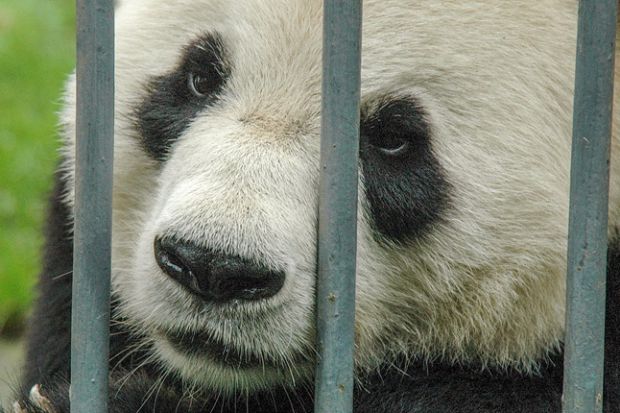
From there a narrative took root: that Beijing was infiltrating and taking over the British state, and China scholars who did not subscribe to this view were part of the plan. Hence, it has become close to impossible to be objective or balanced about China in public. Either you accept the dogma that China is an existential threat to be warred against, or you run a high risk of being exposed and attacked as an apologist and panda hugger.
I have direct experience of this. Aspiring campaigning journalists have misquoted me online. One wrote, without a trace of irony, that I had argued for China’s mode of governance to be adopted in the UK. The debate cited was one in which I had said the exact opposite. I complained, pointing out that I had written an entire book arguing that China’s problem is a political model so exclusive that nobody else could govern that way even if they wanted to. But the author replied publicly that I was the “epitome of a traitorous academic”.
The more serious problem is money. Universities are in financial crisis, and government support is ever harder to come by for anything foreign-related, especially when it relates to somewhere as remote and difficult as China. My institute has been supported by endowments for roughly four of its academic posts – an entirely legal and standard form of philanthropy even if it is more common in the US. The gifts came from a Hong Kong-based businessman with long links to King’s as a former student, and they went through the university’s full due diligence. The universities of Oxford and Cambridge, UCL and the British Museum have all taken support originating in Hong Kong.
Two years ago, a report from a small campaigning organisation claimed that 99 per cent of our funding came from a figure linked to the Chinese Communist Party. However, most of the institute’s income comes not from gifts but from student fees, with research grants behind that. Endowments, rare and precious as they are, always support specific posts, and only as part of a mix. They do not pay for the space academics work in, which at a London university is among the largest costs of all. The report insisted that our donor agreements “would show donor influence”. When the agreements were released, they showed nothing of the kind. No correction was ever published. For the record: our donor has never sought, and would never seek, any role in the work of the scholars their gift supports.
What unsettled me even more than the errors was how easily they travelled. A set of false claims could be fired into social media and, within days, become an alternative reality that colleagues, journalists and politicians treated as established fact. The presumption now is that anyone working on China in the UK is complicit in a hidden campaign by Beijing to dominate the country unless you loudly say otherwise – and even then the suspicion lingers.
The practical consequence is that one of the few remaining sources of funding for China studies has been effectively closed off. Who would offer a significant gift now, knowing what awaits them? Money will keep flowing to those who want to reinforce the picture of an all-powerful China preparing to annex the West; there is a market for that story, and some noisy politicians to buy it. Those offering a more complicated account, one that fully recognises the problems China poses but also tries to describe the country as it is, will have to do so on their own, or not at all.
Something is being lost here, and it is worth being precise about what. The UK had, until recently, a small body of scholars who could read Chinese sources, had spent years in the country and could tell ministers when a threat was real and when it was theatre. A case in point is that of the two Chrises: a former parliamentary researcher and an academic who were charged under the old Official Secrets Act in 2024 for allegedly passing politically sensitive information to Chinese intelligence but whose trial was dropped in 2025. I served as expert witness for one of the defendants. The evidence against them included the simply untenable claim that they had met one-to-one with a politburo member while teaching English in China. For anyone with even a smidgen of knowledge of the Chinese system, this was hard to believe – particularly when Chinese language sources offered irrefutable proof that at the time of the claimed meeting, the high-level figure was a thousand miles away at another public event. That is exactly the capacity a proportionate policy needs, because proportion depends on seeing clearly what you are dealing with.
As China becomes a technology superpower, with its capacity in AI, clean energy and medicine improving almost daily, the UK’s response has been to batten down the hatches and hang up a sign reading, “Please Leave Us Alone”. It is hard to think of a time when the country was so ill equipped, and so self-defeating, on a question this large.
If we are serious about understanding China, we need a due-diligence standard for gifts that the whole sector signs up to, so that a donation cleared once is treated as cleared, rather than as evidence of undue influence. And we need public funding that does not require the researcher to prove they hold the approved opinion first.
Otherwise, British China scholars will spend more of their time justifying why they study the place than actually studying it. There can be few more futile outcomes than that.
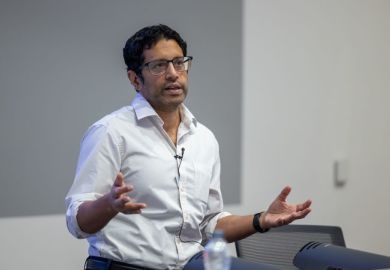
Kerry Brown is professor of Chinese studies and director of the Lau China Institute at King’s College London.
Register to continue
Why register?
- Registration is free and only takes a moment
- Once registered, you can read 3 articles a month
- Sign up for our newsletter
Subscribe
Or subscribe for unlimited access to:
- Unlimited access to news, views, insights & reviews
- Digital editions
- Digital access to THE’s university and college rankings analysis
Already registered or a current subscriber?